Accelerate AI Personalization for Conversion Optimization
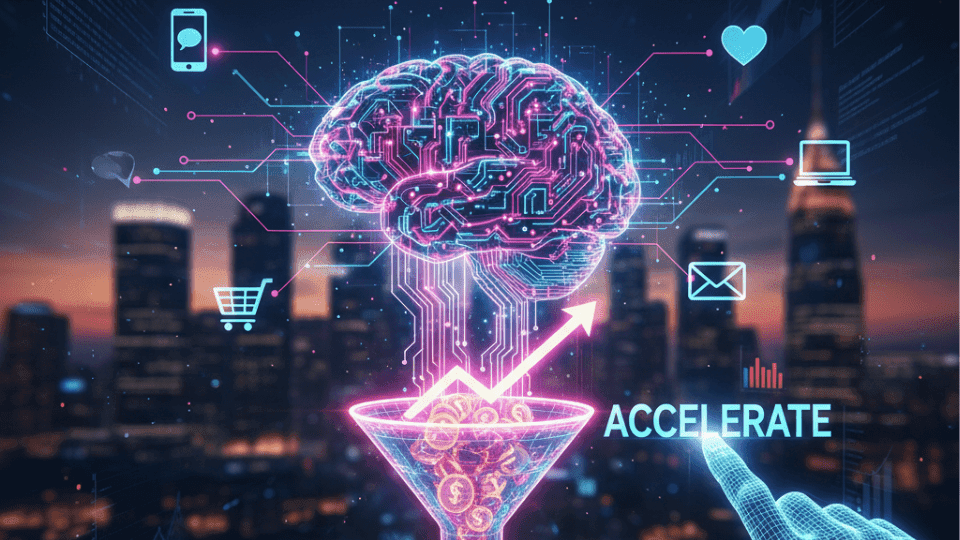
How many times have you received a generic marketing email, or seen a product recommendation that felt completely irrelevant? In today’s crowded digital landscape, generic, one-size-fits-all marketing is not just ineffective; it is actively detrimental. Modern consumers expect, even demand, highly relevant and personalized experiences as a prerequisite for engagement, trust, and ultimately, conversion. To truly unlock business growth, organizations must accelerate AI personalization for conversion optimization, transforming every customer interaction into a tailored, impactful moment that drives action.
The Personalization Imperative: Beyond Generic Marketing
The era of mass marketing is definitively over. Consumers are inundated with information, and their attention spans are shorter than ever. They have come to expect brands to understand their individual needs, preferences, and context. When brands fail to deliver this, the result is often:
- Low Engagement: Customers ignore irrelevant messages and offers.
- High Bounce Rates: Visitors quickly leave websites that do not immediately cater to their interests.
- Abandoned Carts: Lack of personalized incentives or support leads to lost sales.
- Reduced Loyalty: Customers feel like a number, not a valued individual.
This shift means personalization is no longer a “nice-to-have”; it is a “must-have” for any business serious about conversion optimization. Accelerating AI personalization moves businesses beyond basic segmentation to deliver experiences so relevant they feel intuitive, directly impacting conversion rates and customer lifetime value.
Data as Fuel: Unifying Customer Insights for AI Personalization
The foundation of powerful AI personalization is not the AI itself, but the quality and integration of your customer data. AI algorithms are only as intelligent as the data they are fed. To achieve impactful personalization, businesses must prioritize unifying comprehensive customer insights from across their entire ecosystem.
Critical data types include:
- Behavioral Data: Website clicks, browsing history, app usage, interaction patterns.
- Transactional Data: Purchase history, order frequency, average order value, returns.
- Demographic Data: Age, location, gender, income (with consent and privacy compliance).
- Preference Data: Explicitly stated interests, communication preferences, product categories.
- Contextual Data: Device type, time of day, current location.
By integrating and normalizing this disparate data into a unified customer profile, AI gains the rich context it needs to make accurate predictions and deliver truly intelligent personalization. Without this robust data infrastructure, AI personalization remains superficial and ineffective. Data is the rocket fuel for conversion optimization.
AI-Powered Hyper-Targeting: Tailoring the Customer Journey in Real-Time
Once you have a solid data foundation, AI algorithms can perform hyper-targeting, tailoring the customer journey in real-time. This is where AI truly shines, moving beyond simple rules to dynamically adjust experiences based on individual customer behavior and predicted needs.
AI-powered hyper-targeting involves:
- Dynamic Content Delivery: Displaying personalized website layouts, hero images, and call-to-actions based on visitor segments or individual profiles.
- Personalized Product Recommendations: Offering highly relevant product suggestions on e-commerce sites, in emails, or during chat interactions, based on past purchases, browsing, or similar customer behavior.
- Optimized Offers and Incentives: Presenting tailored discounts, free shipping, or loyalty rewards at the precise moment a customer is most likely to convert.
- Predictive Next-Best-Action: Suggesting the most probable next step for a customer, whether it is an article, a support agent, or a specific product, to guide them efficiently down the funnel.
This real-time adaptation and precision targeting eliminate friction, capture attention, and make the conversion path feel effortless and highly relevant. It transforms passive browsing into active engagement, directly accelerating conversion rates across your digital touchpoints.
Orchestrating Omnichannel Experiences: Consistent Personalization Everywhere
A customer’s journey rarely happens on a single channel. They might browse on a desktop, add to cart on a mobile app, receive an email, and then engage with a chatbot. To truly accelerate AI personalization for conversion optimization, this personalization must be consistent and coherent across all channels. Fragmented personalization is almost as bad as no personalization.
Orchestrating omnichannel experiences means:
- Unified Customer View: Ensuring that AI has access to the customer’s complete history across web, email, SMS, social media, and chat.
- Cross-Channel Consistency: Maintaining a consistent brand voice, message, and personalized offers, regardless of the channel.
- Contextual Handoffs: If a customer switches channels (e.g., from email to live chat), the AI or human agent should have immediate context from previous interactions.
- Channel Optimization: AI intelligently determines the best channel to deliver a personalized message or offer based on customer preference and historical engagement.
This integrated approach ensures that the customer feels a continuous, seamless, and personalized experience, eliminating the jarring disconnections that often deter conversion. It creates a powerful, unified brand presence that resonates deeply with individuals, driving loyalty and accelerating conversions.
Testing, Learning, and Iterating: Sustaining Personalization’s Impact
Accelerating AI personalization for conversion optimization is not a one-time setup; it is an ongoing, iterative process. The digital landscape, customer behaviors, and market trends are constantly evolving, and your AI personalization strategy must evolve with them. Continuous testing, learning, and refinement are critical for sustaining its impact.
Key iterative practices include:
- A/B Testing Personalization Strategies: Experimenting with different AI models, recommendation algorithms, or personalized content variations to identify what performs best.
- Robust Analytics and Reporting: Tracking key metrics like conversion rates, average order value, customer lifetime value, and engagement rates directly attributable to personalization.
- Machine Learning Model Refinement: Continuously feeding new data into your AI models to improve their predictive accuracy and adapt to changing customer behaviors.
- Customer Feedback Loops: Incorporating direct customer feedback (surveys, reviews) to understand their perception of personalization and identify areas for improvement.
- Ethical Review: Regularly auditing AI personalization to ensure fairness, transparency, and compliance with data privacy regulations.
By embracing this cycle of testing, learning, and iterating, businesses can ensure their AI personalization strategies remain at the forefront of effectiveness, continuously optimizing conversion rates and driving sustained business growth.
Accelerating AI personalization is a strategic imperative for any business aiming to dominate in conversion optimization. By building a robust data foundation, leveraging AI for hyper-targeting, orchestrating seamless omnichannel experiences, and committing to continuous iteration, organizations can transform generic interactions into impactful, personalized journeys. This approach not only boosts conversion rates but also cultivates deeper customer loyalty and fuels sustainable business growth. What is the first key customer touchpoint you plan to hyper-personalize with AI to accelerate your conversion efforts?