Building Visual Memory and Securing the Robotic Future
Alex Berg and Peter Belhumeur believe that for a robot to be truly useful, it needs more than just a camera. It needs a memory. Their company, Memories AI, is building a system that allows wearables and robots to remember exactly what they see. This is a massive shift from how AI usually works. Most AI can identify a chair or a cat in a photo, but it cannot remember that it saw your specific car keys on the kitchen counter ten minutes ago. By giving machines a visual memory layer, they are essentially giving them spatial intelligence.
The core idea here is that a robot should not have to relearn its environment every time it turns on. If you have a home robot or a pair of smart glasses, those devices should recognize your living room, remember where you put your coffee mug, and understand the history of the physical space they inhabit. This goes beyond simple object detection. It is about creating a searchable database of visual experiences. For consumer gear like smart glasses, this could mean your glasses could literally tell you where you left your wallet because they saw it earlier.
This level of interaction requires a sophisticated way to store and recall data. Memories AI focuses on making this process seamless so that the hardware can navigate the world more like a human does. We do not just see the world in isolated frames; we build a continuous map in our heads. This technology aims to do the same for machines, making them much more reliable and helpful in everyday life.
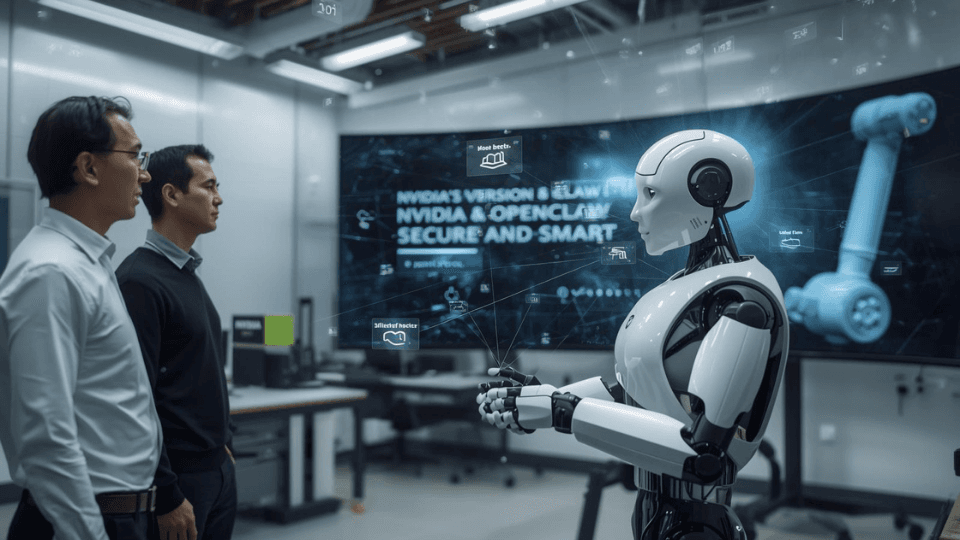
As these machines become more integrated into our homes and workplaces, a new problem emerges: security. If a robot is recording and remembering everything it sees, that data becomes a prime target for hackers. This is where Nvidia enters the picture with a project called OpenClaw. Nvidia recognizes that security is often an afterthought in early tech development, but when you have heavy machinery or cameras moving around humans, safety has to come first.
OpenClaw is an effort to build a secure, open standard for robotics. It focuses on encrypted communication and safety features that are baked directly into the link between the robot and its AI. Instead of every developer trying to figure out how to lock down their own system, Nvidia is providing a secure foundation they can all use. This moves the industry toward a standard way of handling sensitive visual data and machine commands.
By creating this secure framework, Nvidia hopes to speed up the use of AI in factories, warehouses, and even homes. When security is standardized, companies can focus on making their robots smarter rather than worrying about constant hacking threats. This combination of visual memory from companies like Memories AI and the secure infrastructure of OpenClaw marks a turning point for the industry. We are moving away from simple machines and toward reliable, intelligent partners that can safely navigate our world.