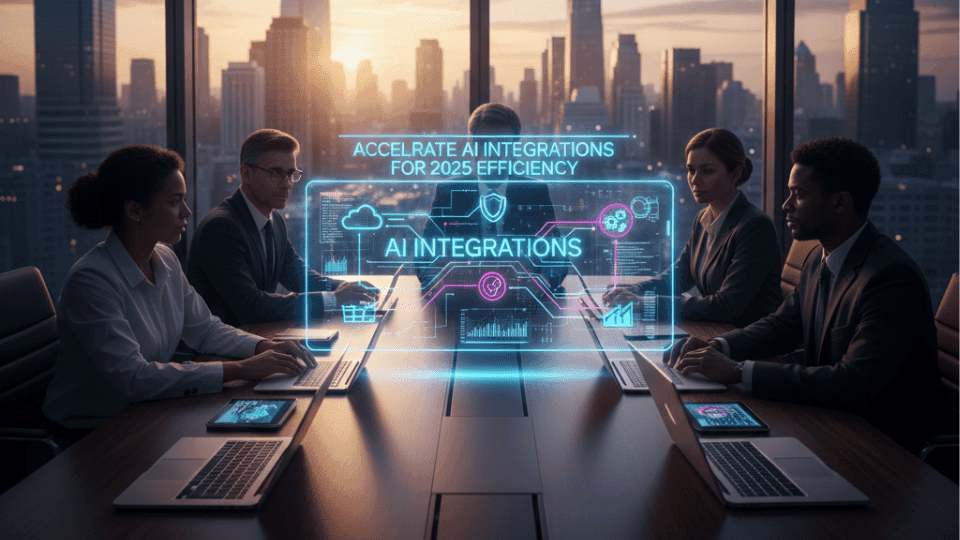
Accelerating AI Integrations for 2026 Efficiency
In the relentless pursuit of competitive advantage, businesses are keenly aware that Artificial Intelligence offers transformative potential. Yet, the promise often outstrips the reality, as many organizations grapple with isolated AI solutions, data silos, and a fragmented technological landscape. The true power of AI doesn’t lie in a single algorithm, but in its seamless integration across an entire enterprise. To truly accelerate AI integrations for 2025 efficiency, organizations must move beyond point solutions, building an intelligent, interconnected ecosystem that maximizes data flow, automates complex workflows, and unlocks unprecedented operational agility.
Breaking Down Data Silos for Unified Intelligence
The most significant barrier to accelerating AI integrations is often fragmented data. AI thrives on comprehensive, accessible data, but in many organizations, critical information remains locked in disparate systems. For 2025 efficiency, breaking down these data silos is non-negotiable.
Focus on:
- Centralized Data Platforms: Implement Customer Data Platforms (CDPs) or data lakes that aggregate information from all systems (CRM, ERP, marketing automation, customer service) into a single, unified source.
- API-First Strategy: Prioritize the development and use of robust Application Programming Interfaces (APIs) to ensure seamless, real-time data exchange between AI models and existing business applications.
- Data Governance Frameworks: Establish clear policies and procedures for data collection, storage, quality, and access, ensuring data integrity and security for AI consumption.
By creating a unified data foundation, you provide your AI models with the rich, diverse information they need to generate accurate insights and drive intelligent automation across the entire organization.
Automating End-to-End Workflows
Individual AI tools provide value, but the real leap in 2025 efficiency comes from automating end-to-end workflows where AI acts as the intelligent orchestrator. This eliminates manual handoffs, reduces human error, and accelerates processes across departments.
Implement AI to automate workflows such as:
- Lead-to-Customer Journey: Automate lead scoring, personalized content delivery across marketing channels, and intelligent lead routing to sales, all powered by AI.
- Customer Service and Support: Integrate AI chatbots that handle initial inquiries, access customer history from the CRM, and seamlessly escalate to human agents with full context.
- Financial Operations: Automate invoice processing, fraud detection, and reconciliation by integrating AI with ERP systems.
- Supply Chain Optimization: Use AI to predict demand fluctuations, optimize inventory levels, and automate ordering processes across your supply chain systems.
Automating these complex workflows transforms disjointed tasks into smooth, intelligent processes, dramatically boosting operational speed and accuracy.
Critical Pillars for Accelerated AI Integrations
- API Management: Centralized governance for all APIs ensuring security, reliability, and scalability.
- Integration Platform as a Service (iPaaS): Cloud-based solutions to connect applications and data effortlessly.
- Orchestration Engines: Tools to design, manage, and monitor complex automated workflows involving multiple AI models and systems.
- Scalable Infrastructure: Cloud-native and microservices architectures to support growing AI demands.
Enhancing Decision-Making with Integrated Intelligence
When AI insights are isolated, their impact is limited. Accelerating AI integrations for 2025 efficiency means embedding AI-driven intelligence directly into the decision-making tools and dashboards used by employees daily. This empowers every team member with actionable insights.
Integrate AI to enhance decision-making by:
- Predictive Analytics in CRM: Embed AI predictions for customer churn risk or upsell opportunities directly into sales and customer service dashboards.
- Real-time Business Intelligence: Connect AI models to BI tools to provide dynamic, predictive reports on market trends, operational performance, and customer behavior.
- Personalized Marketing Campaigns: Use AI to segment audiences and generate personalized content recommendations directly within marketing automation platforms.
- Fraud Detection in Financial Systems: Integrate AI alerts directly into financial transaction monitoring systems, allowing for immediate action on suspicious activities.
By making AI insights readily available and actionable within existing tools, you enable smarter, faster decisions across the entire organization, driving competitive advantage.
Cultivating an Integration-First Culture
Technology alone cannot accelerate AI integrations; a cultural shift is also necessary. For 2025 efficiency, organizations must foster an integration-first mindset, where teams understand the value of interconnected systems and actively seek opportunities for collaboration between AI and existing platforms.
Promote an integration-first culture by:
- Cross-Functional Teams: Encourage collaboration between IT, data science, and business units to identify integration opportunities and ensure alignment.
- Training and Upskilling: Provide training for employees on how to interact with and leverage integrated AI tools, ensuring high adoption rates.
- Governance and Best Practices: Establish clear guidelines for AI integration, including security protocols, data sharing standards, and ethical considerations.
- Showcasing Successes: Highlight successful AI integration projects to build enthusiasm and demonstrate tangible business value, encouraging further adoption.
A culture that values seamless integration ensures that AI investments yield maximum returns by truly transforming how work gets done.
Measuring, Monitoring, and Iterating for Continuous Efficiency
Accelerating AI integrations is not a one-time project; it’s an ongoing journey of refinement and optimization. For sustained 2025 efficiency, organizations must establish robust mechanisms for measuring performance, monitoring integrations, and continuously iterating based on insights.
Focus on:
- Integrated Performance Dashboards: Create dashboards that provide a holistic view of AI model performance, integration health, and business impact across all connected systems.
- Automated Monitoring and Alerts: Implement tools that proactively monitor API connections, data flows, and AI model outputs, alerting teams to potential issues before they impact operations.
- Feedback Loops: Collect continuous feedback from users and stakeholders on the effectiveness of integrated AI solutions, identifying areas for improvement.
- A/B Testing Integrations: Experiment with different integration strategies or AI models within existing workflows to identify the most efficient and effective configurations.
By meticulously measuring, monitoring, and iterating, organizations can ensure their AI integrations remain optimized, secure, and continuously contribute to enhanced efficiency and business growth.
Accelerating AI integrations for 2025 efficiency is about building a connected, intelligent enterprise. By breaking down data silos, automating end-to-end workflows, enhancing decision-making, fostering an integration-first culture, and committing to continuous optimization, businesses can unlock the full, transformative power of Artificial Intelligence. This strategic approach will not only streamline operations and boost productivity but also position organizations for sustainable growth in an increasingly AI-driven world. What is the biggest integration challenge your organization faces in maximizing its AI potential?