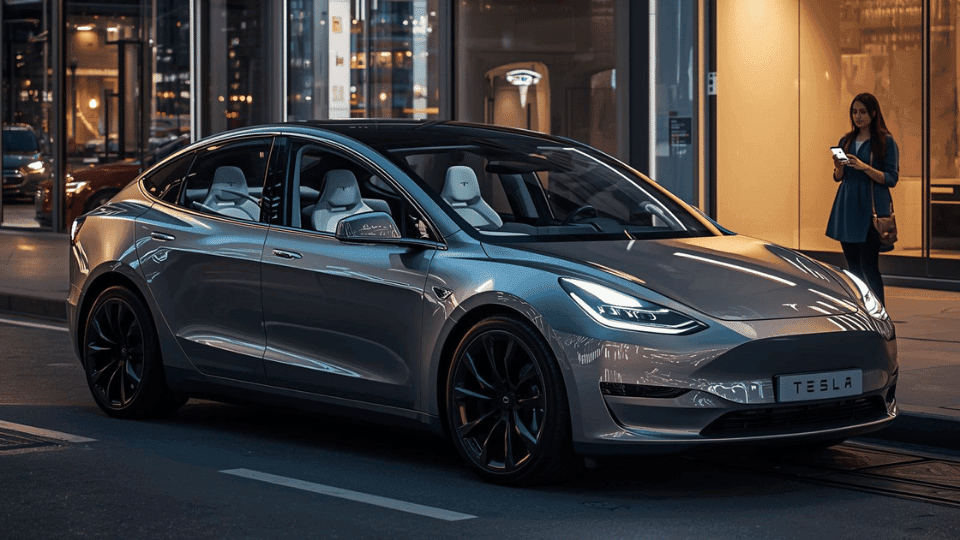
Tesla’s Reckoning: Elon Musk Finally Admits the $25,000 EV is Dead
The dream of a cheap Tesla for the masses has officially hit a wall. For years, Elon Musk teased a $25,000 electric vehicle, often called the “Model 2.” Fans and investors waited for a car that would finally make going electric affordable for everyone. But during the latest earnings call, Musk changed his tune. He basically called the idea of a standard $25,000 car “pointless” and “silly.” Instead, he is betting the entire future of the company on a fleet of self-driving robotaxis. This shift marks a major turning point for Tesla, moving it away from being a car company for regular people and toward a futuristic AI service.
Musk’s logic is simple, if a bit controversial. He believes that in a world where cars can drive themselves, owning a cheap, manual car makes no sense. He argued that every Tesla produced today will eventually become a fully autonomous robotaxi. Because of this, he thinks the company should focus all its energy on perfecting the Cybercab, a two-seat vehicle with no steering wheel or pedals. While this sounds like a sci-fi dream, it leaves a huge hole in the market for people who just want a budget-friendly electric car they can actually drive themselves.
The Pivot to Autonomy
This decision has caused a lot of friction inside Tesla. Reports suggest that many engineers were already working hard on the affordable “Model 2” project. When Musk decided to pivot to the Cybercab, it led to a wave of layoffs and departures from the executive team. Investors are also divided. Some think that a $25,000 car is the only way for Tesla to keep growing its sales numbers. Others believe Musk is right to chase the massive profits that could come from a global network of autonomous taxis.
The Cybercab itself is a radical piece of hardware. It looks like a smaller, sleeker version of the Cybertruck and is built to operate without any human input. Musk claims these vehicles will be much cheaper to run than a traditional Uber or Lyft. However, the technology still has a long way to go. Tesla’s “Full Self-Driving” software still requires a human to pay attention, and regulators are still very skeptical about letting thousands of driverless cars roam the streets. By killing the cheap car, Musk is putting all his chips on a technology that might not be ready for years.
A New Chapter for the EV Market
While Tesla walks away from the budget market, other companies are rushing in to fill the gap. Manufacturers in China are already producing high-quality electric cars for under $20,000. If Tesla refuses to compete on price, they might lose their crown as the king of the EV world. Musk doesn’t seem worried. He has always viewed Tesla as an AI and robotics company rather than just a car manufacturer. He wants to win by building the smartest cars, not the cheapest ones.
This gamble will either make Tesla the most valuable company on Earth or go down as one of the biggest mistakes in automotive history. For now, the message to consumers is clear: if you want a cheap Tesla, you are out of luck. The company is no longer interested in the “average” driver. They are building a future where you don’t own a car at all, you just summon one with an app. It is a bold, risky vision that moves Tesla further away from its original mission of accelerating the world’s transition to sustainable energy through affordable transport.