XUNA Logo

PRODUCTS

XUNA Voice

XUNA Voice

AI-powered voice calls.

XUNA iMessage & SMS

XUNA iMessage & SMS

Two-way iMessage and SMS outreach.

XUNA Chat

XUNA Chat

AI web chat.

XUNA WhatsApp

XUNA WhatsApp

AI-powered WhatsApp conversations.

XUNA Ringless VM

XUNA Ringless VM

Drop voicemails without ringing.

XUNA CRM

XUNA CRM

Automated lead tracking.

XUNA Reviews

XUNA Reviews

Automated review requests.

INDUSTRIES

Automotive

Automotive

Solutions for automotive industry.

Hospitality

Hospitality

Solutions for hospitality industry.

Travel

Travel

Solutions for travel industry.

Wellness & Med Spa

Wellness & Med Spa

Solutions for wellness and med spa industry.

Healthcare

Healthcare

Solutions for healthcare industry.

Agencies

Agencies

Solutions for agencies industry.

Insurance

Insurance

Solutions for insurance industry.

eCommerce

eCommerce

Solutions for eCommerce industry.

Every Business

Every Business

Solutions for every business.

INTEGRATIONS
PRICING
WHITE LABEL
PULSE
ENTERPRISE
CONTACT

Status

Loading article...
XUNA
Selected ByNVIDIA Inception ProgramGoogle for StartupsAWS Startups

Headquarters

3701 Midtown DrTampa, FL 33607
(855) 585-9862team@xuna.ai
AICPA SOC 2Sensiba SOC 2 AttestationHIPAA CompliantGDPR Compliant

Products

  • Voice
  • iMessage & SMS
  • WhatsApp
  • Chat
  • Ringless VM
  • CRM

Industries

  • Automotive
  • Hospitality
  • Travel
  • Wellness & Med Spa
  • Healthcare
  • Agencies
  • Insurance
  • eCommerce
  • Every Business

Compare

  • ElevenLabs
  • VAPI
  • Retell AI
  • Synthflow
  • Deepgram
  • Vocode
  • Bland AI
  • Play.AI

Resources

  • Trust Center
  • White Label
  • Pulse
  • Integrations
  • Enterprise
  • Contact
  • Glossary
  • Changelog

© 2026 XUNA AI. All rights reserved.

  • Partner Program $
  • Privacy Policy
  • Terms & Conditions
  • System Status
Scale Ai Chatbot for 2026 Efficiency
Product Insight

Scale Ai Chatbot for 2026 Efficiency

Remember the frustration of navigating a phone tree, pressing endless numbers only to repeat your issue to three different people? That archaic system is giving way to a much more intuitive, and scalable, solution: AI chatbots. By 2026, companies that effectively integrate and scale these intelligent assistants won’t just be ahead. They will be operating in an entirely different league, offering instant, personalized service that builds loyalty and drives growth. The conversation around AI chatbots has evolved from simple query responses to sophisticated, revenue-generating interactions.

Moving Beyond Basic FAQs

Early chatbots were often glorified FAQs, struggling with anything outside their narrow programming. Today, advancements in natural language processing (NLP) and machine learning (ML) allow AI chatbots to understand context, intent, and even emotional cues. They can seamlessly handle complex customer journeys, from initial product inquiries to post-purchase support, without missing a beat.

This evolution means a chatbot can do more than just answer a question. It can:

  • Qualify Leads: Engage prospects, gather essential information, and route high-value leads directly to sales.
  • Personalize Experiences: Recall past interactions, suggest relevant products, and tailor responses based on user data.
  • Proactively Assist: Anticipate needs based on browsing behavior or purchase history, offering help before it’s even requested.

Moving past basic functionality frees up human agents for more complex, empathetic problem-solving, dramatically improving overall service quality.

Architecting for Scalability

Building a single, effective chatbot is one thing. Scaling it across multiple channels, languages, and use cases without compromising performance is another challenge entirely. True scalability involves a robust architecture that can handle increasing user loads and diverse integrations.

Cloud-Native Solutions

Leveraging cloud-native platforms allows chatbots to dynamically scale computing resources up or down based on demand. This ensures consistent performance during peak times, like holiday sales, and optimizes costs during slower periods. It also simplifies global deployment, allowing businesses to serve international customers with localized chatbot experiences.

Modular Design

A modular chatbot architecture means you can build reusable components. Need a new payment processing module? Integrate it once, and it’s available across all your chatbot instances. This approach accelerates development, reduces errors, and ensures consistency. You can roll out new features rapidly without needing to rewrite entire sections of code.

Integrating with Existing Ecosystems

A powerful chatbot rarely works in isolation. Its true value emerges when it integrates seamlessly with your existing CRM, ERP, marketing automation platforms, and communication tools. This creates a unified data flow, empowering the chatbot with a complete view of the customer and enabling it to trigger actions across different systems.

Imagine a chatbot identifying a customer’s specific technical issue, then automatically creating a support ticket in your helpdesk system, notifying the relevant department, and providing the customer with a tracking number, all within seconds. This level of integration transforms customer service from reactive to proactive, and often, fully automated. APIs are the backbone here, enabling the smooth exchange of information that makes these advanced capabilities possible.

Data-Driven Optimization and Continuous Learning

The power of AI lies in its ability to learn and improve. A scaled chatbot ecosystem isn’t static. It constantly collects data on user interactions, identifies areas for improvement, and refines its responses. This iterative process is crucial for maintaining high levels of efficiency and customer satisfaction.

Businesses must implement strong analytics frameworks to monitor chatbot performance. This includes tracking metrics such as:

  • Resolution Rate: The percentage of queries the chatbot successfully resolves without human intervention.
  • User Satisfaction Scores (CSAT): Feedback collected directly from users about their chatbot experience.
  • Escalation Rate: How often the chatbot needs to hand off a conversation to a human agent.

Regular analysis of these metrics informs training data updates, intent refinement, and feature enhancements. It ensures your chatbot grows smarter and more effective over time, making it a continuous asset rather than a one-time deployment.

The Human Element: When to Hand Over

While AI chatbots are incredibly powerful, they are tools to augment human capabilities, not replace them entirely. Knowing when to seamlessly hand over a conversation to a human agent is a critical aspect of scaling. A well-designed chatbot will recognize complex emotional cues, highly specific or sensitive requests, or moments when a human touch is simply preferred.

This handoff should be smooth. The human agent should receive the full transcript of the conversation, along with any relevant customer data, preventing the customer from needing to repeat themselves. This blended approach ensures efficiency for routine tasks and empathy for unique situations, leading to superior customer experiences and fostering trust.

The future of customer interaction isn’t just about automation. It’s about intelligent automation that scales, learns, and knows when to defer to the unique strengths of a human. As we approach 2026, the question isn’t whether to use AI chatbots, but how strategically you will scale them to unlock unprecedented levels of efficiency and customer engagement.

Are you ready to transform your customer interactions from transactional to truly intelligent?

Quick Notes

5 min

Read Time

Product Insight
XUNA
XUNA AI
January 20, 2026
Back to Pulse
Share This Article
XUNA

Effortless Human-Like AI Phone Calls

Build a no-code AI phone system with our AI voice assistants: stop missing calls and start converting more leads.

Get Started With XUNA
Share This Post
Back to Pulse
XUNA PULSE

Related Articles

Beyond Chatbots: How OpenAI Reengineered Coding Tools Into Always-On Personal Assistants
Product InsightXUNA AI

Beyond Chatbots: How OpenAI Reengineered Coding Tools Into Always-On Personal Assistants

OpenAI shifted its product strategy to focus on continuous personal assistants, turning its internal coding infrastructure into a platform called Dots. The move represents a major change in how software developers and everyday users interact with artificial intelligence. Instead of forcing people to type repetitive text prompts into a blank chat box, OpenAI designed Dots […]

Read More20 hours ago
Pointed Ambiguity: X Confuses Users With Mystery Hand Graphic Prompting Profile Shares
Product InsightXUNA AI

Pointed Ambiguity: X Confuses Users With Mystery Hand Graphic Prompting Profile Shares

Social media platform X started testing a bizarre UI prompt that encourages people to share peer accounts, leaving users baffled across the site. The feature displays a graphic of a suited hand pointing upward. It appears above user profile cards, post composition screens, and direct messaging interfaces without providing clear context or instructions. The strange […]

Read More20 hours ago
Machine Mythologies: Grok Releases Seven Minutes of Synthetic Epic Odyssey
Product InsightXUNA AI

Machine Mythologies: Grok Releases Seven Minutes of Synthetic Epic Odyssey

Three months after Elon Musk declared that Grok would produce a full-length, historically accurate movie adaptation of The Odyssey, xAI published seven minutes of video content labeled Episode 1 of its new Odyssey series. The release represents xAI’s first public attempt to generate long-form narrative cinema using automated video generation tools. Musk previously criticized director […]

Read More1 day ago
Beyond Human Limits: Microsoft Claims Clinical AI Beats Senior Doctors on Complex Medical Diagnostics
Product InsightXUNA AI

Beyond Human Limits: Microsoft Claims Clinical AI Beats Senior Doctors on Complex Medical Diagnostics

Microsoft’s artificial intelligence lead Mustafa Suleyman announced that the company’s newest healthcare model outperforms licensed human doctors on complex medical cases, advancing its strategy to build what he terms medical superintelligence. Speaking at an industry summit, Suleyman revealed internal testing benchmark data showing that Microsoft’s clinical software achieved superior diagnostic accuracy compared to experienced physicians […]

Read More4 days ago
Built for Designers: Canva Unveils Canva Craft Image Generator to Challenge Silicon Valley Giants
Product InsightXUNA AI

Built for Designers: Canva Unveils Canva Craft Image Generator to Challenge Silicon Valley Giants

Design software platform Canva released its first in-house image generation model, named Canva Craft, taking on rival media models built by Google, OpenAI, ByteDance, and Meta. Built directly by Canva’s internal research team, the generator uses a specialized two-stage process to turn text prompts into high-resolution visual layouts. During the first stage, Canva Craft interprets […]

Read More4 days ago
Keys Without Secrets: 1Password Launches Agent Auth Platform to Lock Down Automated Logins
Product InsightXUNA AI

Keys Without Secrets: 1Password Launches Agent Auth Platform to Lock Down Automated Logins

Password manager giant 1Password launched a new security management tool designed to let autonomous AI agents access user accounts without exposing plain-text passwords or secret credentials. As consumers increasingly rely on automated assistants to handle everyday online tasks, security firms are rushing to build safeguards. The platform, called 1Password for Agents, creates a secure bridge […]

Read More4 days ago
Machine-Made Code: Recursive Debuts Flint, a Lighter Laptop Coding Model Built by AI
Product InsightXUNA AI

Machine-Made Code: Recursive Debuts Flint, a Lighter Laptop Coding Model Built by AI

Artificial intelligence research startup Recursive released its first open-source model, Flint, showcasing a practical milestone for self-improving software pipelines. Led by Chief Executive Officer Richard Socher, former chief scientist at Salesforce, the firm developed Flint using an automated internal research engine dubbed the Eureka Machine. The automated setup directed key stages across the model’s design, […]

Read More5 days ago
Drive Custom Intelligence: Google Extends Personalized Gemini AI Into Connected Vehicle Dashboards
Product InsightXUNA AI

Drive Custom Intelligence: Google Extends Personalized Gemini AI Into Connected Vehicle Dashboards

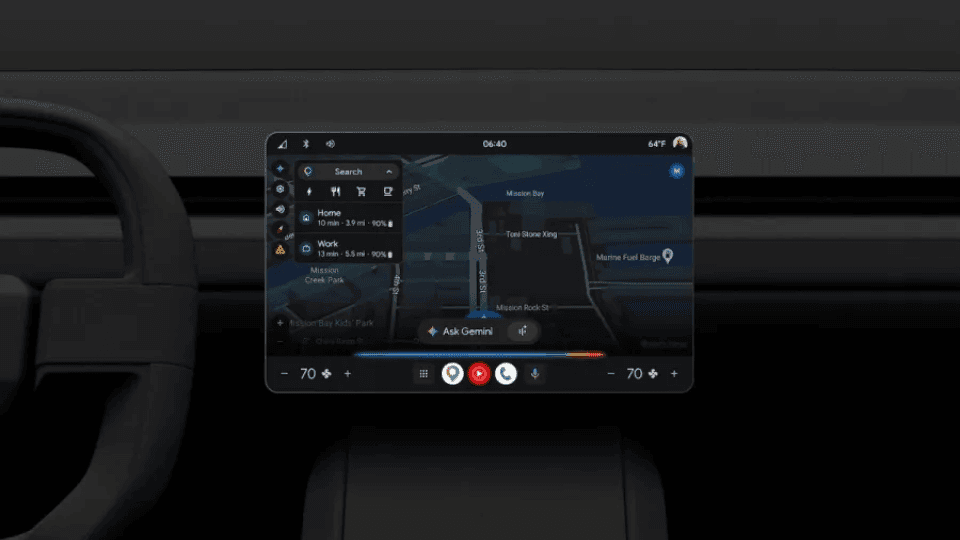
Google rolled out significant upgrades to its Gemini in-car assistant, introducing personalized intelligence features across millions of connected vehicles, trucks, and SUVs. The system pulls data directly from connected Google services like Gmail, Google Calendar, YouTube, Google Maps, and Search history to tailor real-time responses to driver preferences, daily schedules, and past habits. The new […]

Read More6 days ago