Ditching the Monoliths: How Bluesky is Building a New Blueprint for Social Communities
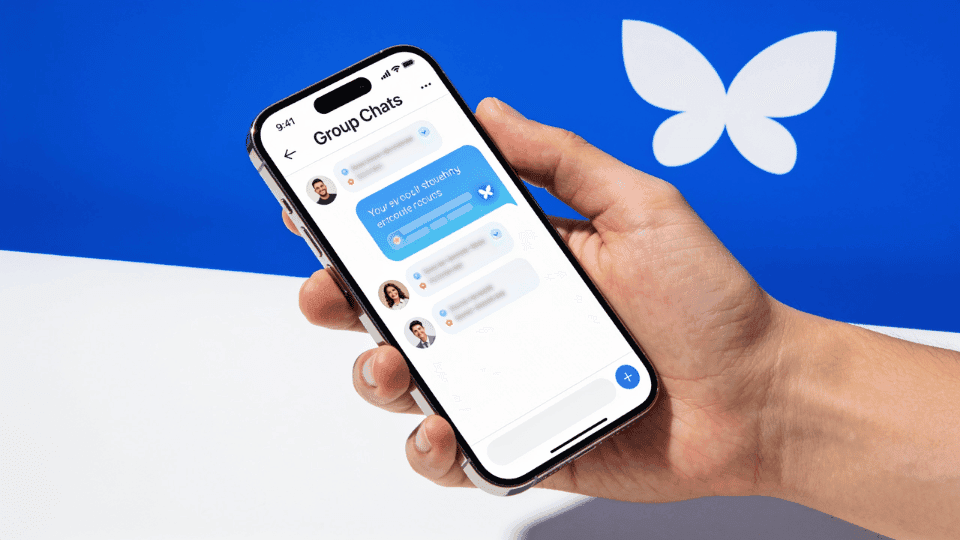
Social network Bluesky just rolled out native support for group chats, marking a major software update as the decentralized platform shifts its focus entirely toward building smaller, intimate community features. This strategic product update allows the application to compete directly with its larger, centralized social media rivals.
The feature lands right as Elon Musk’s X doubles down on its own chat infrastructure, notably launching a standalone companion communication app. Bluesky is playing catch up by offering a safer, more private alternative for users who want to talk away from public feeds. The group chat tool rolls out inside the latest version of the main mobile application. It represents one of the first major steps in Bluesky’s long-term plan to emphasize community hubs rather than acting purely as a broadcast network where individuals post solely to reach a massive, unvetted audience.
This feature launch signals a visible pivot in product strategy, arriving just as Bluesky’s initial explosive user acquisition phase slows down. Today, the network counts roughly forty-five point eight million registered users, which looks tiny when compared to X’s reported six hundred million monthly active users. If Bluesky cannot match the raw scale of legacy systems like X or Meta’s Threads, the engineering team must find alternative ways to make its ecosystem highly attractive to new users. They plan to win by offering completely different, highly customized forms of digital social connection.
The startup added baseline support for direct messaging back in 2024, but it only recently integrated encrypted chats by pulling in third-party encryption protocols. Now, Bluesky is expanding that utility by supporting text groups of up to fifty people. While that capacity limit looks small next to X’s support for one thousand members, it serves as a solid foundation for the platform, and the company plans to scale this capacity limit higher as the underlying architecture matures.
Group creators retain full administrative control over their private spaces. The original creator decides exactly who can join the room, and they can easily generate unique text invite links that members can share across external networks, including public Bluesky posts where the application renders the link as an embedded card. Group participants can also control their own privacy settings, choosing who is allowed to invite them to new chats. The application defaults to an invite restriction model, blocking invitations from everyone unless you explicitly follow them or open your preferences to allow broader invites. Bluesky notes that sharing media inside these group chats is not yet supported because the engineering team is still building the necessary moderation and safety tracking infrastructure.
Alex Benson, head of product at Bluesky, shared that the development team wants to make the application feel like a network of smaller, cozy neighborhood spaces where users can share niche ideas and hang out with people who care about the exact same topics. He explained that the team designed these community features on top of their open-source protocol, ensuring the wider developer ecosystem can build custom tools around them. The timing is excellent for the platform, especially since X announced it was shutting down its old Communities tool due to low engagement and rampant spam. Bluesky is stepping right into that vacant territory, catering directly to users who want absolute control and ownership over their digital environments.
Every custom community on Bluesky secures a unique web URL, allowing group names to double as digital handles. These spaces can operate as open public hubs, invite-only rooms, or completely hidden private spaces, matching the classic structures found on legacy platforms like Facebook Groups or Reddit. By building these open utilities, Bluesky is betting that internet users are searching for an exit ramp from closed platforms managed by big tech corporations, attracting people toward open systems where a single algorithmic change cannot ruin their entire community or block their profile access. Alongside group messaging, the updated software introduces a quick profile sharing tool using custom QR codes, making it simple to link up with friends in the physical world.