Chasing Gigawatts: How Two Starlink Vets Are Weaponizing Solar and Batteries to Fuel the AI Boom
Two prominent SpaceX alumni have a wild proposal for tech hyperscalers, and it has absolutely nothing to do with rockets or deep space. Instead, they are building ground-based clean power plants right here on Earth. Their pitch is incredibly direct: they can deliver dependable, around-the-clock electricity much faster and cheaper than a traditional natural gas plant.
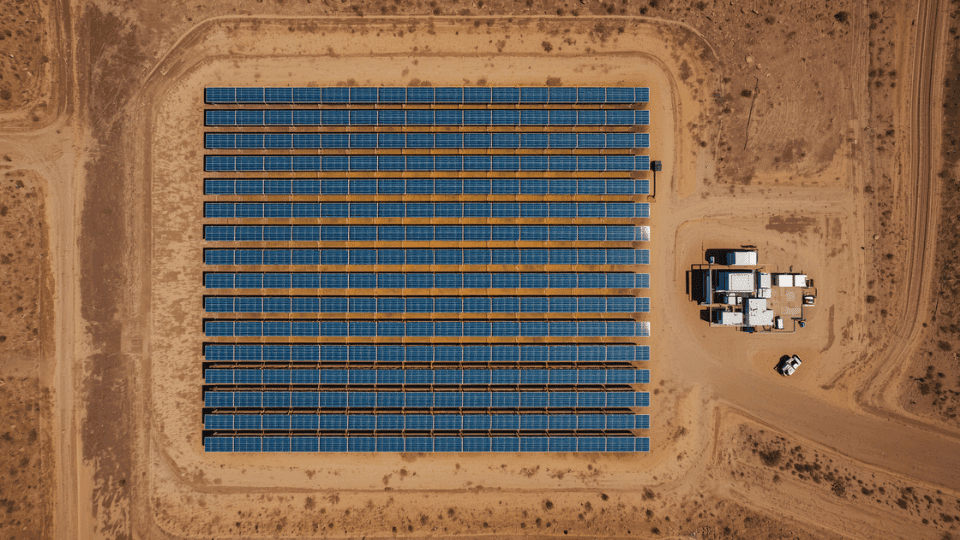
The startup behind this ambitious effort is Ambrosia Energy, a company that operated entirely in stealth mode until this week. Ambrosia did not invent a completely original chemical battery technology. Instead, their system pairs massive grids of standard solar panels with heavy installations of lithium-ion batteries. This setup keeps electricity flowing smoothly to demanding clients day and night, targeting a flat delivery cost of $100 per megawatt-hour.
Sara Spangelo, co-founder and president of Ambrosia Energy, explained that her team can construct a fully functional power plant at literally any scale within twelve months of a client signing a contract. She noted that this timeline covers everything from initial paperwork to turning on the main breakers. The team intends to rapidly scale up operations to deliver multiple gigawatts of clean electricity straight to the grid.
To bring hardware prices down to earth, the startup focused on simplifying the structural design of standard battery packs. Most traditional grid-scale storage systems run through harsh charging and discharging cycles over a short two or four-hour window, which places massive physical strain on the battery cells. Ambrosia uses a slower approach, trickle-charging its battery banks throughout the day as sunlight hits the solar arrays, then slowly releasing that stored power overnight. These engineering adjustments, alongside a handful of structural design choices, cut the total system packaging cost to just 1.5 times the raw price of the individual battery cells, well below the standard pricing trends seen across the clean energy industry.
If Ambrosia successfully scales up its modular construction methods, it could completely disrupt the commercial utility landscape. Right now, building a highly efficient combined-cycle gas turbine plant costs utility companies roughly $107 per megawatt-hour to construct and operate. Even if a tech company has the cash to pay that price, massive global manufacturing backlogs mean they will wait five to seven years just to get the necessary gas turbines delivered. Ambrosia promises to bypass those shipping delays entirely while delivering a power grid that is significantly more reliable than fossil fuels.
Spangelo and her co-founder, CEO Ben Longmier, have plenty of experience managing massive logistics operations. The duo previously built the satellite network startup Swarm before SpaceX acquired the business to help scale its Starlink internet constellation. Before that corporate exit, Spangelo worked at Google, while Longmier spent time at Apple and steered multiple space tech startups.
The founders originally used their own capital to fund early operations at Ambrosia, but the startup recently pulled in a major round of venture funding from DFJ Growth. Spangelo declined to reveal the exact dollar amount of the deal. She noted that the logistical hurdles of launching a massive energy grid mirror the exact challenges they faced while deploying hardware at SpaceX, comparing the process of building physical power plant modules to manufacturing and launching a satellite constellation.
To test its manufacturing model, Ambrosia started building its first test plant in West Texas this past January, just weeks after officially incorporating the business. Longmier reported that the engineering team is already halfway finished with construction on that initial project. The crew turned on several completed sections a few weeks ago, and those early modules are currently operating at full capacity.
The underlying technology uses an infinitely scalable architecture, meaning clients can purchase smaller installations to test out the hardware before committing to massive utility investments. The modular units can link straight to the main public electrical grid or sit directly behind the meter at an independent corporate data center. Longmier noted that Ambrosia has a solid network of land partners, giving them immediate access to roughly a million acres of terrain. That footprint gives them space to build a massive 30-gigawatt solar footprint based on recent land use requirements. The startup plans to start with smaller projects producing 20 to 30 megawatts using off-the-shelf components while they transition toward building custom internal designs. They are also preparing to construct a major manufacturing plant in Austin, Texas, to build massive gigawatt-scale projects by the end of the decade.