XUNA Logo

PRODUCTS

XUNA Voice

XUNA Voice

AI-powered voice calls.

XUNA iMessage & SMS

XUNA iMessage & SMS

Two-way iMessage and SMS outreach.

XUNA Chat

XUNA Chat

AI web chat.

XUNA CRM

XUNA CRM

Automated lead tracking.

XUNA Reviews

XUNA Reviews

Automated review requests.

XUNA Ringless VM

XUNA Ringless VM

Drop voicemails without ringing.

INDUSTRIES

Automotive

Automotive

Solutions for automotive industry.

Hospitality

Hospitality

Solutions for hospitality industry.

Travel

Travel

Solutions for travel industry.

Wellness & Med Spa

Wellness & Med Spa

Solutions for wellness and med spa industry.

Healthcare

Healthcare

Solutions for healthcare industry.

Agencies

Agencies

Solutions for agencies industry.

Insurance

Insurance

Solutions for insurance industry.

eCommerce

eCommerce

Solutions for eCommerce industry.

Every Business

Every Business

Solutions for every business.

INTEGRATIONS
PRICING
WHITE LABEL
PULSE
ENTERPRISE
CONTACT

Status

Loading article...
XUNA
Selected ByNVIDIA Inception ProgramGoogle for StartupsAWS Startups

Headquarters

3701 Midtown DrTampa, FL 33607

Contact

(855) 585-9862hello@xuna.ai

Products

  • Voice
  • iMessage & SMS
  • Chat
  • Ringless VM
  • CRM

Industries

  • Automotive
  • Hospitality
  • Travel
  • Wellness & Med Spa
  • Healthcare
  • Agencies
  • Insurance
  • eCommerce
  • Every Business

Compare

  • ElevenLabs
  • VAPI
  • Retell AI
  • Synthflow
  • Deepgram
  • Vocode
  • Bland AI
  • Play.AI

Resources

  • White Label
  • Pulse
  • Integrations
  • Enterprise
  • Contact
  • Glossary

© 2026 XUNA AI. All rights reserved.

  • Partner Program $
  • Privacy Policy
  • Terms & Conditions
  • System Status
Powering the Grid: Why Global Automakers Are Snapping Up the Battery Storage Market
Trends & Strategy

Powering the Grid: Why Global Automakers Are Snapping Up the Battery Storage Market

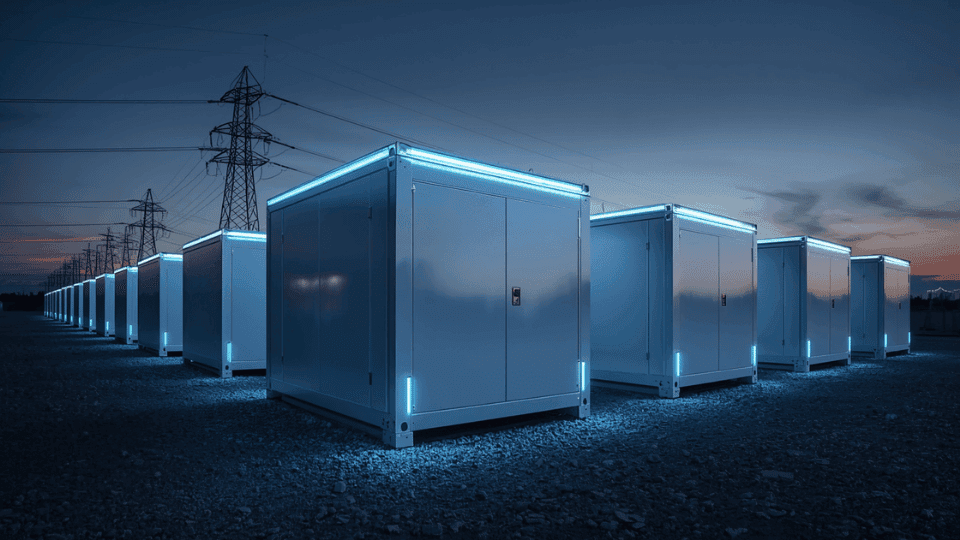
First it was Tesla, then Ford, and now GM. Every major automaker wants a piece of the massive energy storage market. The motivation behind this shift is easy to see. While electric vehicle sales hit a temporary plateau in the United States, sales of massive, stationary utility batteries doubled over the last two years, and this trend shows zero signs of slowing down.

Even with changes to major federal clean energy subsidies, the Solar Energy Industries Association predicts that yearly installations will soon blow past 110 gigawatt-hours by 2030, which is double where the market sits right now. Kurt Kelty, vice president of battery and sustainability at GM, noted that the team sees massive potential in this space. GM has played around with energy storage before, but they just made a major play by rolling out an entirely new sodium-ion battery chemistry aimed straight at the heart of the grid utility market.

This skyrocketing energy storage boom is moving forward thanks to three major factors. The most obvious driver is the aggressive expansion of massive data centers built to handle heavy artificial intelligence processing. Data center energy demand will likely triple by the close of the decade. Alongside that massive tech expansion, huge sections of the broader economy, including traditional shipping fleets, manufacturing plants, and industrial heating and cooling systems, are switching entirely to electric power. Kelty explained that while data centers represent a massive piece of this growth, the broader industrial transition was already moving fast on its own.

Automakers are not the only ones jumping into the grid storage arena. Emerging startups are pulling in massive funding rounds to secure their own piece of the market. Base Power recently closed a $1 billion Series C funding round to expand its grid hardware footprint outside of Texas, while Lunar Energy successfully raised $232 million to sell specialized home battery storage systems directly to property owners. Other players are executing clever strategic pivots, like electric commercial truck brands that now sell heavy mobile battery packs to construction sites and industrial zones that lack permanent electrical hookups.

Right now, Tesla commands the absolute lion’s share of the stationary storage market. Out of the 57 gigawatt-hours of hardware deployed last year, Tesla built 82 percent of those total installations. The company now generates massive recurring revenue from its utility energy division, mostly because of skyrocketing global sales for its industrial Megapack systems and residential Powerwall units. Tesla reports gross profit margins of roughly 30 percent on these energy products, which is double what it earns on actual car sales and three times higher than traditional automotive manufacturing margins. Over the last 15 years, GM has maintained a gross margin of just over 11 percent, showing why the financial allure of grid storage is so powerful.

Despite the massive financial potential, GM is moving carefully rather than rushing its hardware to market. Its first major sodium-ion product will not land on the market until late in the decade. Kelty stated that the company will focus on building a safe, dependable battery architecture that fits the long lifespan requirements of the utility market.

GM believes sodium-ion chemistry is worth the long wait. The raw materials are incredibly cheap, easy to find, and do not require complex liquid cooling setups. These packs can handle significantly more charge and discharge cycles over their lifespan than standard lithium-ion hardware. Furthermore, global supply chains for sodium are far less consolidated. Right now, Chinese companies process almost all of the world’s cobalt, creating a massive bottleneck for traditional EV batteries. Sodium-ion gives automakers a clear path to build domestic supply chain resilience using cheap materials.

GM could have taken a simpler path by packaging its current lithium-ion cells into big metal boxes, similar to what Tesla and Ford currently do. However, the automaker wants to save its current lithium production capacity exclusively for cars, ensuring it can handle a sudden resurgence in electric vehicle demand without building massive new factories from scratch. The company is also working on a separate lithium-manganese-rich chemistry slated for a 2028 debut, which promises to deliver excellent driving range while slashing vehicle manufacturing costs by 10 percent.

For now, sodium-ion will focus entirely on stationary grid storage. While Chinese automakers are starting to put these packs into small commuter cars, the batteries are still too heavy and lack the high energy density needed for long-distance driving. However, they are cheap, safe, and charge incredibly fast, making them an excellent match for stationary power banks. While moving slow brings the risk of missing out on early data center contracts if the current AI infrastructure boom peaks early, GM believes holding out for the best, safest hardware chemistry will pay off over the long haul.


Quick Notes

4 min

Read Time

Trends & Strategy
XUNA
XUNA AI
June 10, 2026
Back to Pulse
Share This Article
XUNA

Effortless Human-Like AI Phone Calls

Build a no-code AI phone system with our AI voice assistants: stop missing calls and start converting more leads.

Get Started With XUNA
Share This Post
Back to Pulse
XUNA PULSE

Related Articles

Betting on the Stars: The Wild Tech Speculation Anchoring the SpaceX IPO
Trends & StrategyXUNA AI

Betting on the Stars: The Wild Tech Speculation Anchoring the SpaceX IPO

SpaceX is sprinting toward its historic public market debut this Friday, and investor appetite has completely overwhelmed the initial $75 billion stock offering. Reports show that massive institutional buyers have already locked down staggering $10 billion investment blocks inside Elon Musk’s empire. This frantic scramble displays an intense mix of profound market confidence and severe […]

Read More1 day ago
Silicon Valley’s New Payroll: The Eye-Popping Cost of Feeding the Token Monster
Trends & StrategyXUNA AI

Silicon Valley’s New Payroll: The Eye-Popping Cost of Feeding the Token Monster

An executive from Nvidia dropped a massive truth bomb recently, stating that the raw cost of computing power has officially blown past the total combined salaries of human employees at several cutting-edge tech firms. To back this up, the CEO of Mercor shared that his startup now spends significantly more money purchasing software tokens for […]

Read More1 day ago
Massive Scale: How Anthropic and TCS Are Forcing Enterprise AI Past the Pilot Phase
Trends & StrategyXUNA AI

Massive Scale: How Anthropic and TCS Are Forcing Enterprise AI Past the Pilot Phase

The race to secure large-scale enterprise distribution channels just hit a massive milestone. Anthropic has locked in a global strategic partnership with Indian IT services titan Tata Consultancy Services to accelerate the deployment of its Claude artificial intelligence models inside major corporations. The agreement establishes a dedicated internal business unit within TCS focused entirely on […]

Read More1 day ago
Chasing Gigawatts: How Two Starlink Vets Are Weaponizing Solar and Batteries to Fuel the AI Boom
Trends & StrategyXUNA AI

Chasing Gigawatts: How Two Starlink Vets Are Weaponizing Solar and Batteries to Fuel the AI Boom

Two prominent SpaceX alumni have a wild proposal for tech hyperscalers, and it has absolutely nothing to do with rockets or deep space. Instead, they are building ground-based clean power plants right here on Earth. Their pitch is incredibly direct: they can deliver dependable, around-the-clock electricity much faster and cheaper than a traditional natural gas […]

Read More2 days ago
Small and Scraping: Why Smart Businesses Are Dumping Heavy AI Models
Trends & StrategyXUNA AI

Small and Scraping: Why Smart Businesses Are Dumping Heavy AI Models

The entire artificial intelligence boom has relied on one foundational belief: bigger models perform better, and the single most powerful model always wins the market. Now, the tech industry is hitting a massive wall where that core belief is starting to fracture. Sprawling hardware and operating bills are forcing engineers and finance departments to look […]

Read More2 days ago
Price Cuts and Data Bumps: How Google is Shifting the Balance in AI Subscriptions
Trends & StrategyXUNA AI

Price Cuts and Data Bumps: How Google is Shifting the Balance in AI Subscriptions

Google just made its budget artificial intelligence tier much friendlier on the wallet, initiating a direct consumer price war in the United States. The tech giant cut the monthly price of its entry-level Google AI Plus subscription from $7.99 down to $4.99. To make the deal even sweeter for everyday shoppers and students, the company […]

Read More2 days ago
Slow and Steady Wins the AI Race: Why Apple’s Calculated Patience is Paying Off
Trends & StrategyXUNA AI

Slow and Steady Wins the AI Race: Why Apple’s Calculated Patience is Paying Off

For years, critics hammered Apple for lagging behind in the artificial intelligence arms race. Skeptics argued that the lack of a clear, aggressive AI strategy would destroy the company’s competitive edge. Wall Street analysts openly worried that this technical gap would soon tank iPhone sales globally. Now, Apple has finally revealed its countermove with Siri […]

Read More3 days ago
Elon Musk Outmuscles Big Tech: Inside Google’s Massive Data Deal
Trends & StrategyXUNA AI

Elon Musk Outmuscles Big Tech: Inside Google’s Massive Data Deal

Google just signed a giant check to rent raw computing power from Elon Musk. According to a fresh regulatory filing, Google will pay SpaceX a staggering $920 million every single month. This massive deal locks in premium access to processing power right before SpaceX launches its historic initial public stock offering. The contract starts running […]

Read More4 days ago