Orbital Compute Powerhouse: SpaceX Super Intelligence Segment Crushes Third-Quarter Revenue Targets
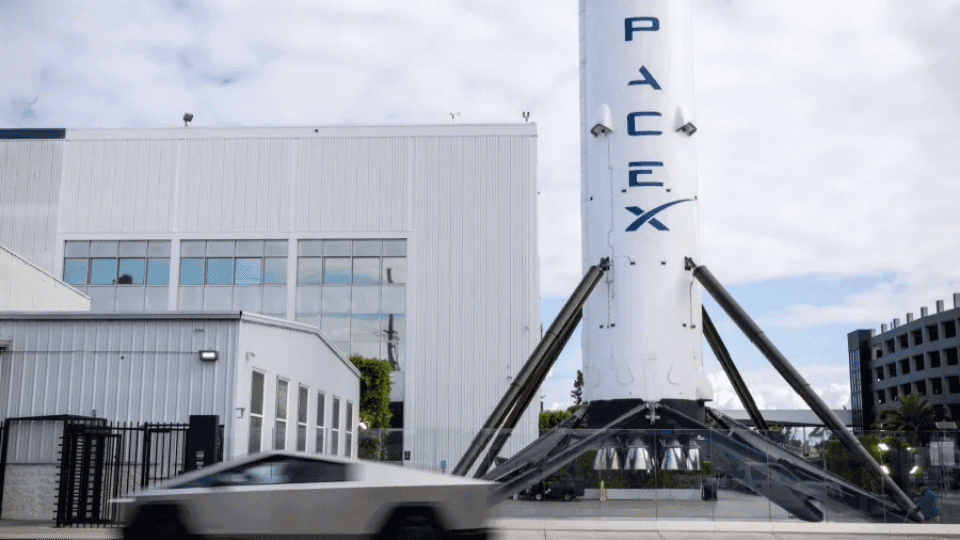
SpaceX reported $14.6 billion in third-quarter revenue, comfortably beating Wall Street expectations as rapid expansion across its newly renamed Super Intelligence division reshaped the aerospace manufacturer into a dominant artificial intelligence hardware provider. Super Intelligence now accounts for 52 percent of total company earnings, officially overtaking satellite connectivity and launch services as SpaceX’s main income source. Total net income reached $4.4 billion for the quarter, marking a complete financial turnaround from the $1.1 billion net loss recorded during the same period last year.
The Super Intelligence division generated $7.6 billion in revenue, up 830 percent year-over-year. Explosive growth stemmed directly from new enterprise cloud service agreements, strong adoption of Grok AI assistant tools, and the recent acquisition of AI coding platform Cursor. Super Intelligence delivered $431 million in net profit, which would have reached significantly higher levels without a one-time $1.2 billion stock compensation charge tied directly to the Cursor deal. Top-line revenue also received a $1 billion boost from rising Bitcoin valuations and non-operating investment returns.
SpaceX balancing massive revenue growth against heavy capital expenditures, spending $19.6 billion during the quarter to scale compute infrastructure and launch operations. Over $16.4 billion went straight into the Super Intelligence segment to fund Colossus II, SpaceX’s massive second-generation data center site. Chief Financial Officer Bret Johnsen stated that SpaceX plans to spend between $35 billion and $40 billion on capital projects in the fourth quarter to expand data center capacity, support next-generation Starlink satellite deployments, and fund heavy-lift Starship manufacturing.
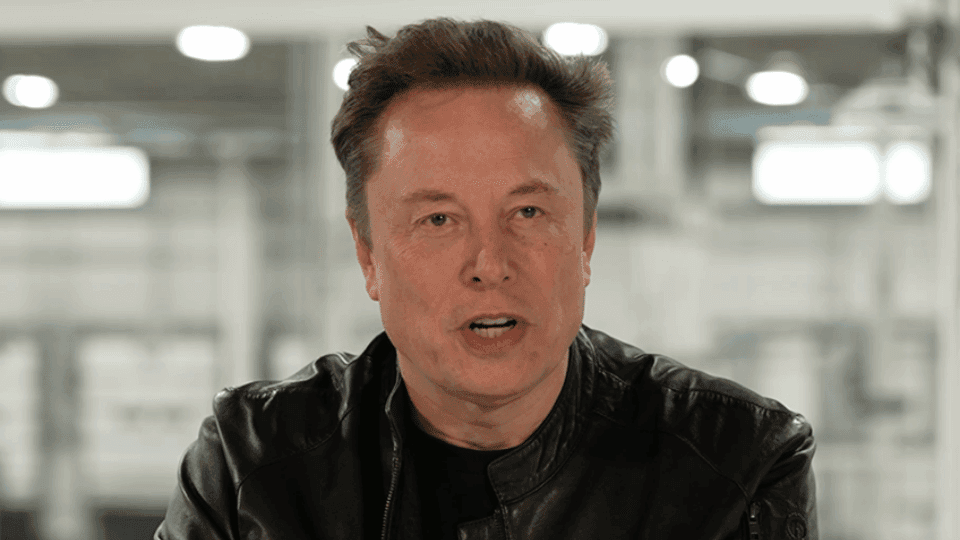
Chief Executive Officer Elon Musk addressed investors during a livestreamed call, explaining that he spent four days a week in Memphis, Tennessee, overseeing physical construction at the Colossus II facility. Musk stressed that power availability and thermal cooling represent the true bottlenecks limiting large-scale AI deployment rather than semiconductor availability. He tasked SpaceX rocket propulsion engineers with solving data center energy hurdles, using aerospace manufacturing capabilities to produce heavy-duty cooling components and power turbines faster than traditional industrial suppliers.
For example, industrial equipment suppliers face 12 to 18-month lead times for high-grade metal turbine blades and pressure valves. SpaceX avoided supply chain delays by using its proprietary metal casting facilities built for Starship engines to produce custom power generation hardware internally. On the launch side, SpaceX prepares for its next Starship test flight in November, aiming to catch both the Super Heavy first-stage booster and the upper stage vehicle using launch tower arms.
SpaceX’s Connectivity segment, anchored by Starlink satellite internet, grew to 13.6 million consumer subscribers, generating $5.25 billion in revenue. Musk noted that expanding AI agent usage increases global demand for high-bandwidth satellite data links, driving continuous consumer adoption. While heavy capital spending resulted in a net loss of $413 million across the first nine months of the year, third-quarter profits put SpaceX on track for full-year profitability. Musk predicted that annual recurring revenue for Super Intelligence will eventually reach between $500 billion and $1 trillion, while Johnsen projected total Q1 2027 revenue between $33 billion and $37 billion.