Radical New Hardware Startup Battles the Trillion Dollar Artificial Intelligence Power Crisis
The global race to build the next massive breakthrough in artificial intelligence has triggered a wild wave of ambitious hardware engineering experiments. One stealthy startup wants to take things to the absolute limit by completely rebuilding basic computer architectures from the ground up.
Led by Naveen Rao, the former head of artificial intelligence at Databricks, a new venture called Unconventional AI aims to make the everyday processing of running smart models significantly more efficient. Their secret technological weapon is a radical new kind of oscillator-based computer design that challenges standard silicon computing concepts.
The company just pulled back the curtain on its very first proof-of-concept model named Un-0. This image generation system serves as the public’s first look at how their physical chips can successfully mimic what traditional machines do. Along with the software reveal, the startup’s research team published an engineering paper detailing how they constructed a fully functional image creator using a complex software simulation of their new hardware. Rao told reporters that this launch represents a basic greeting to the world for a totally new flavor of computer architecture, promising that a wave of fascinating developments will follow over the coming year.
The visual results coming out of the Un-0 system look remarkably similar to what you get from established platforms like Stable Diffusion or OpenAI’s early tools. The truly shocking part of the achievement is how the math inside the system arrives at that high level of quality. The engine relies on an oscillator-based architecture, which functions completely differently than the binary chips powering today’s large language models. While the underlying physics of oscillator computing get incredibly dense, Rao believes this specific setup will drop the power consumption of running neural networks by a massive 1,000 times.
A vast portion of the physical hardware infrastructure needed to deploy this on a global scale does not exist yet. The current iteration of Un-0 operates entirely inside a software simulator designed to mimic the properties of Unconventional AI’s future physical chips. However, the startup plans to release open-source schematics for an actual piece of silicon very soon. From that baseline, the ultimate goal is to construct a complete processing stack from scratch. Unconventional AI wants to eventually offer raw cloud compute power to clients, directly competing with traditional data center giants.
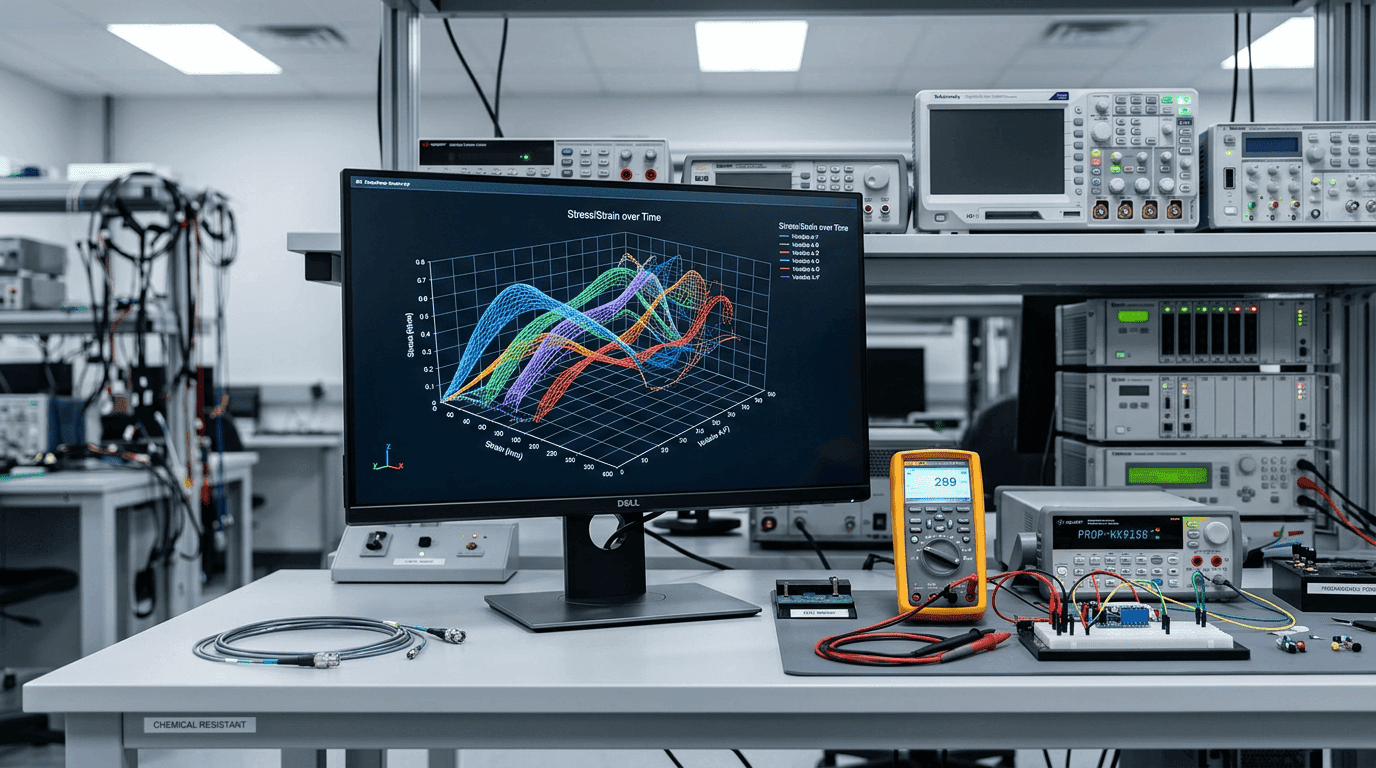
The layout shown in image_d8bb3d.jpg highlights this dramatic shift in how we think about computing variables. Rao explains that his company wants to construct a completely fresh class of server systems built entirely out of their custom oscillator silicon. In his vision, they will operate large clusters where user prompts enter through a network cable and processed answers fly back out, but the entire physical facility will run on a mere fraction of the electricity used by standard operations.
This goal sounds almost impossibly bold for a young firm that currently employs fewer than 50 people. However, considering the sheer scale of modern server farm construction and the terrifying electric bill that comes with it, fixing the energy crisis is the only way to keep technology moving forward. Power limitations will soon become a massive bottleneck for global engineering, making this tiny startup one of the few teams directly tackling the industry’s biggest roadblock.