Built for Designers: Canva Unveils Canva Craft Image Generator to Challenge Silicon Valley Giants
Design software platform Canva released its first in-house image generation model, named Canva Craft, taking on rival media models built by Google, OpenAI, ByteDance, and Meta. Built directly by Canva’s internal research team, the generator uses a specialized two-stage process to turn text prompts into high-resolution visual layouts.
During the first stage, Canva Craft interprets user text prompts to map out a detailed visual plan. The underlying code calculates spatial relationships between objects, balances relative scales, sets a visual hierarchy, and prepares exact positioning data for text elements. In the second stage, the model renders clear, high-definition images up to 2K resolution across 30 different aspect ratios, allowing creators to generate custom graphics tailored for social media feeds, desktop banners, and print assets.
This structured generation method gives creators precise control over final visual outputs. Unlike standard models that alter an entire canvas during minor adjustments, Canva Craft lets users edit specific elements or swap out isolated details without modifying the rest of the image. The model also excels at rendering crisp, legible text inside complex graphics, solving a common flaw found in competing AI generators.
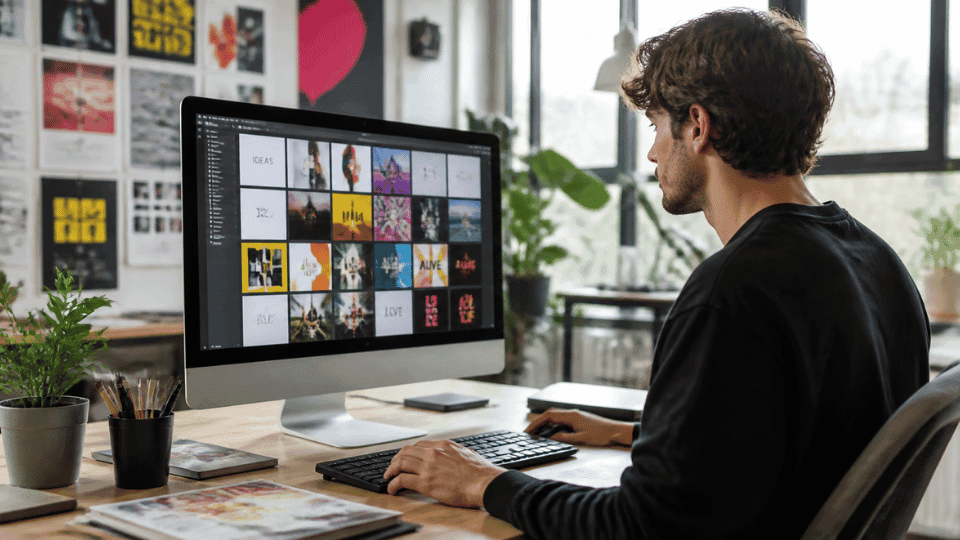
Canva took a unique path when selecting training data. Instead of scraping raw photography across the public web, Canva trained the model on human-designed templates sourced directly from its asset library. Training on structured posters, social posts, corporate presentations, infographics, digital menus, and typography-heavy layouts allows Canva Craft to output clean, layer-ready designs. Users can convert generated pictures into fully editable, layered templates using Canva Magic, the platform’s image-to-design tool built to organize graphic elements into editable components.
Canva Craft is live for all registered users through the Dream Lab tab inside the main editing workspace. Developers can also access the generator through the Canva API. Additionally, Canva plans to support external image generation inside popular conversational assistants like ChatGPT and Gemini by connecting through Canva’s Model Context Protocol (MCP).
Building an in-house image generator helps Canva reduce heavy reliance on third-party API providers. While Canva historically integrated third-party models across its suit of creation tools, deploying native software cuts ongoing operational costs while giving internal engineers direct control over generation speeds and output quality. Researchers from Leonardo.ai, a media generation startup acquired by Canva last year, contributed directly to building Canva Craft.
Canva is also building two faster, lightweight variations of the model called Craftfast and Craft-ultrafast to lower computing overhead. The technical expansion arrives as Canva works to hit $4 billion in annual revenue, even as external financial analysts trimmed the company’s valuation from $42 billion down to $35 billion due to slower growth projections. Launching fast, in-house visual tools ensures that Canva stays competitive across both consumer design markets and enterprise creative teams.