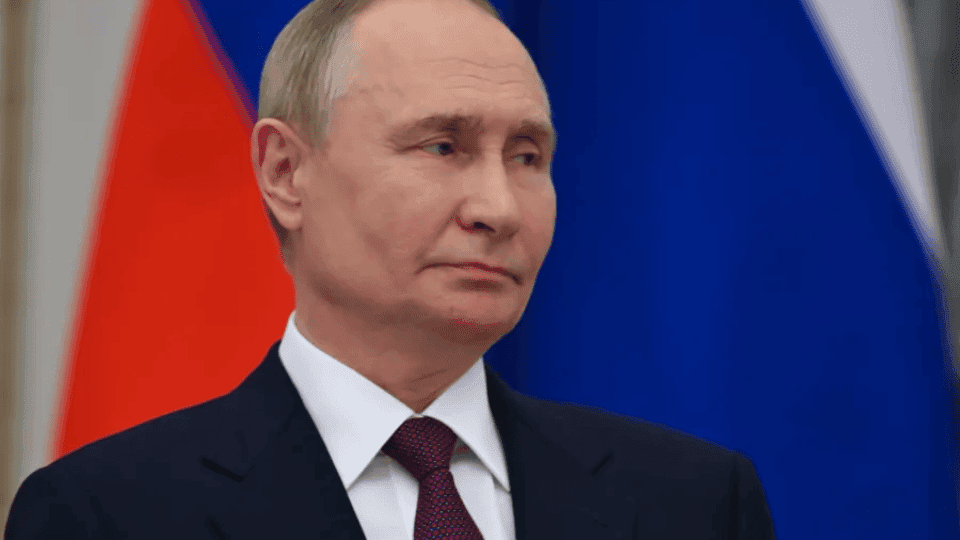
Orbital Power Play: Putin Praises Musk as Russian Satellite Network Seeks Close Alignment
Russian President Vladimir Putin publicly called SpaceX Chief Executive Officer Elon Musk a genius while revealing that Russian officials maintain close contact with him regarding Rassvet, Russia’s domestic satellite internet initiative built to compete directly with Starlink. Speaking at the Russia-Africa Summit, Putin praised Musk’s rapid deployment of over 5,000 active communication satellites in low Earth orbit, admitting that Russia is currently taking its first steps in building out a matching space-based network.
The public acknowledgment of direct communication between Kremlin leadership and Musk carries heavy international geopolitical consequences. Musk has voiced growing frustration with Ukrainian President Volodymyr Zelenskyy as Ukraine continues defending its borders against the ongoing Russian military invasion. Following recent moves by the United States government to ease select economic sanctions on Russia, Ukrainian defense officials expressed deep alarm over the stability of their battlefield communications. Ukrainian military units rely heavily on Starshield, the specialized military variant of SpaceX’s Starlink network, to coordinate real-time defense maneuvers and control automated equipment.
Concerns over satellite service stability proved well-founded during recent military actions. Ukrainian unmanned aerial vehicles experienced widespread connectivity drops over a ten-day period. Investigations by the Wall Street Journal indicated that Musk instructed SpaceX engineers to restrict Starlink signal access across specific operational zones in Ukraine. While alternative reports suggested the restriction order came directly from White House officials, Musk stated publicly on social media that Ukraine violated Starlink platform terms of service by using satellite connections to guide offensive strike drones.
While normal Starlink connectivity eventually resumed across Ukrainian operational zones, Musk highlighted the absolute dependency of front-line units on his private satellite constellation. Musk posted on social media that turning off Starlink completely would cause Ukrainian defensive positions to collapse immediately, framing his statement as a direct observation of battlefield reality rather than an active threat.
The interaction highlights how a single private commercial entity can hold immense influence over international military conflict. Providing low-orbit satellite coverage gives SpaceX control over critical communication infrastructure during wartime scenarios. As Russia pushes forward with its own Rassvet constellation, official Kremlin praise for Musk demonstrates how digital satellite networks have become central to international defense policy, global influence, and modern war tactics.
Developing independent satellite constellations requires massive capital, precise rocket launch cadence, and long-term hardware manufacturing. While SpaceX currently dominates low Earth orbit communications, Russia’s determination to establish Rassvet shows that major global powers intend to control their own physical space infrastructure. Balancing commercial satellite expansion alongside active military support will force global governments to establish clearer rules around private tech networks operating in combat zones.