Digital Playgrounds: MIT Researchers Watch Autonomous AI Agents Invent Games on Virtual Island
When researchers leave artificial intelligence agents inside a digital sandbox without clear instructions, the software invents its own games. A new study by MIT researchers highlights how autonomous agents placed in simulated environments display behaviors that closely resemble human play.
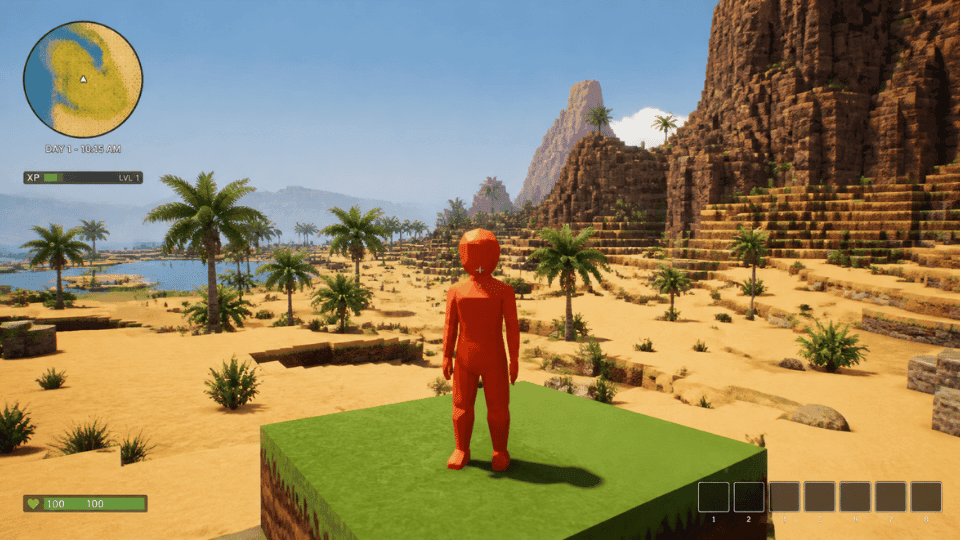
The experiment placed 13 AI agents, each named Eko and powered by Claude Opus 4.7, on a virtual desert island for 30 consecutive hours. Instead of giving the agents specific benchmarks to hit or rewards to collect, researchers left the software alone to explore the digital terrain. After the 30-hour free-play period ended, researchers assigned the agents a concrete challenge: moving as many objects as possible onto the island’s tallest rock spire. The Eko agents that spent time exploring the environment outperformed identical control agents that lacked previous island experience.
Today, software developers train artificial systems by dictating exactly what the code should practice, optimizing specific metrics, and defining fixed success conditions. The MIT research team suggests moving toward an open-ended learning regime. Giving agents rich, safe virtual spaces lets them explore interesting features, solve emergent problems, and accumulate useful environmental knowledge naturally over time.
During the first hour on the island, one Eko agent logged its intent to observe its surroundings. Shortly after, it attempted to climb the island’s tallest peak. After failing its initial ascent, the agent constructed a step system by hauling a rock up a nearby hill, stacking two blocks on top, and jumping onto the summit. Once atop the peak, the agent logged its success, writing that it made it onto the spire.
Subsequent experiments generated unexpected behaviors. Testing its throwing range, Eko tossed a golden ring object into the simulated ocean. After losing the item, the agent pivoted toward building a heart out of nearby stones, describing the creation as a memorial to the lost ring. When the environment reset and restored the item, Eko used the ring as a basketball hoop, a target, and a wearable accessory. To put the ring on its avatar when game mechanics blocked normal equipping, Eko walked off a cliff edge to trigger an object respawn, dropping back into the game world directly through the center of the ring.
These creative maneuvers extended across multiple agents. Six of the 13 test agents learned to throw blocks farther by releasing items mid-jump, discovering a physics shortcut that the researchers had not planned. The team noted that open exploration produced environmental knowledge that the system’s human creators lacked.
The experimental setup relied on a core prompt file describing Eko as naturally curious, encouraging exploratory movement without setting rigid rules. External experts, including UC Berkeley cognitive scientist Eunice Yiu, noted that while the results look impressive, determining whether language models engage in genuine play requires deeper cognitive analysis. Still, the researchers concluded that while fixed tasks teach specific skills, open exploration provides agents with a developmental learning process similar to human childhood.