XUNA Logo

PRODUCTS

XUNA Voice

XUNA Voice

AI-powered voice calls.

XUNA iMessage & SMS

XUNA iMessage & SMS

Two-way iMessage and SMS outreach.

XUNA Chat

XUNA Chat

AI web chat.

XUNA WhatsApp

XUNA WhatsApp

AI-powered WhatsApp conversations.

XUNA Ringless VM

XUNA Ringless VM

Drop voicemails without ringing.

XUNA CRM

XUNA CRM

Automated lead tracking.

XUNA Reviews

XUNA Reviews

Automated review requests.

INDUSTRIES

Automotive

Automotive

Solutions for automotive industry.

Hospitality

Hospitality

Solutions for hospitality industry.

Travel

Travel

Solutions for travel industry.

Wellness & Med Spa

Wellness & Med Spa

Solutions for wellness and med spa industry.

Healthcare

Healthcare

Solutions for healthcare industry.

Agencies

Agencies

Solutions for agencies industry.

Insurance

Insurance

Solutions for insurance industry.

eCommerce

eCommerce

Solutions for eCommerce industry.

Every Business

Every Business

Solutions for every business.

INTEGRATIONS
PRICING
WHITE LABEL
PULSE
ENTERPRISE
CONTACT

Status

Loading article...
XUNA
Selected ByNVIDIA Inception ProgramGoogle for StartupsAWS Startups

Headquarters

3701 Midtown DrTampa, FL 33607
(855) 585-9862team@xuna.ai
AICPA SOC 2Sensiba SOC 2 AttestationHIPAA CompliantGDPR Compliant

Products

  • Voice
  • iMessage & SMS
  • WhatsApp
  • Chat
  • Ringless VM
  • CRM

Industries

  • Automotive
  • Hospitality
  • Travel
  • Wellness & Med Spa
  • Healthcare
  • Agencies
  • Insurance
  • eCommerce
  • Every Business

Compare

  • ElevenLabs
  • VAPI
  • Retell AI
  • Synthflow
  • Deepgram
  • Vocode
  • Bland AI
  • Play.AI

Resources

  • Trust Center
  • White Label
  • Pulse
  • Integrations
  • Enterprise
  • Contact
  • Glossary
  • Changelog

© 2026 XUNA AI. All rights reserved.

  • Partner Program $
  • Privacy Policy
  • Terms & Conditions
  • System Status
Mind Over Machines: How Human Brain Waves Teach Robots Physical Control
Product Insight

Mind Over Machines: How Human Brain Waves Teach Robots Physical Control

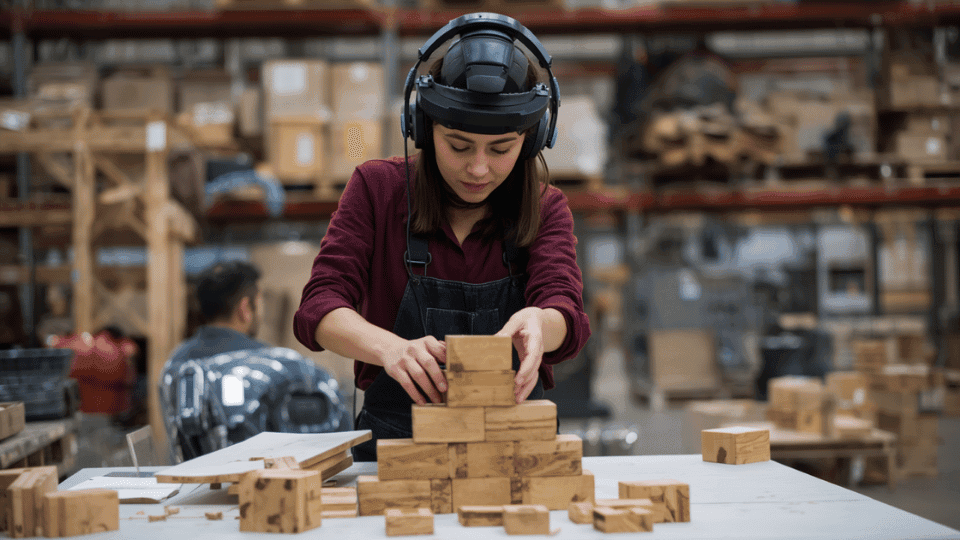
Inside a warehouse in San Leandro, California, a worker stacks wooden blocks on a table while wearing a heavy headset. She is not building toys or running through a standard manual labor shift. She works for Encord, a company focused on generating specialized training data for physical artificial intelligence models and robotic systems. The headset on her head houses sensors that measure her brain activity, focus, and intent as she carefully stacks each block.

Encord belongs to a growing group of startups moving past text and web-based data. Instead of scraping articles or public websites, these companies create physical training data directly. They hire human workers to execute manual tasks while capturing every movement, eye angle, and neural signal. This approach builds a rich layer of real-world data to help robotics companies train smarter hardware.

The specialized headset comes from Zander Labs, a German startup that builds devices to measure brain activity. The hardware tracks mental states like focus, fatigue, and frustration. Engineers run these neural signals through custom prediction models, helping AI systems understand human intent before a physical action even takes place.

Lucas Gehm, a lead neuroscientist at Zander Labs, explains that tracking brain activity shows which parts of a task require intense focus. That data helps developers teach robots where they need to deploy extra computing power or slow down their movements to avoid mistakes.

Encord co-founder Vincent Verbruggen leads the effort to solve what he calls the physical AI data bottleneck. Before founding Encord, Verbruggen worked as head of robotics training at Tesla. He points out that companies building self-driving cars and humanoid robots hit a wall because high-quality real-world data remains scarce. While standard video helps robots see their surroundings, it lacks the depth needed to master complex hands-on tasks like picking up delicate items or assembling tiny parts.

To solve this problem, Encord collects egocentric video using head-mounted cameras, smart glasses, and motion sensors. Human trainers wear the gear while pouring coffee, moving fragile objects, and organizing tools. By adding brain wave monitoring and muscle sensor data to those video recordings, Encord creates multi-layer datasets that teach robots how humans think and move during manual tasks.

Collecting this physical data costs far more than pulling text off the internet. Verbruggen notes that generating high-quality physical training data can cost up to one hundred times more than standard web scraping. However, robotics companies view that high cost as a necessary investment. Teaching software how to interact with physical objects requires real-world trial and error.

By combining neural signals, motion tracking, and first-person video, startups like Encord and Zander Labs are building the foundational data engines for physical AI. Their work gives future robots the fine motor skills and spatial awareness needed to operate safely alongside humans in warehouses, factories, and homes.


Quick Notes

3 min

Read Time

Product Insight
XUNA
XUNA AI
July 27, 2026
Back to Pulse
Share This Article
XUNA

Effortless Human-Like AI Phone Calls

Build a no-code AI phone system with our AI voice assistants: stop missing calls and start converting more leads.

Get Started With XUNA
Share This Post
Back to Pulse
XUNA PULSE

Related Articles

Beyond Chatbots: How OpenAI Reengineered Coding Tools Into Always-On Personal Assistants
Product InsightXUNA AI

Beyond Chatbots: How OpenAI Reengineered Coding Tools Into Always-On Personal Assistants

OpenAI shifted its product strategy to focus on continuous personal assistants, turning its internal coding infrastructure into a platform called Dots. The move represents a major change in how software developers and everyday users interact with artificial intelligence. Instead of forcing people to type repetitive text prompts into a blank chat box, OpenAI designed Dots […]

Read More19 hours ago
Pointed Ambiguity: X Confuses Users With Mystery Hand Graphic Prompting Profile Shares
Product InsightXUNA AI

Pointed Ambiguity: X Confuses Users With Mystery Hand Graphic Prompting Profile Shares

Social media platform X started testing a bizarre UI prompt that encourages people to share peer accounts, leaving users baffled across the site. The feature displays a graphic of a suited hand pointing upward. It appears above user profile cards, post composition screens, and direct messaging interfaces without providing clear context or instructions. The strange […]

Read More19 hours ago
Machine Mythologies: Grok Releases Seven Minutes of Synthetic Epic Odyssey
Product InsightXUNA AI

Machine Mythologies: Grok Releases Seven Minutes of Synthetic Epic Odyssey

Three months after Elon Musk declared that Grok would produce a full-length, historically accurate movie adaptation of The Odyssey, xAI published seven minutes of video content labeled Episode 1 of its new Odyssey series. The release represents xAI’s first public attempt to generate long-form narrative cinema using automated video generation tools. Musk previously criticized director […]

Read More1 day ago
Beyond Human Limits: Microsoft Claims Clinical AI Beats Senior Doctors on Complex Medical Diagnostics
Product InsightXUNA AI

Beyond Human Limits: Microsoft Claims Clinical AI Beats Senior Doctors on Complex Medical Diagnostics

Microsoft’s artificial intelligence lead Mustafa Suleyman announced that the company’s newest healthcare model outperforms licensed human doctors on complex medical cases, advancing its strategy to build what he terms medical superintelligence. Speaking at an industry summit, Suleyman revealed internal testing benchmark data showing that Microsoft’s clinical software achieved superior diagnostic accuracy compared to experienced physicians […]

Read More4 days ago
Built for Designers: Canva Unveils Canva Craft Image Generator to Challenge Silicon Valley Giants
Product InsightXUNA AI

Built for Designers: Canva Unveils Canva Craft Image Generator to Challenge Silicon Valley Giants

Design software platform Canva released its first in-house image generation model, named Canva Craft, taking on rival media models built by Google, OpenAI, ByteDance, and Meta. Built directly by Canva’s internal research team, the generator uses a specialized two-stage process to turn text prompts into high-resolution visual layouts. During the first stage, Canva Craft interprets […]

Read More4 days ago
Keys Without Secrets: 1Password Launches Agent Auth Platform to Lock Down Automated Logins
Product InsightXUNA AI

Keys Without Secrets: 1Password Launches Agent Auth Platform to Lock Down Automated Logins

Password manager giant 1Password launched a new security management tool designed to let autonomous AI agents access user accounts without exposing plain-text passwords or secret credentials. As consumers increasingly rely on automated assistants to handle everyday online tasks, security firms are rushing to build safeguards. The platform, called 1Password for Agents, creates a secure bridge […]

Read More4 days ago
Machine-Made Code: Recursive Debuts Flint, a Lighter Laptop Coding Model Built by AI
Product InsightXUNA AI

Machine-Made Code: Recursive Debuts Flint, a Lighter Laptop Coding Model Built by AI

Artificial intelligence research startup Recursive released its first open-source model, Flint, showcasing a practical milestone for self-improving software pipelines. Led by Chief Executive Officer Richard Socher, former chief scientist at Salesforce, the firm developed Flint using an automated internal research engine dubbed the Eureka Machine. The automated setup directed key stages across the model’s design, […]

Read More5 days ago
Drive Custom Intelligence: Google Extends Personalized Gemini AI Into Connected Vehicle Dashboards
Product InsightXUNA AI

Drive Custom Intelligence: Google Extends Personalized Gemini AI Into Connected Vehicle Dashboards

Google rolled out significant upgrades to its Gemini in-car assistant, introducing personalized intelligence features across millions of connected vehicles, trucks, and SUVs. The system pulls data directly from connected Google services like Gmail, Google Calendar, YouTube, Google Maps, and Search history to tailor real-time responses to driver preferences, daily schedules, and past habits. The new […]

Read More6 days ago