XUNA Logo

PRODUCTS

XUNA Voice

XUNA Voice

AI-powered voice calls.

XUNA iMessage & SMS

XUNA iMessage & SMS

Two-way iMessage and SMS outreach.

XUNA Chat

XUNA Chat

AI web chat.

XUNA WhatsApp

XUNA WhatsApp

AI-powered WhatsApp conversations.

XUNA Ringless VM

XUNA Ringless VM

Drop voicemails without ringing.

XUNA CRM

XUNA CRM

Automated lead tracking.

XUNA Reviews

XUNA Reviews

Automated review requests.

INDUSTRIES

Automotive

Automotive

Solutions for automotive industry.

Hospitality

Hospitality

Solutions for hospitality industry.

Travel

Travel

Solutions for travel industry.

Wellness & Med Spa

Wellness & Med Spa

Solutions for wellness and med spa industry.

Healthcare

Healthcare

Solutions for healthcare industry.

Agencies

Agencies

Solutions for agencies industry.

Insurance

Insurance

Solutions for insurance industry.

eCommerce

eCommerce

Solutions for eCommerce industry.

Every Business

Every Business

Solutions for every business.

INTEGRATIONS
PRICING
WHITE LABEL
PULSE
ENTERPRISE
CONTACT

Status

Loading article...
XUNA
Selected ByNVIDIA Inception ProgramGoogle for StartupsAWS Startups

Headquarters

3701 Midtown DrTampa, FL 33607
(855) 585-9862team@xuna.ai
AICPA SOC 2Sensiba SOC 2 AttestationHIPAA CompliantGDPR Compliant

Products

  • Voice
  • iMessage & SMS
  • WhatsApp
  • Chat
  • Ringless VM
  • CRM

Industries

  • Automotive
  • Hospitality
  • Travel
  • Wellness & Med Spa
  • Healthcare
  • Agencies
  • Insurance
  • eCommerce
  • Every Business

Compare

  • ElevenLabs
  • VAPI
  • Retell AI
  • Synthflow
  • Deepgram
  • Vocode
  • Bland AI
  • Play.AI

Resources

  • Trust Center
  • White Label
  • Pulse
  • Integrations
  • Enterprise
  • Contact
  • Glossary
  • Changelog

© 2026 XUNA AI. All rights reserved.

  • Partner Program $
  • Privacy Policy
  • Terms & Conditions
  • System Status
Open Source Overhaul: Meet the Essential Libraries Powering Modern Machine Learning
Product Insight

Open Source Overhaul: Meet the Essential Libraries Powering Modern Machine Learning

The rapid rise of artificial intelligence often centers on massive, flashy language models that dominate regular news headlines. However, software engineering teams know that the real magic happens deep down in the foundational source code. Behind every chat bot, image generator, and automated database sits a network of open-source software libraries that do the heavy lifting. These community-built tools provide the mathematical equations, data sorting pipelines, and hardware connections that make modern automation possible.

To understand how software teams build intelligent applications, you have to look closely at the primary layers of the development stack. At the very base of this system sits raw math. Early programming required writing long, complex loops just to multiply columns of numbers. Today, foundational libraries handle that math instantly, allowing developers to manipulate massive data tables with a single line of code. These tools optimize how a computer uses its short-term memory, ensuring that hardware can process millions of data points without crashing.

Once a developer handles the basic numbers, they face the massive challenge of managing data structures. Artificial intelligence models are incredibly hungry for clean information. They require a steady stream of text logs, digital images, or audio files to learn new tasks. Specialized data-processing libraries act as automated factory lines, cleaning up messy files, filling in missing database entries, and translating raw human text into a structured format that a computer can read. Without these background data layers, engineers would spend all their time cleaning up spreadsheets instead of designing smart automation workflows.

The next critical layer in the stack handles neural network architecture. This is where software mimics the human brain. Instead of writing rigid, step-by-step instructions, developers use open-source frameworks to build layered digital nodes that can spot patterns on their own. For instance, if you want to teach a system to recognize a smartphone in a photo, these libraries provide pre-built training loops. They pass thousands of images through the digital network, automatically adjusting internal mathematical weights until the program can spot the device accurately.

The image layout in file image_de6a9c.jpg showcases a classic collaborative dynamic, featuring a silhouette of a professional team analyzing strategies on a whiteboard. This collective effort mirrors how the open-source community maintains these libraries. Thousands of independent software engineers constantly review the core code, patching dangerous security bugs, adding fresh features, and optimization scripts for the latest graphics cards. This shared development model prevents single tech conglomerates from monopolizing the industry.

By relying on these public, community-maintained frameworks, a single developer working from a home desk can build software that matches the capability of tools engineered by massive tech corporations. You do not need a multi-million dollar research budget to deploy automated systems anymore. You simply need to pull down the correct open-source libraries, hook them up to your local database, and configure the training parameters. As the open-source community continues to refine these foundational tools, the barrier to entering the programming field will keep dropping, making advanced automation accessible to everyone.


Quick Notes

3 min

Read Time

Product Insight
XUNA
XUNA AI
July 6, 2026
Back to Pulse
Share This Article
XUNA

Effortless Human-Like AI Phone Calls

Build a no-code AI phone system with our AI voice assistants: stop missing calls and start converting more leads.

Get Started With XUNA
Share This Post
Back to Pulse
XUNA PULSE

Related Articles

Beyond Chatbots: How OpenAI Reengineered Coding Tools Into Always-On Personal Assistants
Product InsightXUNA AI

Beyond Chatbots: How OpenAI Reengineered Coding Tools Into Always-On Personal Assistants

OpenAI shifted its product strategy to focus on continuous personal assistants, turning its internal coding infrastructure into a platform called Dots. The move represents a major change in how software developers and everyday users interact with artificial intelligence. Instead of forcing people to type repetitive text prompts into a blank chat box, OpenAI designed Dots […]

Read More19 hours ago
Pointed Ambiguity: X Confuses Users With Mystery Hand Graphic Prompting Profile Shares
Product InsightXUNA AI

Pointed Ambiguity: X Confuses Users With Mystery Hand Graphic Prompting Profile Shares

Social media platform X started testing a bizarre UI prompt that encourages people to share peer accounts, leaving users baffled across the site. The feature displays a graphic of a suited hand pointing upward. It appears above user profile cards, post composition screens, and direct messaging interfaces without providing clear context or instructions. The strange […]

Read More19 hours ago
Machine Mythologies: Grok Releases Seven Minutes of Synthetic Epic Odyssey
Product InsightXUNA AI

Machine Mythologies: Grok Releases Seven Minutes of Synthetic Epic Odyssey

Three months after Elon Musk declared that Grok would produce a full-length, historically accurate movie adaptation of The Odyssey, xAI published seven minutes of video content labeled Episode 1 of its new Odyssey series. The release represents xAI’s first public attempt to generate long-form narrative cinema using automated video generation tools. Musk previously criticized director […]

Read More1 day ago
Beyond Human Limits: Microsoft Claims Clinical AI Beats Senior Doctors on Complex Medical Diagnostics
Product InsightXUNA AI

Beyond Human Limits: Microsoft Claims Clinical AI Beats Senior Doctors on Complex Medical Diagnostics

Microsoft’s artificial intelligence lead Mustafa Suleyman announced that the company’s newest healthcare model outperforms licensed human doctors on complex medical cases, advancing its strategy to build what he terms medical superintelligence. Speaking at an industry summit, Suleyman revealed internal testing benchmark data showing that Microsoft’s clinical software achieved superior diagnostic accuracy compared to experienced physicians […]

Read More4 days ago
Built for Designers: Canva Unveils Canva Craft Image Generator to Challenge Silicon Valley Giants
Product InsightXUNA AI

Built for Designers: Canva Unveils Canva Craft Image Generator to Challenge Silicon Valley Giants

Design software platform Canva released its first in-house image generation model, named Canva Craft, taking on rival media models built by Google, OpenAI, ByteDance, and Meta. Built directly by Canva’s internal research team, the generator uses a specialized two-stage process to turn text prompts into high-resolution visual layouts. During the first stage, Canva Craft interprets […]

Read More4 days ago
Keys Without Secrets: 1Password Launches Agent Auth Platform to Lock Down Automated Logins
Product InsightXUNA AI

Keys Without Secrets: 1Password Launches Agent Auth Platform to Lock Down Automated Logins

Password manager giant 1Password launched a new security management tool designed to let autonomous AI agents access user accounts without exposing plain-text passwords or secret credentials. As consumers increasingly rely on automated assistants to handle everyday online tasks, security firms are rushing to build safeguards. The platform, called 1Password for Agents, creates a secure bridge […]

Read More4 days ago
Machine-Made Code: Recursive Debuts Flint, a Lighter Laptop Coding Model Built by AI
Product InsightXUNA AI

Machine-Made Code: Recursive Debuts Flint, a Lighter Laptop Coding Model Built by AI

Artificial intelligence research startup Recursive released its first open-source model, Flint, showcasing a practical milestone for self-improving software pipelines. Led by Chief Executive Officer Richard Socher, former chief scientist at Salesforce, the firm developed Flint using an automated internal research engine dubbed the Eureka Machine. The automated setup directed key stages across the model’s design, […]

Read More5 days ago
Drive Custom Intelligence: Google Extends Personalized Gemini AI Into Connected Vehicle Dashboards
Product InsightXUNA AI

Drive Custom Intelligence: Google Extends Personalized Gemini AI Into Connected Vehicle Dashboards

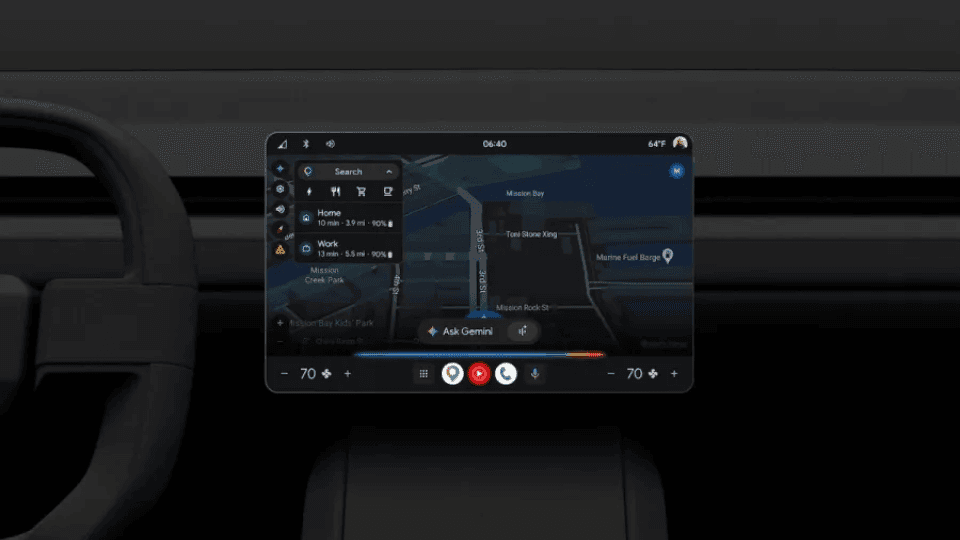
Google rolled out significant upgrades to its Gemini in-car assistant, introducing personalized intelligence features across millions of connected vehicles, trucks, and SUVs. The system pulls data directly from connected Google services like Gmail, Google Calendar, YouTube, Google Maps, and Search history to tailor real-time responses to driver preferences, daily schedules, and past habits. The new […]

Read More6 days ago