Rapid Reprogramming: Industrial Next Powers Robots to Shift Factory Tasks in Minutes Instead of Weeks
Industrial robotics startup Industrial Next launched a software platform that slashes robot retooling times across manufacturing assembly lines from weeks to mere minutes. Founded by former Tesla engineering leaders Lukas Fickinger and Allen Pan, the company aims to eliminate rigid, expensive programming cycles that hold back factory automation. Competing as part of the TechCrunch Startup Battlefield 200, Industrial Next raised $12 million in early funding backed by BMW i Ventures, General Catalyst, and Toyota Ventures to scale its software platform across high-volume production facilities.
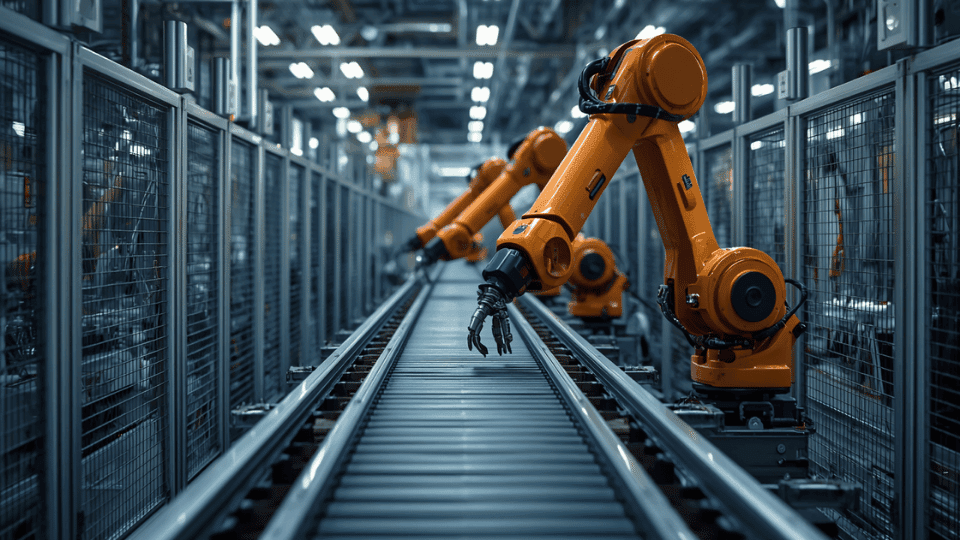
Traditional manufacturing plants rely heavily on hard-coded robotic arms designed to perform identical physical tasks continuously. Changing a production line to handle a new product variant, updated circuit board layout, or modified part geometry requires stopping factory lines, writing custom code, and manually calibrating hardware sensors. This slow programming process stalls factory floors for weeks, costing manufacturers millions of dollars in downtime, lost output, and specialized engineering labor.
Industrial Next solves this manufacturing bottleneck by building computer vision models and adaptive spatial algorithms directly into factory robotic arms. Instead of relying on rigid motion paths, the software enables industrial robots to inspect incoming components, detect positional offsets, and adjust physical movements in real time. Assembly lines can switch between different product builds on the fly, allowing workers to swap production tasks on a central dashboard in minutes without rewriting core software code.
Fickinger and Pan built the platform after spending years running production lines at Tesla’s Gigafactory operations in Shanghai and Austin. During model ramp-ups, rigid robotic programming constantly created line stoppages, requiring engineers to re-engineer hardware setups manually. They realized that giving industrial robots real-time spatial awareness and self-correcting vision algorithms would allow assembly lines to adapt automatically to manufacturing variations, reducing expensive factory delays.
Deploying adaptive vision software allows manufacturers to run flexible, high-mix production lines efficiently. Traditional assembly plants require separate, dedicated hardware lines for each individual product variant. With Industrial Next’s software installed, a single robotic work cell can assemble multiple circuit board models, handle mixed electronics parts, and adjust to physical component tolerances automatically. The system records operational data continuously, tracking visual quality and assembly speed to improve performance over time.
Securing backing from major automotive venture arms highlights an industry-wide demand for flexible factory automation. As electric vehicle production, consumer electronics manufacturing, and battery assembly require rapid product updates, manufacturers must adapt assembly lines quickly. Industrial Next provides the software foundation needed to make factory hardware flexible, helping manufacturing teams reduce downtime, lower retooling expenses, and speed up product launches.