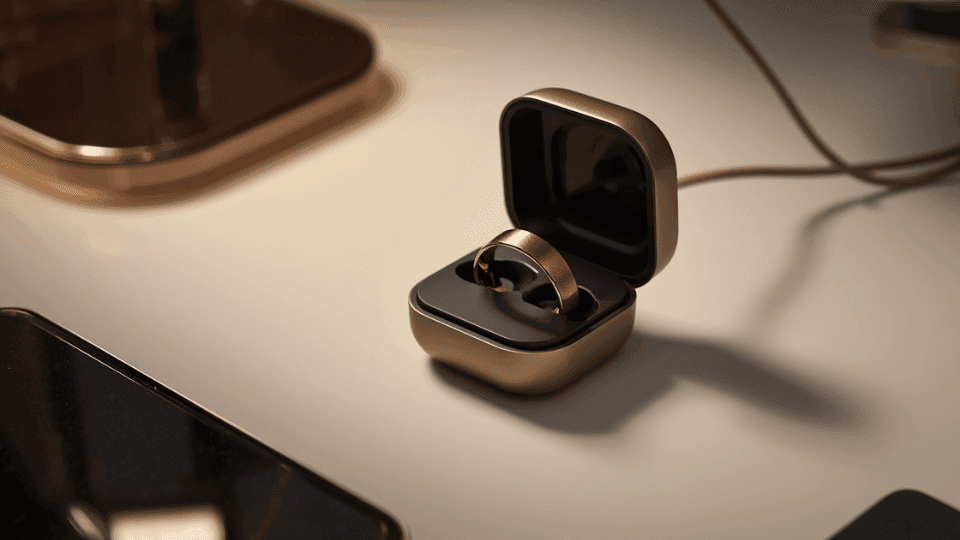
Ring Intelligence: Qualcomm Backs Ultrahuman in $70 Million Push to Turn Wearables Into Computers
Ultrahuman, an Indian health technology startup known for making smart rings, raised $70 million in a fresh funding round to turn health tracking hardware into powerful standalone computing devices. The financing values the Bengaluru-based company at $365 million, up threefold from its valuation in 2023.
Qualcomm Ventures led the new investment alongside participation from Labcorp, Alpha Wave, Nexus Venture Partners, Blume Ventures, and Alteria Capital. The funding combines $65 million in primary equity with $5 million in debt financing.
Ultrahuman is collaborating with Qualcomm to put custom processor chips inside its next-generation smart ring hardware. Adding faster on-device processing power allows the ring to process algorithms directly on the hardware instead of relying on a paired smartphone connection to handle basic code execution.
Mohit Kumar, founder and chief executive officer of Ultrahuman, explained that current smart rings on the market function mainly as basic data collectors that measure pulse rates, movement steps, and sleep cycles. Kumar wants to turn the ring into an actual wearable computer that runs applications, software models, and custom algorithms right on the device.
This extra processing power opens up new use cases for smart rings beyond tracking basic fitness metrics. Kumar noted that future software updates will let users run custom applications directly from the ring, turning the hardware into a gesture controller, car key, or interactive interface for paired digital devices.
Quinn Li, global head of Qualcomm Ventures, praised the vision, stating that personal artificial intelligence devices must operate continuously in the background to deliver effortless personalized insights.
While next-generation hardware remains in development, Ultrahuman plans to release new software features for current ring owners. The company announced plans to roll out its UltraSignal tool, an app platform allowing ring owners to install third-party applications on existing models. Existing rings will soon function as basic gesture controllers, letting users tap or gesture to control slides, presentations, and digital media.
Using a ring as a gesture interface makes sense because users wear the device on their fingers constantly. Unlike smartwatches that require looking down at a small screen, a smart ring sits on a natural touchpoint, capturing motion data, hand gestures, micro-movements, and skin contact without drawing visual attention.
Beside hardware development, Ultrahuman operates a growing consumer health business. The company runs at an annual revenue run rate of $140 million and targets reaching $200 million by January 2027. The startup reported selling over 600,000 rings, up from 100,000 sales recorded last year.
The company faced hurdles in the competitive smart ring market, including past legal disputes with rival manufacturer Oura over patent claims that briefly blocked sales in the United States. Ultrahuman shifted focus to expand its presence across India, Europe, and the Middle East while continuing to build out offline retail stores and clinical research partnerships.
Packing faster processors into tiny ring bodies gives developers a fresh hardware platform to build on. As miniaturized chips become more efficient, wearable smart rings will evolve from simple step trackers into silent control interfaces for everyday digital devices.