XUNA Logo

PRODUCTS

XUNA Voice

XUNA Voice

AI-powered voice calls.

XUNA iMessage & SMS

XUNA iMessage & SMS

Two-way iMessage and SMS outreach.

XUNA Chat

XUNA Chat

AI web chat.

XUNA WhatsApp

XUNA WhatsApp

AI-powered WhatsApp conversations.

XUNA Ringless VM

XUNA Ringless VM

Drop voicemails without ringing.

XUNA CRM

XUNA CRM

Automated lead tracking.

XUNA Reviews

XUNA Reviews

Automated review requests.

INDUSTRIES

Automotive

Automotive

Solutions for automotive industry.

Hospitality

Hospitality

Solutions for hospitality industry.

Travel

Travel

Solutions for travel industry.

Wellness & Med Spa

Wellness & Med Spa

Solutions for wellness and med spa industry.

Healthcare

Healthcare

Solutions for healthcare industry.

Agencies

Agencies

Solutions for agencies industry.

Insurance

Insurance

Solutions for insurance industry.

eCommerce

eCommerce

Solutions for eCommerce industry.

Every Business

Every Business

Solutions for every business.

INTEGRATIONS
PRICING
WHITE LABEL
PULSE
ENTERPRISE
CONTACT

Status

Loading article...
XUNA
Selected ByNVIDIA Inception ProgramGoogle for StartupsAWS Startups

Headquarters

3701 Midtown DrTampa, FL 33607
(855) 585-9862team@xuna.ai
AICPA SOC 2Sensiba SOC 2 AttestationHIPAA CompliantGDPR Compliant

Products

  • Voice
  • iMessage & SMS
  • WhatsApp
  • Chat
  • Ringless VM
  • CRM

Industries

  • Automotive
  • Hospitality
  • Travel
  • Wellness & Med Spa
  • Healthcare
  • Agencies
  • Insurance
  • eCommerce
  • Every Business

Compare

  • ElevenLabs
  • VAPI
  • Retell AI
  • Synthflow
  • Deepgram
  • Vocode
  • Bland AI
  • Play.AI

Resources

  • Trust Center
  • White Label
  • Pulse
  • Integrations
  • Enterprise
  • Contact
  • Glossary
  • Changelog

© 2026 XUNA AI. All rights reserved.

  • Partner Program $
  • Privacy Policy
  • Terms & Conditions
  • System Status
Scale Dominance: How China Beats US Trade Barriers in the Global Robotics Race
News

Scale Dominance: How China Beats US Trade Barriers in the Global Robotics Race

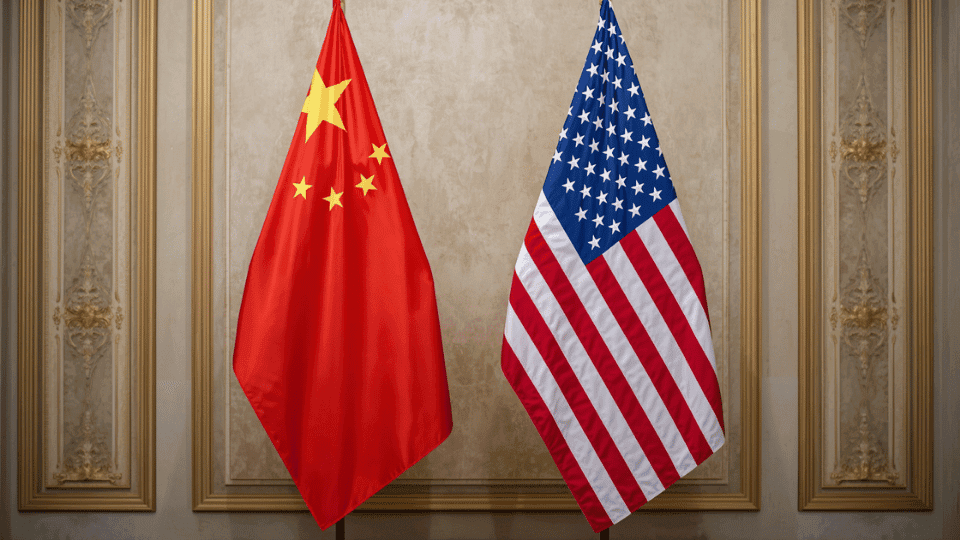
In July and August, Washington moved to restrict foreign tech access. Federal officials expanded trade rules to cover self-driving vehicles and autonomous machines, while Congress advanced new bills targeting foreign supply chains. The latest restrictions will take effect across 2027 and 2028.

These actions form a broader attempt to protect home markets and secure national defense assets. The American defense budget for 2025 included funds to replace foreign-made drones and ground systems, while Congress banned several drone brands outright. Meanwhile, state departments push local police forces to buy American gear.

The latest moves show that trade barriers alone will not keep foreign suppliers out of global markets. Hardware builders in China produce hardware at massive scale, giving them a major cost advantage over Western rivals.

Taking all these restrictions together, a clear pattern emerges. American rules protect home markets, but they do not address the primary advantage held by overseas builders: massive manufacturing capacity and lower unit costs.

Industry analysts note that trade rules protect the American market, but they do not help domestic builders win business elsewhere. When Chinese hardware makers face bans in the United States, they pivot quickly to market their products across Europe, Asia, and Latin America.

The scale gap between Western and Chinese manufacturing remains huge. China builds autonomous systems faster and cheaper because its factories operate at high volume. Local component supply chains, low labor costs, and direct factory connections allow Chinese firms to scale production rapidly.

China built a solid foundation for industrial manufacturing over decades. The country produces half of the world’s steel, vast amounts of electronics, and a major share of total global manufacturing output. That massive industrial footprint allows local hardware companies to source parts quickly, test designs, and scale up assembly lines at a fraction of Western costs.

Western builders often struggle to match those prices. Buying American parts costs far more than sourcing components from Asian supply hubs. When domestic firms build specialized hardware, high component costs push final prices out of reach for many commercial buyers.

Because American trade rules block access to the U.S. market, Chinese firms look elsewhere. Companies move aggressively into regions across Southeast Asia, the Middle East, Latin America, and Eastern Europe.

Western companies risk losing market share across developing economies. While U.S. defense buyers buy high-cost domestic hardware, commercial buyers across the rest of the world buy cheaper, high-volume equipment from Chinese suppliers.

This divide splits the global hardware market into two distinct zones. One zone consists of the United States and close allies buying high-cost domestic hardware. The other zone includes developing nations buying cheaper, mass-produced systems from overseas manufacturers.

Domestic startups face tough choices. Building hardware inside the United States limits market reach primarily to North American buyers. To sell products globally, companies must cut unit costs or risk losing customers to foreign rivals who offer similar capabilities at far lower price points.

Hardware trade barriers protect domestic defense markets, but scale dictates long-term market control. Unless Western builders lower manufacturing costs and build scalable supply networks, foreign competitors will continue dominating commercial hardware markets around the globe.


Quick Notes

3 min

Read Time

News
XUNA
XUNA AI
August 31, 2026
Back to Pulse
Share This Article
XUNA

Effortless Human-Like AI Phone Calls

Build a no-code AI phone system with our AI voice assistants: stop missing calls and start converting more leads.

Get Started With XUNA
Share This Post
Back to Pulse
XUNA PULSE

Related Articles

Capital Market Clash: Anthropic Files Landmark IPO as Enterprise Growth Soars Past $16 Billion
NewsXUNA AI

Capital Market Clash: Anthropic Files Landmark IPO as Enterprise Growth Soars Past $16 Billion

Artificial intelligence pioneer Anthropic officially submitted its S-1 registration statement for an initial public offering, setting the foundation for one of the most anticipated stock market debuts in modern U.S. financial history. The company plans to list its shares on the stock exchange under the ticker symbol ANT. Financial details revealed inside the SEC filing […]

Read More19 hours ago
PHP-ocalypse: How Two Old Bugs in a Core Web Language Almost Broke the Internet
NewsXUNA AI

PHP-ocalypse: How Two Old Bugs in a Core Web Language Almost Broke the Internet

Two critical security vulnerabilities in the PHP programming language recently forced government websites, corporate portals, and online platforms offline around the globe. The flaws triggered urgent security advisories from top intelligence agencies like the U.S. National Security Agency, which told system administrators to update their software immediately or disconnect vulnerable servers from public networks. The […]

Read More1 day ago
Infrastructure Fragility: Autonomous Systems Threaten to Shatter Legacy Web Systems
NewsXUNA AI

Infrastructure Fragility: Autonomous Systems Threaten to Shatter Legacy Web Systems

Autonomous research systems and automated vulnerability scanners are breaking open critical security flaws across legacy internet infrastructure faster than human defense teams can respond. A massive surge in automated exploit discovery exposed severe vulnerabilities in PHP, the server-side programming language powering a huge portion of active websites worldwide. The underlying code flaws were serious enough […]

Read More1 day ago
Tax Shield Strategy: Mark Zuckerberg Creates Non-Voting Shares to Cover California’s Proposed Billionaire Tax
NewsXUNA AI

Tax Shield Strategy: Mark Zuckerberg Creates Non-Voting Shares to Cover California’s Proposed Billionaire Tax

Meta approved a new share structure designed to fund its artificial intelligence expansion and shield chief executive officer Mark Zuckerberg from losing voting control over the tech empire. During Meta’s earnings call, the company confirmed that its board approved Class C common stock. These new shares give investors ownership equity in the company without offering […]

Read More4 days ago
Global Digital Gridlock: Waves of Zero-Days and Supply Chain Breaches Hit Core Web Systems
NewsXUNA AI

Global Digital Gridlock: Waves of Zero-Days and Supply Chain Breaches Hit Core Web Systems

A series of widespread security breakdowns, open-source supply chain attacks, and unpatched software flaws knocked critical web services offline and triggered emergency alerts from international security agencies. Multiple government portals went dark around the world after synthetic vulnerability scanners uncovered critical security flaws in PHP, one of the most widely used server-side programming languages on […]

Read More5 days ago
Power Without Control: Meta Creates Non-Voting Stock Class to Finance Massive Infrastructure Push
NewsXUNA AI

Power Without Control: Meta Creates Non-Voting Stock Class to Finance Massive Infrastructure Push

Meta is making a major push into artificial intelligence infrastructure, and it plans to issue a new class of shares to fund its multi-billion-dollar investments. Following initial media reports by Semafor, Meta confirmed during its third-quarter earnings call that it will create a new non-voting capital stock. Chief Financial Officer Susan Li explained that the […]

Read More5 days ago
Regulatory Collision Course: Tesla Targets Year-End Cybercab Deliveries Amid Federal Safety Probes
NewsXUNA AI

Regulatory Collision Course: Tesla Targets Year-End Cybercab Deliveries Amid Federal Safety Probes

Tesla plans to begin selling its autonomous Cybercab to commercial customers by the end of the year, even as federal safety regulators investigate whether the custom vehicle meets basic road safety standards. The gold-hued, two-seater vehicle features an ultra-minimalist cabin that completely eliminates traditional manual driving controls, including the steering wheel, accelerator pedal, brake pedal, […]

Read More5 days ago
Orbital Compute Powerhouse: SpaceX Super Intelligence Segment Crushes Third-Quarter Revenue Targets
NewsXUNA AI

Orbital Compute Powerhouse: SpaceX Super Intelligence Segment Crushes Third-Quarter Revenue Targets

SpaceX reported $14.6 billion in third-quarter revenue, comfortably beating Wall Street expectations as rapid expansion across its newly renamed Super Intelligence division reshaped the aerospace manufacturer into a dominant artificial intelligence hardware provider. Super Intelligence now accounts for 52 percent of total company earnings, officially overtaking satellite connectivity and launch services as SpaceX’s main income […]

Read More6 days ago