Silicon Powerhouse: Apple Unveils M5 Ultra and Next-Gen M6 Processors
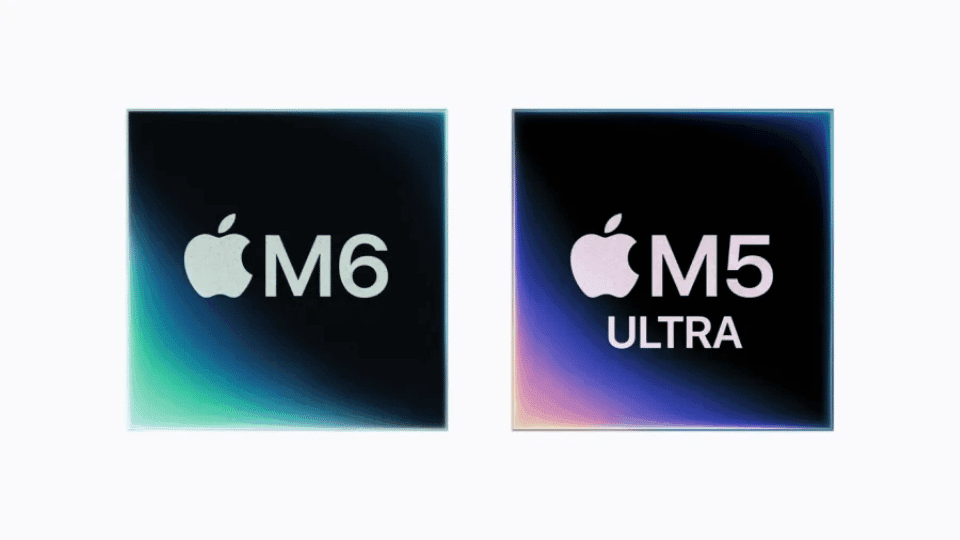
Apple announced two new flagship silicon chips on Tuesday, powering updated versions of the Mac Mini and Mac Studio. The company unveiled the M5 Ultra alongside its brand new M6 processor, setting a high performance bar for local machine learning and heavy media workloads.
The M5 Ultra stands as Apple’s most powerful chip to date, fusing two dual-die M5 Max chips together into a single, massive quad-die package. Built specifically to handle demanding artificial intelligence tasks, the M5 Ultra supports up to a 36-core CPU, an 80-core GPU, and 1.2 terabytes per second of unified memory bandwidth. That bandwidth metric marks a 50 percent leap over the M3 Ultra, which Apple released about eighteen months prior.
Targeted at creators, software developers, and research engineers, the M5 Ultra handles heavy local workloads easily. Whether rendering complex 3D scenes, editing multi-stream high-resolution video, or training large neural networks locally, the top-tier chip keeps calculations running fast without relying on cloud servers.
Alongside the M5 Ultra, Apple introduced the M6 processor, built on an advanced 2-nanometer manufacturing process. Designed for everyday users and lightweight developer setups, the M6 features a new 12-core CPU layout that adds two extra cores compared to the standard M5. This setup delivers nearly 30 percent higher peak graphics performance and speeds up prompt processing for large language models running directly on the machine.
Apple Vice President of Silicon Engineering Sri Santhanam explained that the M6 pairs its 12-core CPU structure with two additional GPU cores, a dual 16-core Neural Engine, and expanded memory bandwidth to process complex tasks while maintaining excellent power efficiency.
With these fresh hardware updates, software developers can fine-tune and run large AI models locally on their Macs. Apple integrated these chips with updated developer tools and frameworks, allowing software to automatically optimize performance across the CPU, GPU, and Neural Engine. Developers can also use Apple Foundation Models and App Intents to build custom intelligence tools that run completely on-device without sending data to external servers.
While Apple moved slower than competitors in deploying its own cloud-based AI models, the tech giant excels at running high-speed, secure workloads directly on consumer hardware. Processing sensitive data locally on the device keeps personal information private, avoiding the security risks associated with cloud processing. Giving developers powerful local chips opens up new ways to test and run software safely on personal desktop hardware.
The new M6 Mac Mini starts at $899, with preorders open immediately and official shipping beginning after September 22.