Silicon Showdown: AMD Launches Helios Racks to Crush Nvidia Hardware Dominance
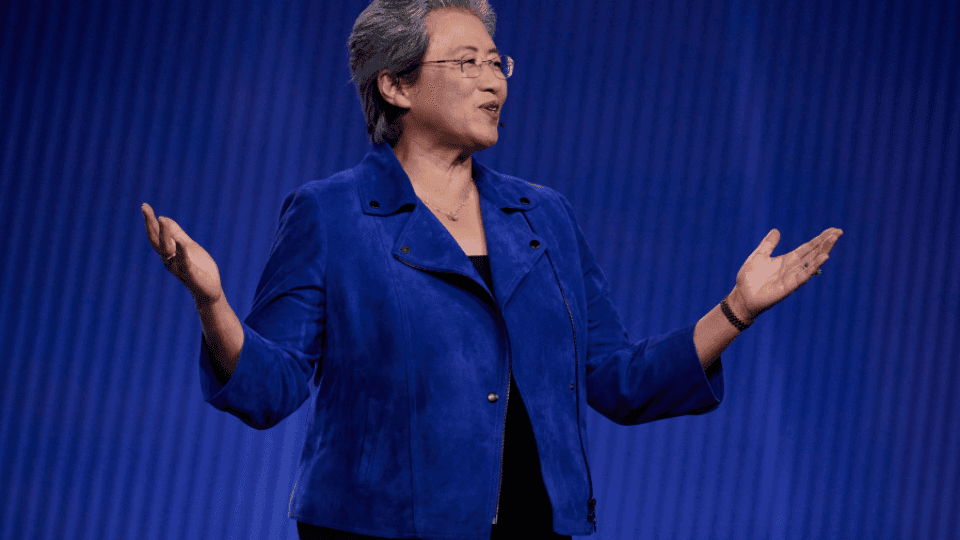
Chipmaker AMD is taking aim directly at Nvidia dominance in the artificial intelligence market. During its packed Advancing AI event in San Francisco, AMD Chief Executive Officer Dr. Lisa Su showed off the company new Helios rack-scale system. The massive hardware setup combines thousands of processors into a single supercomputing unit built specifically to handle massive data center workloads. AMD plans to begin shipping Helios racks to major cloud providers later this year.
Data centers require immense processing power to train and run modern software models. Building high-end artificial intelligence models takes thousands of interconnected graphics processors working together seamlessly. Su called Helios the highest performance AI rack in the industry, explaining that engineers designed the system from the ground up to support gigawatt-scale data center installations.
Nvidia has controlled the high-end hardware market for years with its popular Vera Rubin and Grace Blackwell rack systems. However, independent benchmark reports show that AMD new Helios system beats Nvidia Vera Rubin hardware across several key performance metrics. That performance edge gives AMD its best opportunity yet to capture market share from its chief rival.
Key technology buyers are already signing massive contracts to secure Helios hardware. Companies like OpenAI, Meta, Oracle, Anthropic, and Microsoft plan to integrate Helios racks into their data centers. Microsoft Chief Executive Officer Satya Nadella confirmed plans to expand Azure cloud infrastructure using the new system. AMD also announced a major deal with Microsoft to deploy up to two gigawatts of GPUs using the Helios platform.
Alongside the Helios announcement, AMD introduced its upcoming Venice-X central processing unit. Designed specifically for heavy enterprise workloads and data center management, Venice-X chips will launch officially in 2027. Combining high-powered CPUs with GPU rack systems allows AMD to offer complete hardware stacks for next-generation computing infrastructure.
During her keynote presentation, Su outlined a massive growth projection for the global chip market. She expects the market for specialized artificial intelligence accelerators to reach $1.4 trillion by the year 2030. That growth trajectory means AI hardware will soon approach the size of the entire global semiconductor industry today.
Su pointed to the rapid rise of agentic software as the primary driver behind this sudden spike in hardware demand. When developers build digital agents to handle complex multi-step tasks, those systems must reason through problems, execute code calls, query databases, and refine outputs continuously. That non-stop computational loop requires massive amounts of processing power, keeping data centers running at maximum capacity around the clock.
Algorithms remain early in their development cycle, which keeps software performance tied directly to physical hardware capacity. AMD expects graphics processors to capture the vast majority of future chip spending because developers need total programmability across the silicon stack. As tech giants build out gigawatt data centers to power the next generation of software, AMD Helios racks position the company as a primary contender in the global hardware race.