The Chip King’s Fortress: Why ASML Stands Alone in the Silicon War
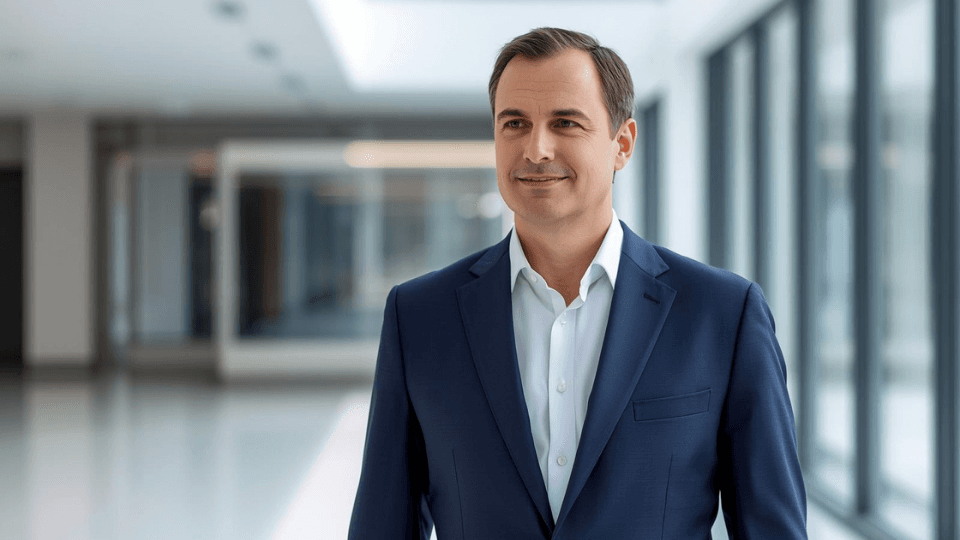
Christophe Fouquet just took the wheel of ASML, a company worth $411 billion that sits at the very heart of the tech world. While other tech giants constantly look over their shoulders, Fouquet is remarkably calm. In his first major talk since becoming CEO, he made a bold claim: nobody is coming for his crown. ASML owns a total monopoly on the machines that make the world’s most advanced computer chips, and Fouquet does not see that changing any time soon.
The secret to this power is a technology called Extreme Ultraviolet (EUV) lithography. These machines use light to etch tiny patterns onto silicon wafers. They are so complex that ASML is currently the only company on Earth that can build them. Without these machines, there are no high-end iPhones, no advanced AI chips for Nvidia, and no modern data centers.
Building the Impossible Machine
Fouquet explains that ASML’s dominance is not an accident. It took decades of risky research and billions of dollars to get here. He points out that ASML spent fifteen years and $10 billion just to get the first EUV machines ready for the market. Even now, the company spends over $4 billion a year on research to stay ahead.
A single EUV machine costs about $180 million, while the newest “High-NA” versions can cost up to $380 million. These machines are as big as a double-decker bus and contain over 100,000 parts. They use mirrors so flat that if they were the size of Germany, the biggest bump would be less than a millimeter high. Fouquet believes that even if a competitor started today with unlimited cash, it would take them at least fifteen to twenty years to catch up.
A Web of Global Partners
The hardware is only part of the story. ASML does not build every piece itself. Instead, they sit at the center of a massive, specialized supply chain. They work with over 5,000 suppliers, and some of those partners have spent their entire existence perfecting just one specific part for ASML. For example, Zeiss in Germany makes the world’s best lenses and mirrors exclusively for these machines.
Fouquet argues that this network is almost impossible to replicate. A rival would not just have to build a better machine; they would have to build an entirely new global ecosystem of suppliers. He believes this gives ASML a moat that is wider than any other in the history of business.
The China Problem
The only real threat to ASML is not another company, but global politics. The United States and Europe have placed strict rules on what ASML can sell to China. China is a massive market, and they are trying hard to build their own chip machines to bypass these bans.
Fouquet is not worried about Chinese competition in the high-end market yet. He notes that while China is making progress with older tech, the gap between what they can do and what EUV can do is still massive. He says that for now, the main challenge is simply following the ever-changing trade laws. ASML’s biggest job is keeping its machines running for customers like TSMC and Intel while navigating the tension between the world’s superpowers. Christophe Fouquet is confident that as long as ASML keeps moving faster than everyone else, the throne is safe.