Unifying the Digital Stack Through Automated AI Integrations
In 2026, the average enterprise manages over 120 separate SaaS applications, yet 70 percent of marketing and sales leaders admit their tools do not talk to each other. This fragmentation results in a massive data tax, where manual data entry and broken APIs lead to lost leads and inconsistent customer experiences. The purpose of this guide is to move beyond the manual labor of connecting software. We will focus on how to automate AI integrations to create a unified intelligence layer that drives predictable conversion growth.
Eliminating Data Silos for a Seamless Conversion Funnel
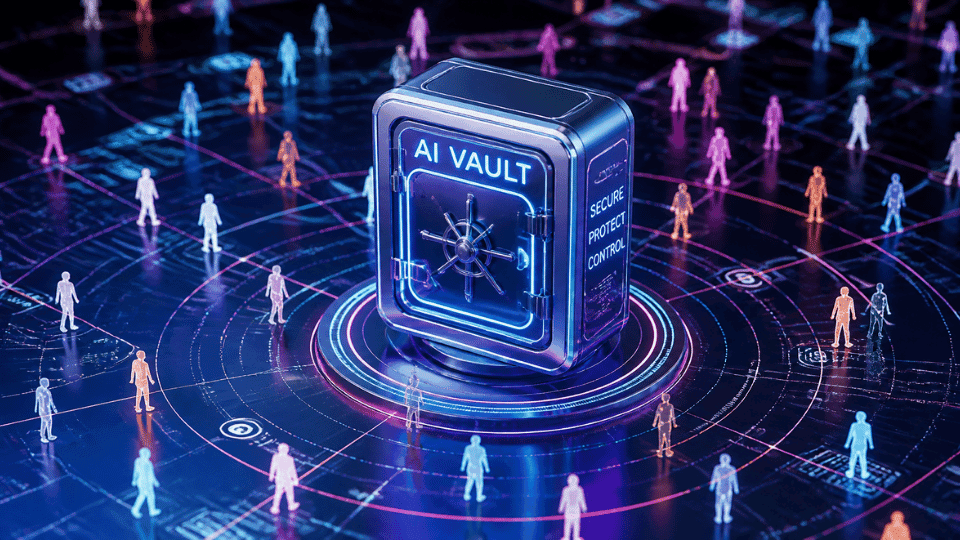
Data silos are the primary barrier to effective conversion optimization. When your LinkedIn ads, website analytics, and CRM act as isolated islands, you lose the ability to see the full customer journey. This leads to redundant messaging and missed opportunities to close high-intent prospects. The true use of AI in integration involves creating a dynamic data layer that sits above your tools and automatically maps information between them.
By automating the flow of data, your systems can react to customer behavior in real time. If a prospect spends ten minutes on a pricing page, the integration layer should immediately trigger a high-priority Slack alert for the sales team and update the lead score. This happens without any manual intervention. This speed ensures that your team engages with the right person at the moment their interest is highest, which is the most direct way to improve conversion rates.
Automating API Management for High-Velocity Growth
Manual API maintenance is a significant drain on technical resources and a frequent cause of system failure. Every time a software provider updates their documentation or changes their data schema, your tracking links risk breaking. Automated AI integrations use machine learning to monitor the health of these connections and adjust to changes in data structures on the fly. This self-healing architecture ensures that your conversion data remains accurate even as your stack evolves.
This level of automation allows your growth team to plug in new tools without the typical three-month engineering lead time. You can experiment with specialized personalization engines or new analytics platforms and have them communicating with your existing CRM in minutes. This agility is a competitive edge in 2026. It allows you to pivot your strategy based on performance data rather than being held back by technical debt or manual coding requirements.
Synchronizing Intent Signals Across Every Communication Channel
A single action, such as a whitepaper download, is often just noise. However, when that download is combined with a specific search query and a visit to a competitor comparison page, it becomes a high-intent signal. Automated AI integrations aggregate these micro-interactions from different sources to create a unified probability score. This ensures that your high-value prospects receive a consistent and relevant message wherever they interact with your brand.
Synchronization prevents the disjointed feeling of receiving an introductory email for a product you have already researched extensively. When your integrations are automated, your email subject lines, social media ads, and website hero sections can all align to a specific customer’s current needs. This level of cross-channel coordination is impossible to manage through manual workflows. It requires an automated backbone that treats your entire technology stack as a single, integrated conversion engine.
Building Resilience with Automated Data Validation and Cleansing
Garbage data is the hidden killer of automated sales funnels. Many teams struggle with duplicate records, mismatched formatting, and missing contact information that breaks their nurture sequences. AI-driven integration layers perform real-time data validation and cleansing as information moves between systems. The system can automatically fill in missing company details from public records or fix formatting errors before a human ever sees the lead.
This automated cleanup increases the efficiency of your front-line teams. They spend less time fixing data errors and more time having meaningful conversations with prospects. It also ensures that your automated touchpoints are professional and accurate. By building validation into the integration layer, you protect your brand’s reputation and ensure that every automated interaction feels high-touch and intentional rather than robotic and error-prone.
Consolidating Disconnected Tools into a Unified Intelligence Layer
Operational chaos is the natural result of a messy stack where tools are added without a central plan. This leads to redundant costs and a loss of strategic focus across the organization. Automating your AI integrations provides a clear path to consolidation. By creating a central intelligence layer, you can see exactly which tools are contributing to conversions and which are merely adding unnecessary complexity.
Once your integrations are automated, you can begin to sunset overlapping platforms and move toward a more streamlined, high-performance architecture. This consolidation reduces your technical debt and simplifies the training process for new hires. Everyone in the company looks at the same data, regardless of which specific tool they are using. This unity of information is the foundation of a scalable operating layer that can withstand organizational growth and market shifts.
Measuring ROI through Integrated Feedback Loops
You cannot improve what you cannot measure with total accuracy. Automated AI integrations provide a complete view of the customer lifecycle, from the first ad click to the final contract signature. This allows you to attribute conversions to the specific combination of touchpoints that actually drove the deal. You move away from last-click attribution and toward a multi-touch model that reflects the reality of the modern B2B buyer journey.
These integrated feedback loops allow the system to continuously refine its own logic. If the data shows that a specific integration is not contributing to conversions, the system flags it for review. This level of transparency ensures that your budget is always directed toward the most effective pathways. You are building a system that does not just work; it learns and improves itself with every interaction, turning raw data into growth signals.
Final Insights for a Future-Proof Architecture
The future of conversion optimization is not found in a single software tool, but in the space between your tools. As we move through 2026, the organizations that master the automation of their AI integrations will be the ones that win. They will have the cleanest data, the fastest response times, and the most consistent brand experience. The transition to a unified, automated architecture is not just a technical upgrade; it is a fundamental shift toward a more intelligent and efficient way of doing business.
Automating your AI integrations is the most effective way to eliminate the friction that kills conversions. It is about creating a resilient, self-healing infrastructure that allows your data to flow freely and purposefully across your entire organization. By removing the manual burden of API management and data cleansing, you free your team to focus on high-level strategy and creative growth. The move from a fragmented stack to a unified layer is the only way to achieve long-term scale.
Is your brand’s growth being throttled by a messy stack of disconnected tools?
Fragmented data silos are the primary reason why high-potential leads fall through the cracks. At xuna.ai, we help modern teams eliminate operational chaos by building a scalable CX operating layer. This unified system ensures your growth efforts are precise, efficient, and built for long-term scale.
Visit xuna.ai to build your scalable CX operating layer today.