Beyond the Graphics Chip: Nvidia Builds the Full Data Center Ecosystem
For the first few years of the automated computing wave, Nvidia stood as the sole source for top-tier graphics processing units. That focus created massive profits as tech companies scaled up. Recently, big cloud providers like Amazon and Google began designing their own silicon chips, leading investors to wonder if Nvidia might lose its dominant market position.
While Nvidia stock multiplied tenfold between early 2023 and mid-2025, share growth slowed down over the past year due to fresh competition in graphics chips. However, a new reality emerged following Nvidia’s latest earnings report. Wall Street analysts and tech investors now see that Nvidia’s main strength extends far beyond basic graphics processors.
As compute workloads scale up toward gigawatt levels, managing data movement becomes a major engineering bottleneck. Nvidia spent years developing full-system hardware packages designed to handle this traffic problem. This system approach gives Nvidia a strong edge, even as direct chip competition increases.
While people talk about raw compute capacity becoming a basic commodity, running a massive data center at peak efficiency remains extremely hard. As facilities grow larger and faster, moving data around efficiently becomes the main challenge for engineers.
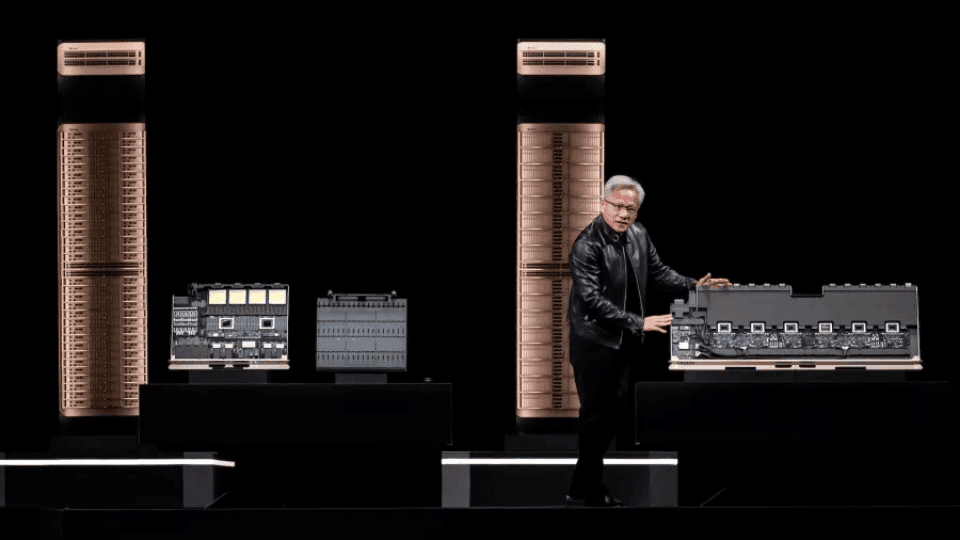
Looking at Nvidia’s current product line highlights this engineering shift. The company now ships the Vera Rubin architecture, which links the main Rubin processor with specialized companion units. These setups combine the Vera central processing unit, Groq 3 LPX inference accelerators, and high-speed networking racks.
If the graphics processor acts as the engine of a car, these surrounding system components act as the transmission, chassis, and wheels. The Vera Rubin package is not just about crunching raw data; it focuses on keeping every part of the system running smoothly without idle delays.
Physical memory limitations create real limits inside individual server racks. Nvidia vice president of storage technology Jason Hardy highlighted that servers can only hold so much memory on a single board. To fix this, the Vera central processor focuses on orchestrating data flow. Improving data flow allows connected flash memory to run at full speed without creating bottlenecks. Tests show up to a three-times performance jump in these operations.
Other industry leaders face similar engineering problems. When OpenAI designed its custom Jalapeño chip, engineers focused on minimizing data movement across boards. By keeping large workloads inside a single connected system, Jalapeño reduces delays and processes incoming requests faster.
Whether companies integrate entire workloads onto single silicon dies or build smart management chips like the Vera central processor, the goal remains identical. Tech firms must optimize data traffic across the system rather than relying solely on raw processor speed.
This focus on data movement creates a fresh competitive arena. To stay ahead, Nvidia must outpace rivals in total system design, not just graphics chip production. Building efficient, full-scale infrastructure networks takes more than fast silicon, and Nvidia currently holds a strong head start in that race.