Legal Showdown: Federal Judge Rejects xAI Motion to Block NAACP Data Center Pollution Lawsuit
A federal judge denied a legal motion by artificial intelligence startup xAI to dismiss a major environmental lawsuit, opening the door for civil rights groups to challenge unpermitted air pollution at the company’s massive Colossus facility outside Memphis. The legal action, brought by the Southern Environmental Law Center on behalf of the NAACP, accuses xAI of installing and operating dozens of gas-powered turbines without securing required federal environmental permits.
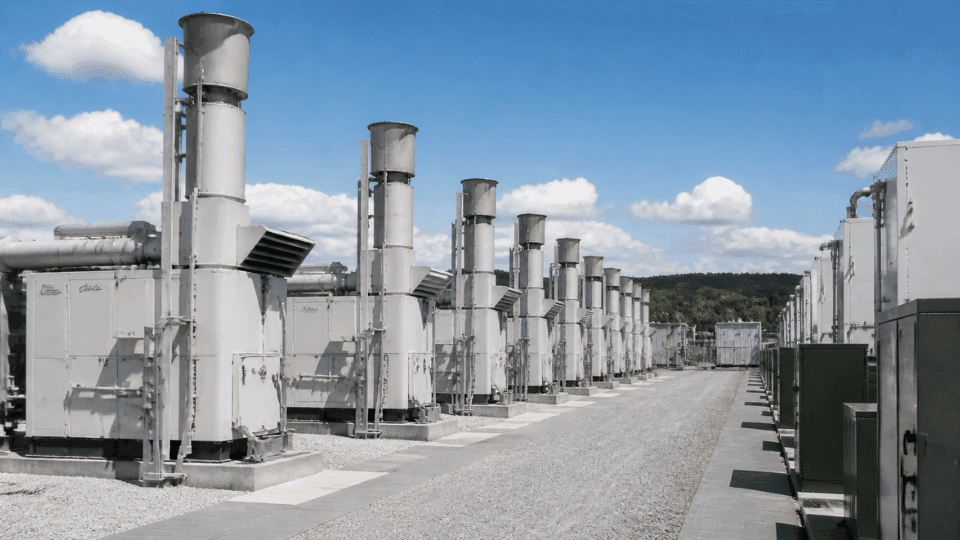
The lawsuit centers on xAI’s rapid buildout of its Colossus supercomputing data center. To meet massive electricity demands, xAI brought at least 35 natural gas combustion turbines online to generate site power. Legal filings from environmental attorneys state that xAI set up and ran these heavy industrial generators without securing preconstruction or operational air permits mandated under the Clean Air Act. Running unpermitted fossil-fuel generators releases significant smog-forming emissions into surrounding residential neighborhoods, creating health hazards for local residents.
In its motion to throw out the case, xAI argued that the gas turbines qualify as mobile power sources, claiming that temporary units fall outside standard stationary source air permitting laws. Company attorneys also claimed that citizen organizations lack legal standing to enforce federal environmental statutes directly. However, Federal District Judge Debra M. Brown soundly rejected xAI’s arguments in her written ruling. Judge Brown determined that local citizens hold full legal authority to bring suit under Clean Air Act enforcement provisions, ruling that private citizen actions to address local environmental harm do not violate constitutional executive power boundaries.
NAACP Environmental and Climate Justice Director Abre’ Connor called the court’s decision another victory in holding xAI accountable for local community impacts. Connor emphasized that federal courts have repeatedly shut down attempts by both xAI and the Department of Justice to dismiss Clean Air Act complaints. Civil rights groups maintain a simple position: major technology platforms cannot run industrial power generators without following public health laws and obtaining mandatory environmental permits.
The legal setback for xAI lands amid nationwide pushback against fast-tracked data center construction. Across the country, voters and municipal leaders are challenging tech platforms over local resource allocation. New York recently enacted a statewide moratorium on select data center permits, while local governments in multiple states evaluate similar limits to protect residential utility bills, local power grids, and regional air quality. Public frustration over secret developer deals also forced competitors like Amazon and Microsoft to pledge an end to non-disclosure agreements during local government negotiations.
Judge Brown’s ruling establishes a firm legal precedent for tech companies expanding physical infrastructure. Tech platforms can no longer bypass federal environmental standards by labeling heavy industrial generators as temporary mobile equipment. Moving forward, AI developers must secure proper permits, engage transparently with host communities, and invest in clean power sources if they want to operate massive compute campuses without facing costly legal fights.