One Basket to Rule Them All: Google Rolls Out Universal Cart Across US E-Commerce
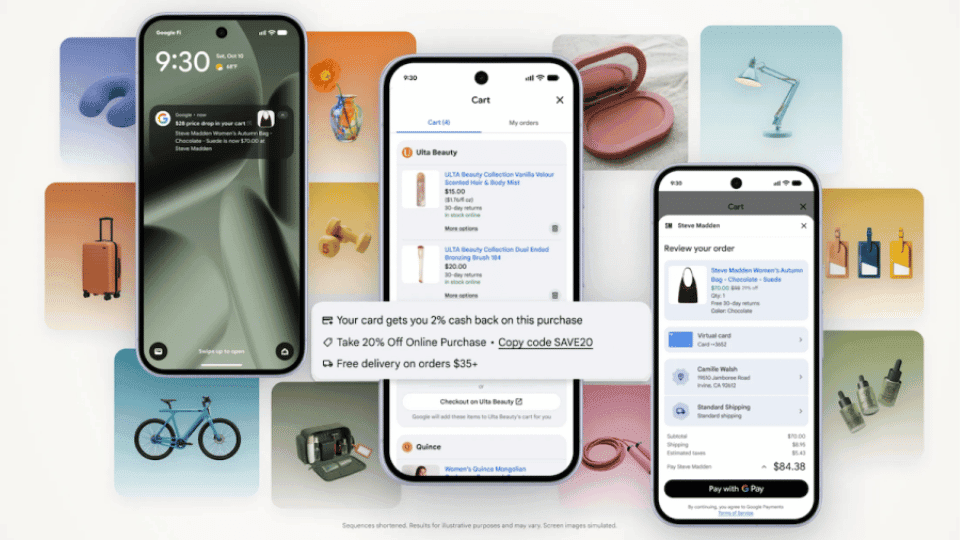
Google officially launched Universal Cart for US users, giving online shoppers a single hub to track, save, and purchase items across multiple internet retailers. First revealed during Google I/O in May, the new feature runs across standard Google Search and the Gemini mobile application. The feature aims to fix fragmented online shopping trips by keeping saved items, active carts, and potential purchases organized in one central place instead of forcing users to hunt through dozens of open browser tabs.
Managing multiple online shopping carts across different stores often leads to forgotten items, lost discounts, and abandoned checkout screens. Universal Cart acts as a central control center for online shopping, pulling products from separate brand websites into a single unified list. When shoppers find a product they like, they save it directly to their Universal Cart and keep browsing. Returning to the cart later shows saved items, updated prices, and current inventory statuses without needing to log into individual store accounts repeatedly.
The platform goes beyond passive list saving by adding real-time tracking features and price alerts. Universal Cart sends instant mobile notifications whenever saved products drop in price or out-of-stock items return to store shelves. During checkout preparation, the software automatically scans for active promo codes, surfaces applicable store coupons, and calculates credit card rewards perks based on user payment preferences. Matching payment cards with specific store offers ensures shoppers capture maximum cash back and bonus points during purchases.
Underneath the interface, Universal Cart relies on Google’s Universal Commerce Protocol (UCP), an open technical standard the company introduced earlier this year. UCP creates a shared technical framework that allows autonomous software agents and online retailers to exchange product information, track order statuses, and handle payments smoothly. Standardizing e-commerce data protocols helps automated tools handle complex shopping workflows across different retail platforms without requiring custom store integrations.
Launching Universal Cart fits into Google’s broader strategy to build conversational product discovery directly into Search’s AI Mode and Gemini. Google previously introduced AI tools like “Let Google Call,” which deploys automated voice agents to phone local brick-and-mortar stores and confirm physical inventory before users drive out. Combining physical inventory checks, conversational product searches, and multi-store cart management creates a comprehensive e-commerce environment built around automated convenience.
Google is not alone in pushing conversational AI into retail workflows. Tech giants and artificial intelligence labs like Amazon and OpenAI are actively adding agentic shopping features to turn text chatbots into practical digital buyers. Moving past simple product recommendations toward active payment execution, cart aggregation, and deal tracking makes conversational assistants far more valuable for everyday consumers.
Centralizing e-commerce operations gives consumers a simpler way to buy goods online without managing dozens of retail accounts. Connecting real-time inventory tracking, automatic discount processing, and credit card perk matching into a single cart interface removes traditional online checkout friction. As open commerce protocols mature, unified shopping tools will redefine how consumers find, track, and buy products across the open web.