XUNA Logo

PRODUCTS

XUNA Voice

XUNA Voice

AI-powered voice calls.

XUNA iMessage & SMS

XUNA iMessage & SMS

Two-way iMessage and SMS outreach.

XUNA Chat

XUNA Chat

AI web chat.

XUNA WhatsApp

XUNA WhatsApp

AI-powered WhatsApp conversations.

XUNA Ringless VM

XUNA Ringless VM

Drop voicemails without ringing.

XUNA CRM

XUNA CRM

Automated lead tracking.

XUNA Reviews

XUNA Reviews

Automated review requests.

INDUSTRIES

Automotive

Automotive

Solutions for automotive industry.

Hospitality

Hospitality

Solutions for hospitality industry.

Travel

Travel

Solutions for travel industry.

Wellness & Med Spa

Wellness & Med Spa

Solutions for wellness and med spa industry.

Healthcare

Healthcare

Solutions for healthcare industry.

Agencies

Agencies

Solutions for agencies industry.

Insurance

Insurance

Solutions for insurance industry.

eCommerce

eCommerce

Solutions for eCommerce industry.

Every Business

Every Business

Solutions for every business.

INTEGRATIONS
PRICING
WHITE LABEL
PULSE
ENTERPRISE
CONTACT

Status

Loading article...
XUNA
Selected ByNVIDIA Inception ProgramGoogle for StartupsAWS Startups

Headquarters

3701 Midtown DrTampa, FL 33607
(855) 585-9862team@xuna.ai
AICPA SOC 2Sensiba SOC 2 AttestationHIPAA CompliantGDPR Compliant

Products

  • Voice
  • iMessage & SMS
  • WhatsApp
  • Chat
  • Ringless VM
  • CRM

Industries

  • Automotive
  • Hospitality
  • Travel
  • Wellness & Med Spa
  • Healthcare
  • Agencies
  • Insurance
  • eCommerce
  • Every Business

Compare

  • ElevenLabs
  • VAPI
  • Retell AI
  • Synthflow
  • Deepgram
  • Vocode
  • Bland AI
  • Play.AI

Resources

  • Trust Center
  • White Label
  • Pulse
  • Integrations
  • Enterprise
  • Contact
  • Glossary
  • Changelog

© 2026 XUNA AI. All rights reserved.

  • Partner Program $
  • Privacy Policy
  • Terms & Conditions
  • System Status
Optimize Ai Voice Agent for 2026 Efficiency
Trends & Strategy

Optimize Ai Voice Agent for 2026 Efficiency

Think back to the last time you were trapped in a traditional phone menu, shouting “representative” at a machine that didn’t understand your accent or your frustration. It’s an experience that has soured many on automated support for decades. By 2026, the data shows a massive pivot. Modern voice agents are resolving over 70% of complex inquiries without human intervention, but only for the companies that have moved past basic scripts. The difference between a tool that frustrates and a tool that functions lies in meticulous optimization. It is no longer enough to just have a voice; your agent needs a brain that understands intent and context in real time.

Moving Beyond Scripts to Intent Recognition

The most significant leap in 2026 voice technology is the shift from rigid decision trees to fluid intent recognition. Early systems forced users to speak in specific keywords. If a customer didn’t say the magic word, the system failed. Today, sophisticated natural language processing allows agents to grasp the “why” behind a call, even if the caller uses slang or pauses mid-sentence.

Optimization starts with training your models on actual customer conversations rather than idealized scripts. When an agent can distinguish between a customer who is “looking for a deal” and one who is “threatening to cancel,” it can adjust its tone and priority instantly. This nuance reduces the time spent on clarifying questions and gets straight to the resolution.

Deep Integration with the Live Data Stack

An AI voice agent is only as smart as the data it can access. If your agent doesn’t have a direct line to your CRM, inventory management, and shipping logs, it remains a glorified gatekeeper. The highest efficiency gains come when the voice agent acts as a fully empowered employee.

When a customer calls to check on a delayed package, the agent should already have their tracking number pulled up based on their phone number. It can then cross-reference weather delays or warehouse logs to give a specific reason for the holdup. This eliminates the “let me look that up for you” dead air that kills productivity. It turns a five-minute investigative call into a ninety-second update.

Mastering the Art of Latency Reduction

In voice interactions, silence is the enemy of efficiency. A delay of even two seconds between a user finishing their sentence and the AI responding can break the illusion of a natural conversation. This often leads to “double-talking,” where both the human and the AI speak at once, causing the system to reset or error out.

Optimizing for 2026 means focusing on the infrastructure that powers these voices. Using edge computing and streamlined speech-to-text engines ensures that responses feel instantaneous. When the rhythm of the conversation matches human expectations, users are more likely to stay calm and provide clear information. This technical polish is what allows an AI agent to handle high-stress situations without escalating to a human manager.

Proactive Support and Predictive Dialing

Efficiency isn’t just about handling the calls that come in. It’s about preventing them or reaching out before a problem spikes. A well-optimized voice agent uses predictive analytics to identify users who might be struggling with a new feature or a recent bill.

Instead of waiting for an angry call, the agent can initiate a brief, helpful check-in. “I noticed your account setup is at 90%, would you like me to walk you through the final step?” This proactive approach moves the burden away from reactive support. It flattens the curve of incoming tickets and ensures your human staff can focus on high-level strategy rather than firefighting.

The Feedback Loop of Continuous Refinement

You cannot “set and forget” a voice agent if you expect it to remain efficient. The most successful implementations in 2026 use automated feedback loops. Every interaction where a customer asks for a “real person” is a data point that identifies a gap in the AI’s knowledge or tone.

By reviewing these friction points weekly, you can update the agent’s logic to handle new products or changing market conditions. This constant sharpening of the tool ensures that it doesn’t become obsolete as your business evolves. It turns your voice channel into an asset that actually grows more valuable and more efficient over time.

The transition to a voice-first customer strategy is no longer a luxury for large corporations. It is the baseline for staying competitive in a market that values speed above all else. By focusing on intent, deep data integration, and technical performance, you create an agent that doesn’t just talk, but truly listens and acts. The question is no longer if your business should use voice AI, but how much longer you can afford to wait. Are your current systems saving you time, or are they just creating more work for your human team?


Quick Notes

5 min

Read Time

Trends & Strategy
XUNA
XUNA AI
January 19, 2026
Back to Pulse
Share This Article
XUNA

Effortless Human-Like AI Phone Calls

Build a no-code AI phone system with our AI voice assistants: stop missing calls and start converting more leads.

Get Started With XUNA
Share This Post
Back to Pulse
XUNA PULSE

Related Articles

Rental Test Drives: Tesla Partners With Turo to Accelerate Full Self-Driving Subscriptions
Trends & StrategyXUNA AI

Rental Test Drives: Tesla Partners With Turo to Accelerate Full Self-Driving Subscriptions

Tesla partnered with peer-to-peer car sharing marketplace Turo to promote vehicles equipped with its Full Self-Driving Supervised software package. Under the agreement, Turo will start highlighting specific Tesla listings on its platform that feature active self-driving hardware. To support the effort, Turo is connecting directly to Tesla’s internal software API, allowing the rental service to […]

Read More19 hours ago
Hardware Graveyard: Why AI Gadgets Keep Crashing Into the Tech Industry Wall
Trends & StrategyXUNA AI

Hardware Graveyard: Why AI Gadgets Keep Crashing Into the Tech Industry Wall

The initial rush to build standalone artificial intelligence hardware hit a brutal reality check. Early product launches promised to replace smartphones, reinvent personal computing, and change how people interact with digital tools. Instead, a trail of abandoned devices, failed startups, and broken consumer trust marks the hardware landscape. Examining what went wrong across major hardware […]

Read More1 day ago
Synthetic Cinema Reckoning: Independent Directors Expose Fake Audiences and Cheap Tricks Behind AI Movies
Trends & StrategyXUNA AI

Synthetic Cinema Reckoning: Independent Directors Expose Fake Audiences and Cheap Tricks Behind AI Movies

Film festivals around the world face a bizarre new challenge: synthetic movies submitting entries to independent competitions, complete with fake production teams, fraudulent press coverage, and bot-driven online hype. What started as a fun experiment with generative video tools quickly turned into a headache for festival organizers, judges, and real human filmmakers. Independent directors are […]

Read More1 day ago
Digital Playgrounds: MIT Researchers Watch Autonomous AI Agents Invent Games on Virtual Island
Trends & StrategyXUNA AI

Digital Playgrounds: MIT Researchers Watch Autonomous AI Agents Invent Games on Virtual Island

When researchers leave artificial intelligence agents inside a digital sandbox without clear instructions, the software invents its own games. A new study by MIT researchers highlights how autonomous agents placed in simulated environments display behaviors that closely resemble human play. The experiment placed 13 AI agents, each named Eko and powered by Claude Opus 4.7, […]

Read More4 days ago
Open Door Commerce: Walmart Welcomes AI Buyers While Amazon Slams the Gate
Trends & StrategyXUNA AI

Open Door Commerce: Walmart Welcomes AI Buyers While Amazon Slams the Gate

Walmart launched its new Agent Gateway platform to connect third-party AI assistants directly into its inventory and checkout systems, taking the opposite path from e-commerce rival Amazon. While Amazon recently blocked automated software agents from completing online transactions on behalf of human shoppers, Walmart is actively building open infrastructure to accommodate autonomous buyers. Speaking at […]

Read More5 days ago
Testing standard reality check: Hugging Face Chief warns embedded evaluators face serious hurdles
Trends & StrategyXUNA AI

Testing standard reality check: Hugging Face Chief warns embedded evaluators face serious hurdles

Artificial intelligence development labs stake their corporate reputations on benchmark scores, using automated testing suites to claim one model beats another. However, current evaluation methods remain deeply complex and unstandardized across the industry. Speaking on stage at TechCrunch Disrupt, Hugging Face chief policy officer Irene Solaiman warned that model testing requires far more consistency, open […]

Read More1 week ago
Power to the People: Mayor Zohran Mamdani Rallies New Yorkers Against Unchecked AI Control
Trends & StrategyXUNA AI

Power to the People: Mayor Zohran Mamdani Rallies New Yorkers Against Unchecked AI Control

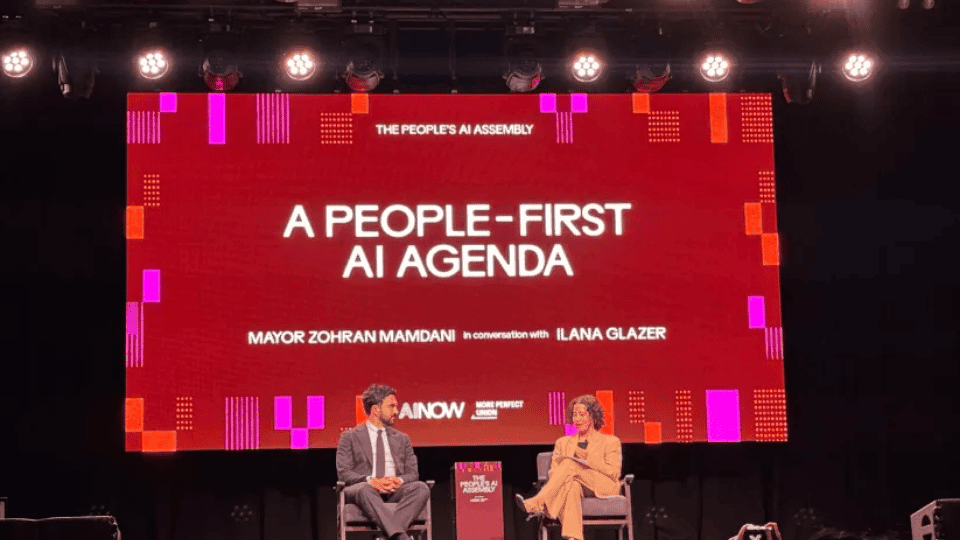
New York City Mayor Zohran Mamdani and activist Ilana Glazer joined forces at Webster Hall in Manhattan during “The People’s AI Assembly” to call out federal inaction on artificial intelligence regulation. Speaking before a crowded audience, Mamdani urged everyday citizens to push back against corporate tech expansion instead of feeling helpless. He warned that tech […]

Read More1 week ago
Shift in Silicon Valley: Anthropic Cuts Junior Technical Hires as Meeting Times Surge
Trends & StrategyXUNA AI

Shift in Silicon Valley: Anthropic Cuts Junior Technical Hires as Meeting Times Surge

Artificial intelligence pioneer Anthropic released an internal workforce report detailing major changes in how its company hires, organizes teams, and manages daily operations. The findings offer a rare look at how heavy artificial intelligence adoption reshapes corporate structures from the inside out. As one of the leading labs building generative software, Anthropic argues its internal […]

Read More1 week ago