XUNA Logo

PRODUCTS

XUNA Voice

XUNA Voice

AI-powered voice calls.

XUNA iMessage & SMS

XUNA iMessage & SMS

Two-way iMessage and SMS outreach.

XUNA Chat

XUNA Chat

AI web chat.

XUNA WhatsApp

XUNA WhatsApp

AI-powered WhatsApp conversations.

XUNA Ringless VM

XUNA Ringless VM

Drop voicemails without ringing.

XUNA CRM

XUNA CRM

Automated lead tracking.

XUNA Reviews

XUNA Reviews

Automated review requests.

INDUSTRIES

Automotive

Automotive

Solutions for automotive industry.

Hospitality

Hospitality

Solutions for hospitality industry.

Travel

Travel

Solutions for travel industry.

Wellness & Med Spa

Wellness & Med Spa

Solutions for wellness and med spa industry.

Healthcare

Healthcare

Solutions for healthcare industry.

Agencies

Agencies

Solutions for agencies industry.

Insurance

Insurance

Solutions for insurance industry.

eCommerce

eCommerce

Solutions for eCommerce industry.

Every Business

Every Business

Solutions for every business.

INTEGRATIONS
PRICING
WHITE LABEL
PULSE
ENTERPRISE
CONTACT

Status

Loading article...
XUNA
Selected ByNVIDIA Inception ProgramGoogle for StartupsAWS Startups

Headquarters

3701 Midtown DrTampa, FL 33607

Contact

(855) 585-9862team@xuna.ai

Products

  • Voice
  • iMessage & SMS
  • WhatsApp
  • Chat
  • Ringless VM
  • CRM

Industries

  • Automotive
  • Hospitality
  • Travel
  • Wellness & Med Spa
  • Healthcare
  • Agencies
  • Insurance
  • eCommerce
  • Every Business

Compare

  • ElevenLabs
  • VAPI
  • Retell AI
  • Synthflow
  • Deepgram
  • Vocode
  • Bland AI
  • Play.AI

Resources

  • Trust Center
  • White Label
  • Pulse
  • Integrations
  • Enterprise
  • Contact
  • Glossary
  • Changelog

© 2026 XUNA AI. All rights reserved.

  • Partner Program $
  • Privacy Policy
  • Terms & Conditions
  • System Status
Silicon Collateral: Inside Nvidia’s $500 Billion Gamble to Back Its Own Hardware Empire
Trends & Strategy

Silicon Collateral: Inside Nvidia’s $500 Billion Gamble to Back Its Own Hardware Empire

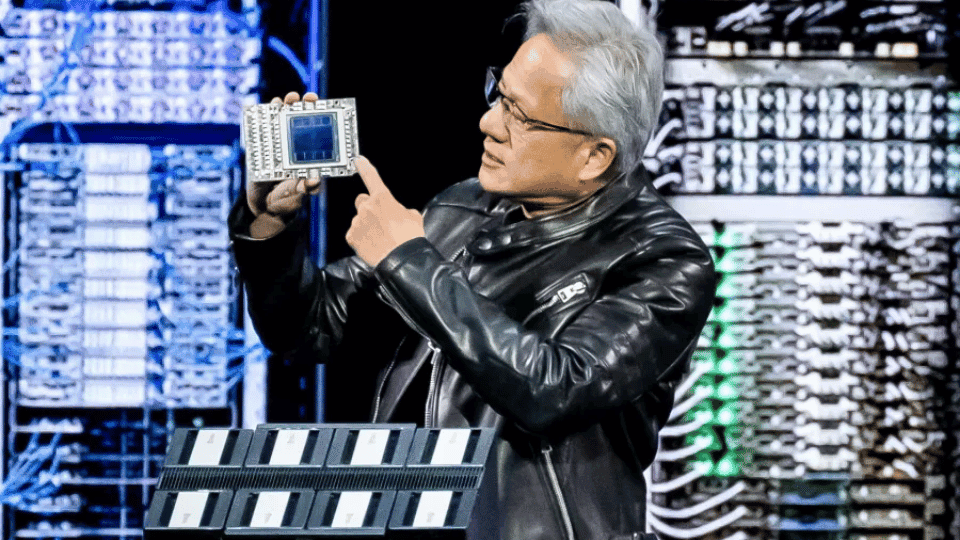
Nvidia dropped news this week that private equity heavyweights including Apollo, BlackRock, Blackstone, Brookfield, Goldman Sachs, and KKR stand ready to commit up to $500 billion toward building AI data centers. While that massive funding pledge grabbed headlines everywhere, the real power play sits in how Nvidia plans to build a secondary resale market for its aging computer processors.

To convince Wall Street institutions to back these massive hardware loans, Nvidia agreed to guarantee with its own cash balance that graphics processors used as collateral will hold their value over time. Industry analysts called the move clever, bold, and risky all at once. Nvidia CEO Jensen Huang took to social media and television interviews to explain how the company limits its actual downside exposure while unlocking private credit markets.

Nvidia is telling lenders that if processors pledged as loan collateral drop below expected market values, the chipmaker will pay up to 25 percent of the financial difference. If a data center operator defaults on its loan payments and the lender must sell off physical processors in a down market, Nvidia steps in to cover part of the price gap.

Financial experts point out that this setup creates a classic risk scenario where Nvidia faces potential losses from both sides simultaneously. If consumer demand for computing power cools off, chip sales drop right when the value of older hardware plummets, forcing Nvidia to cover shortfalls on defaulting loans.

Despite those worries, comparing this move to the telecom crash of the early 2000s misses key differences. When Lucent Technologies collapsed after lending customers money to buy its own gear, it carried almost all the underlying credit risk alone. In contrast, Nvidia gets private investment firms to front the vast majority of cash, agreeing only to back a fraction of the hardware resale price down the road.

Nvidia has spent billions backing major players across the artificial intelligence sector, supporting frontier research teams like OpenAI and Anthropic, along with cloud providers like CoreWeave, Nebius, Firmus, and Lambda. Financial reports indicate Nvidia tracked over $750 billion worth of potential deal opportunities across the market this summer alone.

Huang responded directly to concerns about circular funding models on social media, explaining that the guarantee strategy brings institutional capital directly into computing infrastructure. By guaranteeing a floor on used hardware values, Nvidia encourages private lenders to fund new data center construction without taking on total exposure if tech markets shift.

If the initiative works, Nvidia opens fresh capital pipelines just as standard corporate funding channels show signs of fatigue. Tech giants have taken on huge debt loads or burned through cash reserves to build out servers. Microsoft CEO Satya Nadella even referenced historical railroad booms to highlight how early infrastructure building relies on aggressive financial setups.

Nvidia is betting that computing clusters function more like long-term industrial factories than short-lived consumer gadgets. If a buyer stops using a cluster, another cloud provider can take over the physical hardware to run open-weight software models. By protecting secondary chip values, Nvidia keeps its entire hardware ecosystem running strong.

Quick Notes

3 min

Read Time

Trends & Strategy
XUNA
XUNA AI
August 14, 2026
Back to Pulse
Share This Article
XUNA

Effortless Human-Like AI Phone Calls

Build a no-code AI phone system with our AI voice assistants: stop missing calls and start converting more leads.

Get Started With XUNA
Share This Post
Back to Pulse
XUNA PULSE

Related Articles

Beyond Electric Vehicles: Chinese Automakers Shift Focus to Humanoid Robotics
Trends & StrategyXUNA AI

Beyond Electric Vehicles: Chinese Automakers Shift Focus to Humanoid Robotics

Hype around humanoid robots continues to build across the tech industry, driven by Tesla’s Optimus project and viral performance clips of Boston Dynamics’ Atlas robot. Behind the online buzz, physical robot capabilities are making real progress. Researchers now apply the same training methods behind large language models to physical machines, teaching robots to perform complex […]

Read More10 hours ago
Beyond the Graphics Chip: Nvidia Builds the Full Data Center Ecosystem
Trends & StrategyXUNA AI

Beyond the Graphics Chip: Nvidia Builds the Full Data Center Ecosystem

For the first few years of the automated computing wave, Nvidia stood as the sole source for top-tier graphics processing units. That focus created massive profits as tech companies scaled up. Recently, big cloud providers like Amazon and Google began designing their own silicon chips, leading investors to wonder if Nvidia might lose its dominant […]

Read More10 hours ago
Heavy Iron Brains: How Caterpillar Moves Industrial Automation From Mines to Construction Sites
Trends & StrategyXUNA AI

Heavy Iron Brains: How Caterpillar Moves Industrial Automation From Mines to Construction Sites

Nearly every firm attempting to adopt smart software encounters a shared obstacle: integrating high-end algorithms into daily physical tasks remains surprisingly tough. Heavy machinery titan Caterpillar spent decades tackling that exact problem on remote industrial sites. Now, the manufacturing giant applies those hard-earned operational lessons to deploy smart systems directly into job site fleets. Caterpillar […]

Read More10 hours ago
Name Fatigue: How Complex AI Branding Is Confusing Everyday Users
Trends & StrategyXUNA AI

Name Fatigue: How Complex AI Branding Is Confusing Everyday Users

Google claims its updated Gemini app handles voice commands without making users guess which background tool handles the request. However, the company continues giving individual feature sub-brands to almost every tool inside the app, creating a confusing experience that undermines its own message. Inside the Gemini interface, people must navigate between regular chat, Spark, and […]

Read More4 days ago
The $18 Billion Catch: Meta’s Child Safety Deal Relies on Broken Verification Tech
Trends & StrategyXUNA AI

The $18 Billion Catch: Meta’s Child Safety Deal Relies on Broken Verification Tech

Meta agreed to pay 52 United States attorneys general $18 billion to settle a massive lawsuit regarding child safety on its platforms. The company promised to overhaul how teenagers experience Instagram and Facebook by implementing strict design changes. The Financial Reality The price tag sounds massive, but tech litigator Jessica Mall points out that the […]

Read More4 days ago
Book Pirates or Training Ground: The Legal Battle Over Copyrighted Data
Trends & StrategyXUNA AI

Book Pirates or Training Ground: The Legal Battle Over Copyrighted Data

Major tech platforms like OpenAI, Google, and Anthropic train their models on vast libraries of published books, online articles, and academic papers without asking for permission or paying authors. While authors argue that using their work without consent destroys their livelihoods, federal courts view the legal reality much differently. Intellectual property attorney Cathy Gellis explains […]

Read More1 week ago
Liquid Power: Why Tech Giants Are Looking at Urine to Cool Massive Data Centers
Trends & StrategyXUNA AI

Liquid Power: Why Tech Giants Are Looking at Urine to Cool Massive Data Centers

Tech companies face a massive resource crisis as data centers consume millions of gallons of fresh water to keep server racks cool. With local grids and water supplies running dry, canned water brand Liquid Death teamed up with environmental group Earth Justice to spark a wild debate. They launched a campaign asking whether human urine […]

Read More1 week ago
Broken Promises: Why Everyday Users Are Turning Their Backs on AI Tech
Trends & StrategyXUNA AI

Broken Promises: Why Everyday Users Are Turning Their Backs on AI Tech

Tech leaders expected synthetic tools to win over public opinion by now, but current adoption numbers show a very different picture. A recent Pew Research Center study reveals that 52 percent of Americans express far more concern than excitement about automated tools taking over daily tasks. That concern reflects a steady rise from 37 percent […]

Read More1 week ago