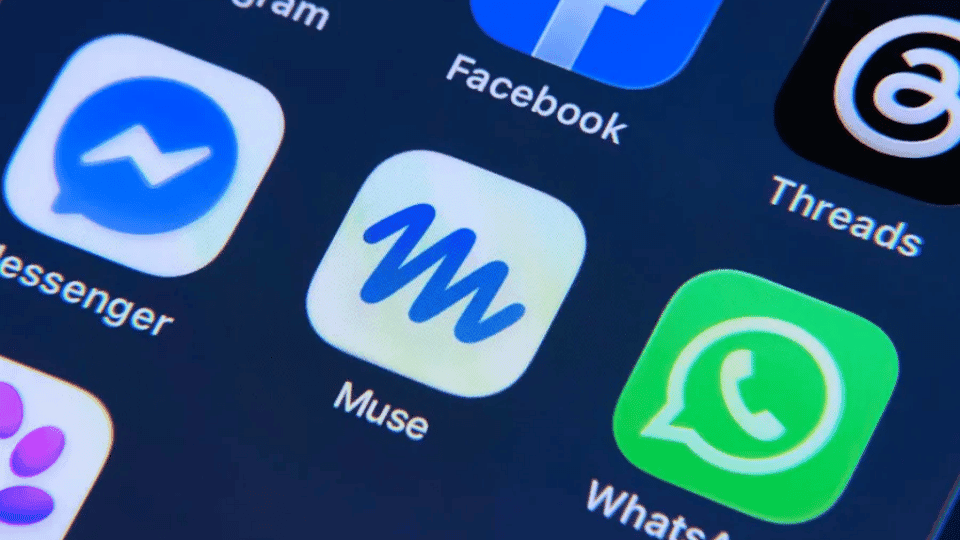
Mobile Takeover: Meta’s Muse Agent Climbs US App Store Charts
Meta is starting to gain favor on Wall Street following the launch of its new standalone application, Muse. The tech giant’s push into autonomous software agents is sparking wide discussion across social media platforms, with early download figures giving clear insight into how domestic consumers are receiving the tool.
Data provided by market intelligence firm Sensor Tower shows that iOS users in the United States downloaded Muse over 83,000 times during its initial rollout phase. Availability remains restricted to US iPhone users for now.
While those numbers pushed Muse into the second overall spot on the US iOS App Store charts, its launch speed trails behind previous software releases from Meta. For context, Threads hit more than 4.3 million downloads on its first day, while the Meta AI app pulled in 109,000 US downloads when it debuted.
Muse also trails early adoption metrics set by rival consumer applications like ChatGPT. Less than a week after launching, ChatGPT topped 500,000 US installations, averaging roughly 83,300 daily downloads during its opening run. Muse needed twice as much time to match that single-day benchmark.
Slower initial numbers do not mean the release is failing. Muse continues climbing app store rankings, rising from fourth place up to the second position on the US iOS chart.
Performance on Android hardware tells a different story. Muse currently ranks at number 338 in the Productivity category on Google Play, though exact download totals for Android users are not public yet.
Download charts do not track web usage or WhatsApp integration, meaning total user activity could be higher than store figures suggest.
Despite modest opening metrics, Muse represents a major strategic shift for Meta. Executive teams believe autonomous agents that perform active tasks for users represent the future of consumer tech. The shift toward agent software matches the scale of the company’s earlier rebrand from Facebook to Meta when it pivoted toward virtual environments.
Meta faces stiff competition across the consumer market. Competitors like Google’s Gemini Spark and Anthropic’s Claude Cowork target everyday task management. Meanwhile, rival startup Instinct raised fresh funding at a $2.5 billion valuation, offering an assistant agent that coordinates tasks over text messages and app networks.
Instinct is drawing heavy interest from tech insiders despite privacy concerns regarding its broad data policies. Supported by a $350 million war chest, Instinct ships features quickly. It recently added dedicated email addresses for users and launched an internal social network that lets personal agents talk directly with friends’ agents to coordinate group plans.
Building social connections based on direct user interactions could create a tighter network than Meta’s existing social graphs. Over recent weeks, Instinct added integrations with Stripe and 1Password alongside location-sharing tools that execute physical actions based on where a user stands.
Timing may also affect how users receive Muse. Asking users to share personal information comes right after Meta agreed to a $10 billion legal settlement over social media harms. Previous data privacy scandals and Federal Trade Commission fines mean consumers evaluate Meta’s data collection policies carefully before handing over access to personal messages.
As software agents take over everyday tasks, platform providers must build public trust. Securing user privacy while shipping useful features will determine which assistant becomes the main digital interface for mobile users.