Political Flashpoint: Post-Midterm Shift Signals Massive Federal and Local Battles Over Data Center Infrastructure
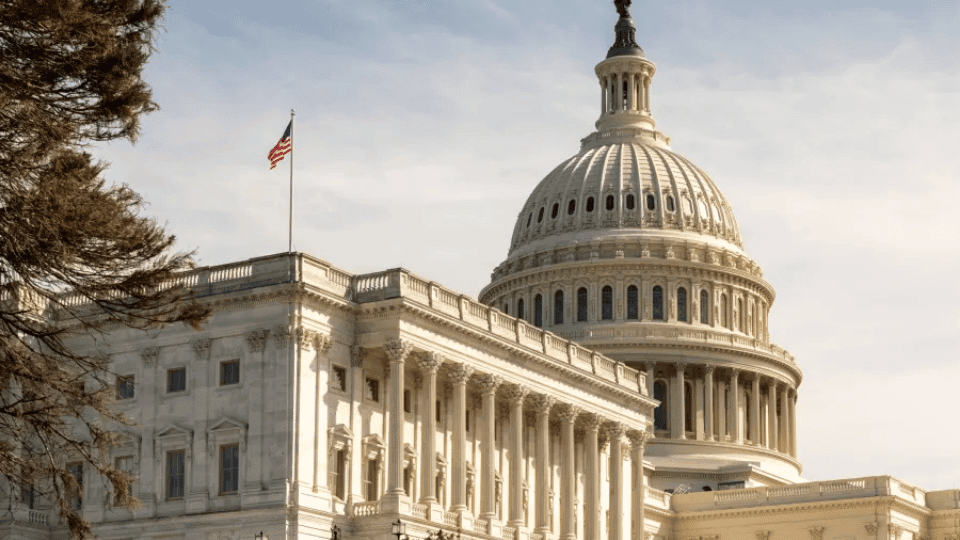
The November 3 midterm election results delivered Democratic control of Congress, setting the stage for one of the most contentious political battles over tech infrastructure this decade. As artificial intelligence hardware expansion sweeps across the United States, large host facilities that store server racks and processing equipment are shifting from quiet industrial projects into primary political flashpoints. With Democrats holding majorities on Capitol Hill, federal lawmakers are preparing strict legislation to govern where data centers can be built, how facilities access power, and how much authority local communities maintain over permitting decisions.
Data center expansion emerged as a key ballot issue in several states during the midterms. In a national poll of registered voters, 66 percent expressed concerns about large computing campuses entering local neighborhoods. Almost 60 percent voted against constructing new facilities nearby, while nearly 60 percent viewed data centers as a major campaign issue. Activists and advocacy leaders point out that community pushback spans the entire political spectrum. Republican voters voice deep frustration over gas turbines and industrial noise, while Democratic voters raise concerns over corporate tax exemptions and environmental degradation.
Voters across multiple states actively rejected data-heavy projects during the midterm election cycles. In Ohio, where OpenAI planned a $500 million facility backed by more than $100 billion in private financing, local voter pushback grew rapidly. In Georgia, voters in South Fulton passed a formal ban on data center permits, and local leaders across the state repeatedly organized against massive developer proposals. Political analysts note that local opposition serves as a powerful campaign tool, allowing candidates from both parties to align with resident concerns over grid stability and noise pollution.
Following the midterm outcomes, state and federal leaders are preparing concrete legislative action to restrict fast-tracked developments. Proposed measures include enforcing multi-year construction moratoriums, requiring developers to pay for private power grid upgrades, and passing strict environmental rules. In Washington, federal lawmakers are reintroducing legislation that would establish a national moratorium on unpermitted data center construction until strict grid safeguards and environmental protections are established. Additionally, proposed energy protection acts aim to prevent utility companies from shifting infrastructure buildout costs directly onto residential electric bills.
The legislative momentum presents major operational hurdles for big tech developers, particularly in high-density markets like Northern Virginia and Central Ohio. Program directors and policy researchers caution that federal restrictions could stall ongoing facility builds and disrupt long-term infrastructure timelines. At the same time, industry skeptics warn that broad legislative bans might hurt overall economic competitiveness by slowing research and development in critical technology sectors.
Despite potential pushback from corporate lobbies, grassroots pressure continues to build at municipal levels. Local residents are demanding transparent development deals, accurate environmental impact reviews, and an end to secret non-disclosure agreements that prevent public scrutiny of city utility contracts. As energy demands climb nationwide, tech companies can no longer rely on quiet local expansion. Developers must secure public consent, invest in independent energy generation, and prove direct economic benefits to host communities if they want to build next-generation computing infrastructure.