Overbooked Power: SoftBank’s $3 Billion Turbine Loss Signals Limits on AI’s Natural Gas Rush
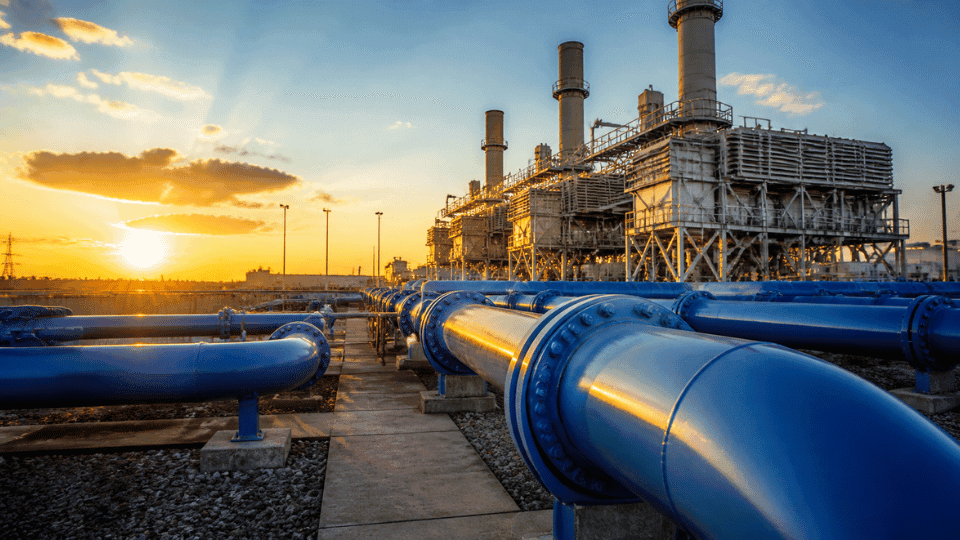
SoftBank rarely enters a hot technology market cautiously, preferring instead to place massive capital bets once momentum builds. Over the past two years, Chief Executive Officer Masayoshi Son applied that aggressive playbook to artificial intelligence infrastructure, committing $30 billion to OpenAI in early 2025 and announcing a $33 billion plan through subsidiary SB Energy to build a 9.2-gigawatt natural gas power plant. That oversized strategy carried directly into equipment procurement, where SoftBank placed advance deposits on more than 13 gigawatts of gas turbines, reserving roughly 50 percent more generation capacity than its planned facilities actually needed.
While over-ordering helped SoftBank jump the line for scarce hardware initially, that aggressive bet just backfired. SoftBank reported a massive $7.1 billion quarterly loss, with over half of that deficit stemming directly from write-downs on power-generating equipment. To lock in manufacturing slots, SoftBank had handed turbine makers billions in non-refundable advance deposits, which the firm now considers largely worthless after scaling back its procurement plans.
Energy market observers say SoftBank’s aggressive pre-ordering stemmed from panic across the power sector. Rapid growth in AI computing caught traditional utilities off guard, stretching delivery queues for new gas turbines into the early 2030s. Son bet that deploying SoftBank’s massive financial war chest to buy up turbine slots early would allow the firm to corner a major piece of the AI energy supply chain. Peter Gardett, chief executive of energy market intelligence firm Noreva, noted that SB Energy had little choice but to overbook future production slots if it wanted immediate turbine deliveries, calling the resulting $3 billion write-off a costly exercise in market price discovery.
SoftBank’s multi-billion-dollar miscalculation reflects the broader electricity anxiety gripping the artificial intelligence industry. Facing multi-year wait times to connect new server campuses to regional utility grids, cloud hyperscalers and data center developers rushed toward dedicated natural gas plants as a fast, reliable power alternative.
However, real-world operating experience is prompting infrastructure builders to rethink relying solely on on-site gas generation. Brent Nelson, senior managing director of markets and strategy at Ascend Analytics, pointed out during a recent Equity podcast appearance that natural gas carries distinct operational hazards, including winter fuel curtailments when cold weather spikes residential heating demand and tightens pipeline supplies.
Instead of building massive standalone gas plants, Nelson argued that most AI data centers are better served by securing smaller utility grid connections paired with large-scale industrial battery storage systems. Battery arrays allow operators to shave peak power loads and ride out temporary utility curtailment requests at a lower cost and with far greater operational flexibility than locking up capital in non-refundable turbine contracts.
As more data center operators reach similar conclusions, demand for dedicated natural gas turbines will likely grow at a steadier, more measured pace than SoftBank anticipated. While SoftBank’s $3 billion write-off will not trigger mass cancellations of existing gas power projects given AI’s massive overall electricity appetite, the loss marks a clear ceiling on speculative energy hoarding across the tech sector.