Power Distortion: Al Gore Calls Out False Climate Hype Around Data Centers
Former US Vice President Al Gore spent more than two decades standing as a primary voice in global climate advocacy, so when he speaks on energy footprints, environmentalists pay close attention. Gore argues that the biggest environmental threat surrounding modern software expansion is not data center electricity use, but rather the misleading public warnings originating from industry insiders.
In a direct conversation, Gore and Generation Investment Management partner Lila Preston clarified that carbon emissions from computing centers make up only a tiny fraction of global industrial output. Public focus, Gore argues, should target real environmental risks rather than hyper-fixating on server cooling systems that draw far less power than widespread residential air conditioning.
Gore noted that air conditioning across warm regions already draws more electricity than entire European countries, with home cooling demand expected to triple by 2050. Compared to domestic air conditioning growth, server power draw remains a manageable secondary challenge.
What worries Gore far more is how fossil fuel companies and utility boards use server expansion as an excuse to build new natural gas pipelines and keep coal plants online. Power executives claim that sudden computing demand forces them to expand fossil fuel infrastructure, ignoring cheap renewable energy options that install faster and cost far less over time.
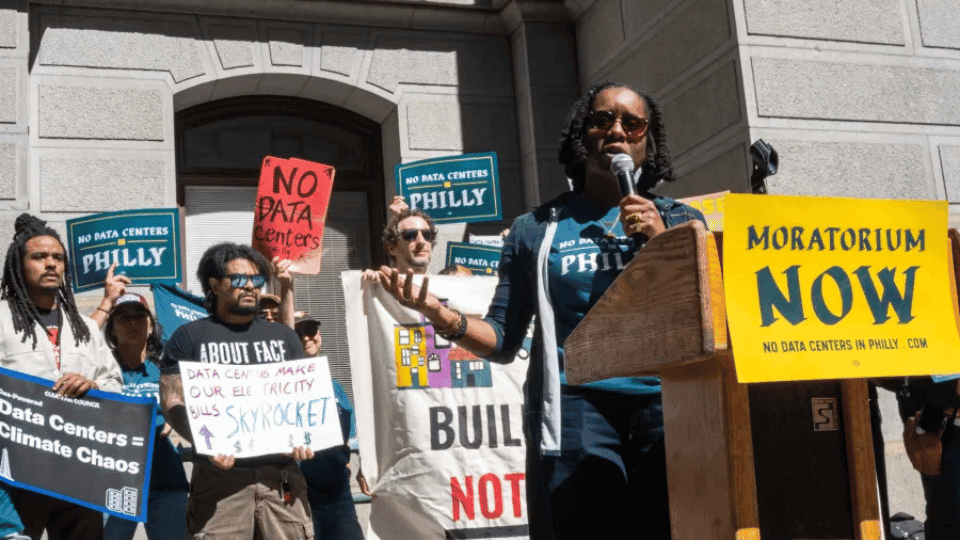
Preston pointed out that growing opposition to server facilities across American towns stems directly from public anxiety over local power costs and fossil fuel pollution. Tech firms like OpenAI and Anthropic regularly sound alarms about energy supply shortages, which power providers use to justify long-term fossil fuel investments.
Gore also called out dramatic public statements from tech leaders regarding existential technology risks. After listening to recent warnings from Anthropic executives and public comments from figures like Elon Musk and Sam Altman, Gore argued that apocalyptic claims serve as strategic distractions, shifting public focus away from immediate pollution concerns and legal accountability.
Quoting author Maya Angelou, Gore noted that when corporate leaders tell you who they are, people should believe them the first time. He stated that exaggerated safety warnings often hide real corporate goals, such as shielding platform algorithms from public oversight while securing preference for utility grid hookups.
Despite those industry distractions, global green energy deployment keeps setting records. Preston highlighted that clean energy builds represent roughly 85 percent of all new global electricity generation added last year, with US clean power additions hitting 91 percent of total new grid capacity.
China earned praise from Gore for leading rapid solar and wind installation campaigns, rapidly replacing fossil fuel reliance with domestic renewable installations. The falling cost of solar panels and battery storage makes renewable generation the absolute cheapest power source on Earth today, beating out gas, coal, and nuclear options without requiring long construction delays.
Fixating on server electricity demands misses the real environmental battle. Power companies must stop using software expansion as a shield to build fossil fuel plants, focusing instead on rapid clean power deployment to supply every growing industry.