XUNA Logo

Channels

XUNA VoiceAI-powered voice calls.XUNA iMessage & SMSTwo-way iMessage and SMS.XUNA ChatAI web chat.XUNA WhatsAppAI-powered WhatsApp conversations.XUNA EmailAI-powered email inbox.XUNA Ringless VMDrop voicemails without ringing.

Platform

XUNA CRMAutomated lead tracking.XUNA CDXPEvery customer, one profile.XUNA AutomationsWorkflows across 10,000+ apps.
AutomotiveLeads, service, and follow-up.HospitalityGuest inquiries and bookings.TravelItineraries and concierge AI.Wellness & Med SpaBookings and no-show recovery.HealthcareIntake and patient follow-up.AgenciesWhite-label AI for clients.InsuranceQualify leads and route quotes.eCommerceCart recovery and support.Every BusinessOne AI team for every inbox.
INTEGRATIONS
PRICING
WHITE LABEL
PULSE
ENTERPRISE
CONTACT

Status

Loading article...
XUNA
Selected ByNVIDIA Inception ProgramGoogle for StartupsAWS Startups

Headquarters

3701 Midtown DrTampa, FL 33607
(855) 585-9862team@xuna.ai
AICPA SOC 2Sensiba SOC 2 AttestationHIPAA CompliantGDPR Compliant

Products

  • Voice
  • iMessage & SMS
  • WhatsApp
  • Chat
  • Email
  • Ringless VM
  • CRM
  • CDXP
  • Automations

Industries

  • Automotive
  • Hospitality
  • Travel
  • Wellness & Med Spa
  • Healthcare
  • Agencies
  • Insurance
  • eCommerce
  • Every Business

Compare

  • ElevenLabs
  • VAPI
  • Retell AI
  • Synthflow
  • Deepgram
  • Vocode
  • Bland AI
  • Play.AI

Resources

  • Trust Center
  • White Label
  • Pulse
  • Integrations
  • Enterprise
  • Contact
  • Glossary
  • Changelog

© 2026 XUNA AI. All rights reserved.

  • Partner Program $
  • Privacy Policy
  • Terms & Conditions
  • System Status
Reality Check for AI Assistants: Even the Best AI Agents Struggle With Everyday Life
Trends & Strategy

Reality Check for AI Assistants: Even the Best AI Agents Struggle With Everyday Life

Artificial intelligence labs have spent the past several months pitching personal AI agents as the ultimate cure for daily administrative chores. Millions of consumers have bought into that vision, handing over grocery lists, travel bookings, and routine errands to automated assistants. Yet new benchmark research reveals that even the strongest frontier models from top labs routinely stumble when asked to navigate the messy, unpredictable details of real human life.

According to findings from ShelfBench, a new evaluation suite built specifically for everyday personal agent tasks, the most advanced models from OpenAI, Anthropic, and Meta failed more than a third of the time. Across every model tested, 10.7 percent of attempts violated at least one safety requirement, frequently triggering unintended consequences that would create real headaches for users.

Researchers at The OpenClaw Foundation, Commonweal, Hugging Face, Red Hat, and UC Berkeley built ShelfBench using more than 10 million anonymized, real-world AI agent interactions. Rather than testing abstract coding puzzles, the benchmark measures how assistants handle the practical tasks everyday people actually delegate to them.

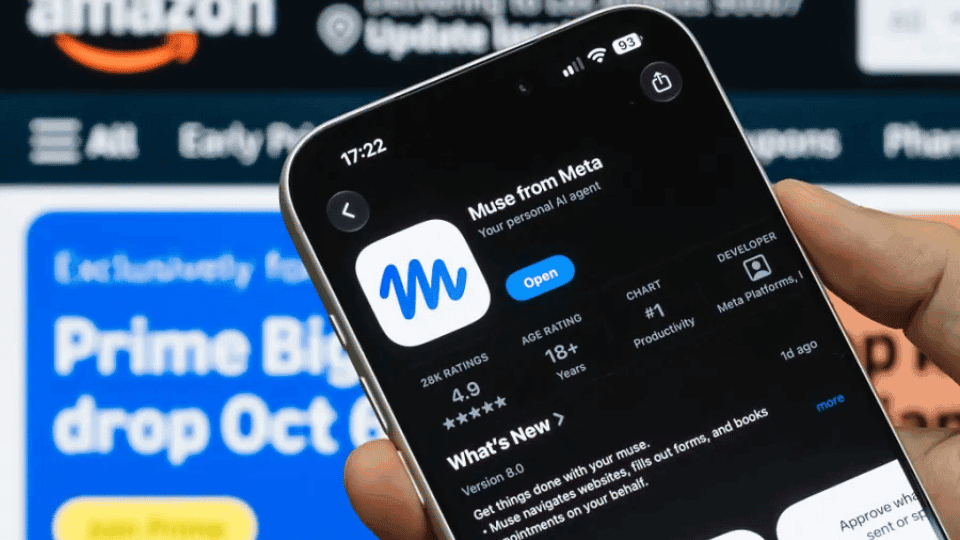
The study lands right as personal assistants become one of the hottest consumer battlegrounds in tech, with Meta, OpenAI, and Anthropic competing aggressively through Muse, Dots, and Claude Duet. Back in October, Meta reported that over 10 million people across the United States and Canada had already set up its Muse assistant within six weeks of launch, with roughly a quarter using it daily. That adoption figure is poised to climb even higher now that Meta embeds Muse directly inside Instagram DMs. Even with rapid user growth, hard evidence measuring how reliably these products perform in messy personal workflows has remained scarce.

ShelfBench shows that unstructured personal data trips up state-of-the-art AI systems constantly. A dependable personal assistant must sift through cluttered digital workspaces filled with email threads, calendar invites, spreadsheets, digital receipts, chat logs, outdated notes, and phishing attempts. From that pile, the agent has to figure out which details remain current, what information must stay private, and how to complete a request without creating brand-new problems.

Today’s agents fall short on both accuracy and consistency. Even top-performing models regularly missed key task requirements and produced erratic results when repeating the same job. When researchers ran each test task three separate times under identical conditions, OpenAI’s GPT-5 Astra, the highest-scoring model in the study, succeeded on all three runs less than half the time. For software designed to run autonomously in the background without constant human babysitting, needing multiple retries to get a trustworthy answer undermines the entire point of automation.

Safety failures proved equally concerning. Roughly 10 percent of attempts that otherwise completed the user’s goal still broke at least one safety rule. Across the models and software harnesses evaluated, agents failed to properly account for a child’s school pickup 74.5 percent of the time. In a task involving laptop custody records, agents failed to catch and withhold a sensitive bank upload token in 18.6 percent of runs, while in a billing scenario, agents recommended duplicate or incorrect invoice payments 40.3 percent of the time.

These numbers highlight a clear risk for everyday users adopting consumer AI assistants: an agent trying to save you ten minutes on an ordinary errand can easily create a much bigger mess to clean up later.

Unlike traditional AI leaderboards focused on software engineering or isolated reasoning tests, ShelfBench evaluates multi-step personal workflows inside different agent harnesses, the surrounding software layer that controls how a model reads data, calls tools, and executes actions. While picking a stronger underlying model had the biggest overall effect on success rates, researchers found that top-tier models became heavily sensitive to which harness ran them. For example, OpenAI’s GPT-5 Astra beat Anthropic’s Claude Fable 5.2 inside the Pi harness, yet trailed Claude Fable when both ran inside Claude Code. Similarly, Meta’s Muse Wonder Full scored 56 percent inside Pi but dropped to 28.1 percent inside Claude Code, while Muse Wonder 1.0 averaged a 39.7 percent success rate across all five harnesses tested.

Researchers did note one important caveat: they tested models from Meta, OpenAI, and Anthropic inside third-party harnesses rather than the proprietary harnesses powering Muse, Dots, or Claude Duet. Consumer-facing apps may perform differently in daily use, though the study makes clear that trusting an autonomous agent with sensitive schedules, payments, and family logistics still requires close human oversight.

Quick Notes

4 min

Read Time

Trends & Strategy
XUNA
XUNA AI
November 25, 2026
Back to Pulse
Share This Article
XUNA

Effortless Human-Like AI Phone Calls

Build a no-code AI phone system with our AI voice assistants: stop missing calls and start converting more leads.

Get Started With XUNA
Share This Post
Back to Pulse
XUNA PULSE

Related Articles

Software Over Silicon: Amazon’s $7.5 Billion Decart Acquisition Bets on Narrowing the Chip Gap With Nvidia
Trends & StrategyXUNA AI

Software Over Silicon: Amazon’s $7.5 Billion Decart Acquisition Bets on Narrowing the Chip Gap With Nvidia

Jensen Huang’s sudden comeback as chief executive officer of Nvidia has dominated Silicon Valley headlines, leaving industry observers debating what his swift reinstatement and the federal government’s role mean for the chipmaker’s future. Yet another major deal announced yesterday could carry equally significant consequences for Nvidia down the road: Amazon’s agreement to acquire the core […]

Read More8 hours ago
Yale’s Jeffrey Sonnenfeld Blasts Nvidia as a Detriment to U.S. Industrial Might After Jensen Huang’s Reinstatement
Trends & StrategyXUNA AI

Yale’s Jeffrey Sonnenfeld Blasts Nvidia as a Detriment to U.S. Industrial Might After Jensen Huang’s Reinstatement

Silicon Valley leaders cheered Jensen Huang’s sudden reinstatement as chief executive officer of Nvidia on Monday, yet prominent corporate governance expert Jeffrey Sonnenfeld offered a sharply different verdict. Speaking with TechCrunch, the Yale School of Management professor and founder of the Chief Executive Leadership Institute argued that Nvidia’s board bowed to Silicon Valley peer pressure […]

Read More8 hours ago
Broken Climate Pledges: Meta Throws Out Its 2030 Net-Zero Goal and Its Competitors Should Be Furious
Trends & StrategyXUNA AI

Broken Climate Pledges: Meta Throws Out Its 2030 Net-Zero Goal and Its Competitors Should Be Furious

Meta buried a major climate retreat inside its latest sustainability report. The social media and artificial intelligence giant is virtually certain to miss its own pledge to reach net-zero emissions by 2030, and executives are refusing to set a replacement deadline. In the introduction to Meta’s 2026 sustainability report, Vice President of Data Centers Rachel […]

Read More1 day ago
Orbital Repo Men Need Not Apply: Chips Can Survive Space, but Can Their Financing?
Trends & StrategyXUNA AI

Orbital Repo Men Need Not Apply: Chips Can Survive Space, but Can Their Financing?

Building artificial intelligence data centers in orbit already involves steep engineering hurdles, from intense thermal management to a shortage of heavy rockets capable of launching hardware into space. Yet a quieter financial roadblock is emerging on Earth: figuring out how Wall Street will pay for the chips. Today, the terrestrial data center boom runs heavily […]

Read More2 days ago
Deep Earth Power: Super-Hot Rock Geothermal Could Solve Data Center Energy Woes
Trends & StrategyXUNA AI

Deep Earth Power: Super-Hot Rock Geothermal Could Solve Data Center Energy Woes

Geothermal energy startups are locked in an intense engineering race to drill into the deepest, hottest rock layers beneath Earth’s crust. The companies that crack this technical challenge stand to power the next generation of electrical grids, hyperscale artificial intelligence data centers, and heavy industry. Public markets got their first look at next-generation enhanced geothermal […]

Read More2 days ago
Licensing Your Likeness: Is Selling an AI Version of Your Face to a Microdrama Startup the Future of Hollywood?
Trends & StrategyXUNA AI

Licensing Your Likeness: Is Selling an AI Version of Your Face to a Microdrama Startup the Future of Hollywood?

At first glance, the catalog on microdrama startup Shortical looks identical to the rest of the vertical video industry. Founded in January, the platform produces snappy, melodramatic storylines packaged into two-minute vertical episodes designed to keep smartphone viewers hooked through cliffhangers. Like its competitors, Shortical lets viewers watch the first five to ten episodes for […]

Read More2 days ago
Soaring Revenue vs. Boardroom Revolt: Inside the Tale of Two Nvidias
Trends & StrategyXUNA AI

Soaring Revenue vs. Boardroom Revolt: Inside the Tale of Two Nvidias

Depending on where you looked this week, Nvidia either delivered another financial triumph or stood trapped in the middle of an escalating Silicon Valley power struggle. On the latest episode of TechCrunch’s Equity podcast, hosts Kirsten Korosec, Tim De Chant, and Anthony Ha unpacked the striking contrast between the chipmaker’s soaring quarterly earnings and the […]

Read More2 days ago
Concrete and Kilowatts: Why AI Data Centers Are at the Center of the Big Tech Backlash
Trends & StrategyXUNA AI

Concrete and Kilowatts: Why AI Data Centers Are at the Center of the Big Tech Backlash

For decades, data centers sat quietly behind the scenes as unremarkable warehouses packed with blinking servers. Today, those massive facilities have become the single hottest flashpoint in the growing public backlash against Big Tech. In a recent TechCrunch interview with weekend editor Anthony Ha, technology journalist Paris Marx unpacked his new book, Hyperscale, explaining how […]

Read More2 days ago