Deep Earth Power: Super-Hot Rock Geothermal Could Solve Data Center Energy Woes
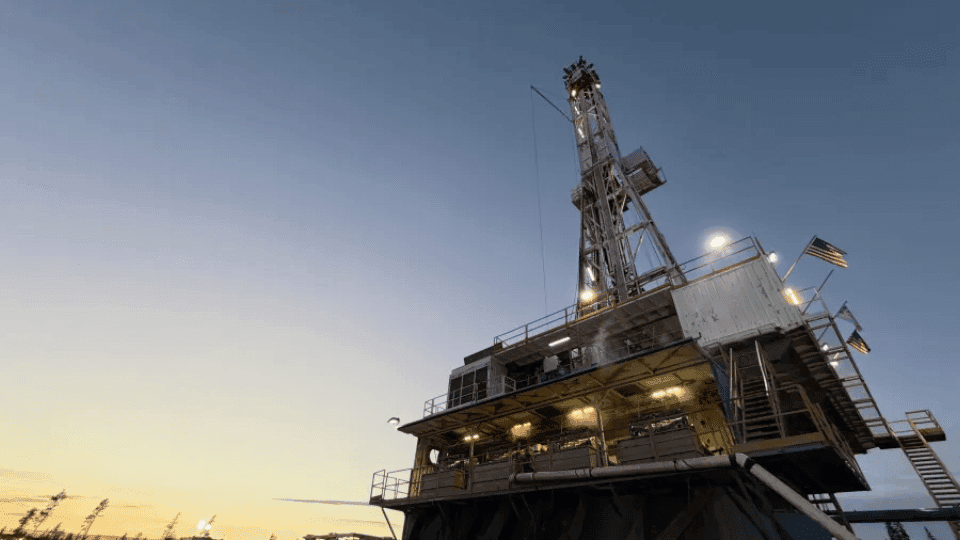
Geothermal energy startups are locked in an intense engineering race to drill into the deepest, hottest rock layers beneath Earth’s crust. The companies that crack this technical challenge stand to power the next generation of electrical grids, hyperscale artificial intelligence data centers, and heavy industry.
Public markets got their first look at next-generation enhanced geothermal earlier this year when Fervo Energy went public, yet this week’s breakthroughs centered squarely on super-hot rock geothermal. Clean-power investors, major technology firms, and the Trump administration have all rallied behind geothermal power. While tapping underground heat is decades old, modern drilling techniques adapted from the oil and gas industry have dramatically expanded where geothermal plants can operate. Across the United States alone, untapped geothermal resources hold up to 5 terawatts of generating potential, more than enough clean baseload power to supply the massive wave of AI data centers under construction.
Super-hot rock geothermal taps into a unique physical phenomenon that occurs at extreme depths. As drillers bore closer to Earth’s superheated interior, underground temperatures and pressures climb dramatically. Once conditions cross a critical threshold, ordinary water transforms into a supercritical fluid, a dense gaseous-liquid state capable of carrying vastly more thermal energy than standard steam. Because supercritical fluid packs so much energy, a single super-hot rock well can generate 15 megawatts of continuous electricity or more, multiplying output compared to conventional wells.
That commercial potential moved closer to reality on Tuesday when Quaise Energy announced that it signed Google as an anchor customer. Google agreed to pay more than $500 million to buy 50 megawatts of round-the-clock clean electricity from a Quaise facility in central Oregon that will tap searing rock three miles underground. Although Google is paying a premium rate for that initial power block, backing early energy suppliers fits Google’s established playbook, mirroring its earlier investment and power purchase agreement with Fervo Energy.
Alongside Google’s deal, two other startups posted major technical milestones this week. On Monday, Khosla Ventures-backed Mazama Energy announced a breakthrough method for keeping drill heads cool while boring into extreme-heat formations. Last week, XGS Energy also secured a Department of Energy grant to develop specialized materials, well designs, and modeling tools that improve hardware reliability at super-hot depths.
While XGS is testing the waters, Quaise and Mazama have built their entire companies around super-hot rock using radically different engineering strategies. Quaise uses a contactless drilling method that sounds straight out of science fiction. Once a conventional rig bores roughly 2.5 miles down, Quaise swaps the mechanical drill bit for a high-powered gyrotron beam that blasts solid basement rock with millimeter-wave radiation, vaporizing the stone into fine ash. Eliminating physical contact avoids the rapid wear and tear that destroys traditional metal drill bits under extreme heat.
Mazama takes the opposite view, betting that standard mechanical drill bits work fine if engineers keep them cold. Mazama’s new Carbon Chill system replaces traditional water-based drilling mud with carbon dioxide. At extreme underground pressures and temperatures, the carbon dioxide becomes supercritical, absorbing massive amounts of heat. Right above the drill bit, the gas passes through a nozzle shaped like a rocket engine, expanding rapidly to chill the cutting head while carrying crushed rock cuttings back to the surface where the carbon dioxide gets filtered and recycled.
Both approaches aim to leapfrog current commercial geothermal plants. Drilling accounts for roughly a quarter to a third of a geothermal plant’s total upfront cost, so extracting dramatically more megawatts from fewer, hotter wells makes projects far more economical. Venture investors have poured serious capital behind both visions. Quaise has raised over $120 million from backers including Prelude Ventures, Collaborative Fund, Engine Ventures, and angel investor Vinod Khosla, while Mazama has raised $171 million from Khosla Ventures, Doerr Capital, and Bill Gates.
Early field data suggests the engineering bets are paying off. Mazama co-founder and Chief Executive Officer Sriram Vasantharajan told TechCrunch that the startup drilled its second test well 82 percent faster than its first, with its carbon dioxide cooling system cutting drilling time by another 20 percent. Combined with Google’s $500 million commitment to Quaise, super-hot rock geothermal is rapidly heating up as a serious solution for round-the-clock data center power.