Rooftop Signal Boost: Elon Musk Says SpaceX Has a Plan to Eliminate Cell Phone Dead Zones
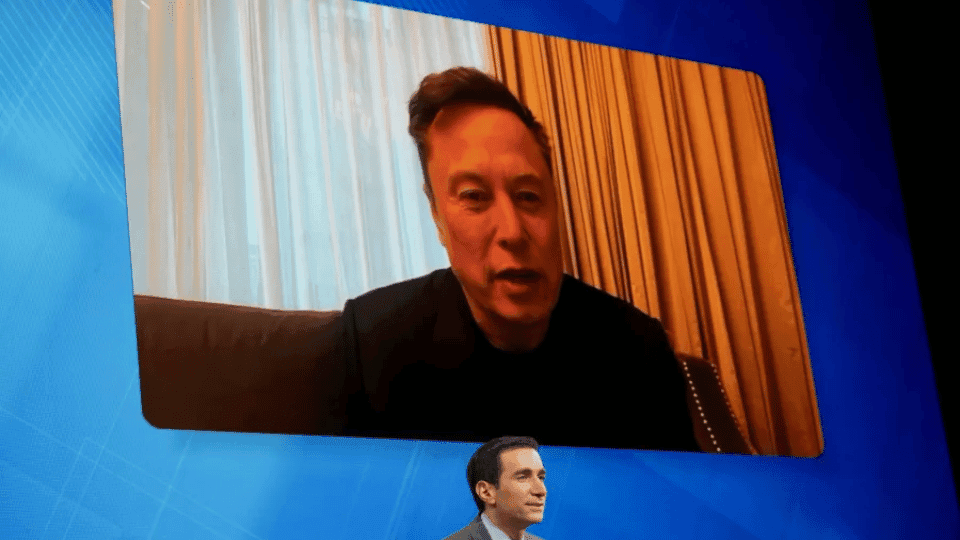
SpaceX Chief Executive Officer Elon Musk announced that his aerospace company has finished designing a miniature rooftop cell tower built to wipe out indoor mobile dead zones where overhead Starlink satellite signals struggle to penetrate. Speaking during an interview at The New York Times DealBook Summit this week, Musk revealed that SpaceX expects to begin manufacturing these compact ground units in 2027.
Musk laid out a broad connectivity vision aimed at delivering seamless mobile coverage anywhere on Earth. SpaceX plans to launch its upgraded Direct-to-Cell V2 satellite constellation next year, a network upgrade Musk said will boost wireless bandwidth by 40 times. Even with stronger orbital satellites, physics creates a stubborn limitation: satellite radio waves easily bounce off thick concrete ceilings and metal roofs, leaving phones disconnected once people step indoors. Musk explained that solving the indoor dead zone puzzle requires a ground-based relay capable of bridging the gap between orbital satellites and mobile handsets inside buildings.
SpaceX has spent the past two years quietly assembling the wireless spectrum rights needed to make a hybrid space-and-ground network work. After winning Federal Communications Commission approval in 2024 to roll out direct-to-phone Starlink service alongside T-Mobile, SpaceX moved aggressively to buy up radio frequencies. The company closed a $17 billion spectrum deal with EchoStar in 2025 and followed up this year with an agreement to acquire an additional portfolio of low-band wireless spectrum valued at $8 billion.
Pairing those low-band frequencies with miniature rooftop transmitters solves both coverage and signal penetration challenges. Musk described the newly designed hardware as a micro cell tower that users simply mount on a roof, much like installing a standard Starlink satellite dish. While Musk acknowledged his well-known habit of missing aggressive manufacturing timelines, he estimated that the rooftop units will enter production next year.
The concept of small ground relays has circulated inside SpaceX for months, though this week’s remarks provided the clearest confirmation yet that hardware engineering is complete. Back in August, SpaceX President Gwynne Shotwell told investors during an earnings call that the company had no plans to build massive traditional macro cell towers, opting instead to deploy compact, low-power cellular base stations. Even with finished hardware designs, SpaceX is still refining how customers will purchase and deploy the gear, with Musk suggesting that the company could bundle the micro cellular base stations directly inside standard Starlink broadband terminals.
SpaceX’s push toward a hybrid satellite-and-cellular network has sparked intense debate across the telecommunications industry, with some analysts warning that legacy mobile carriers could face existential pressure. Musk downplayed predictions that telecom giants like AT&T or Verizon will go out of business, noting that while traditional carriers might lose some revenue, total global demand for wireless bandwidth is poised to explode. According to Musk, future network traffic will not come primarily from human smartphone users, but from autonomous robots and artificial intelligence systems that require massive, continuous data pipelines everywhere they operate.